

Key Takeaways
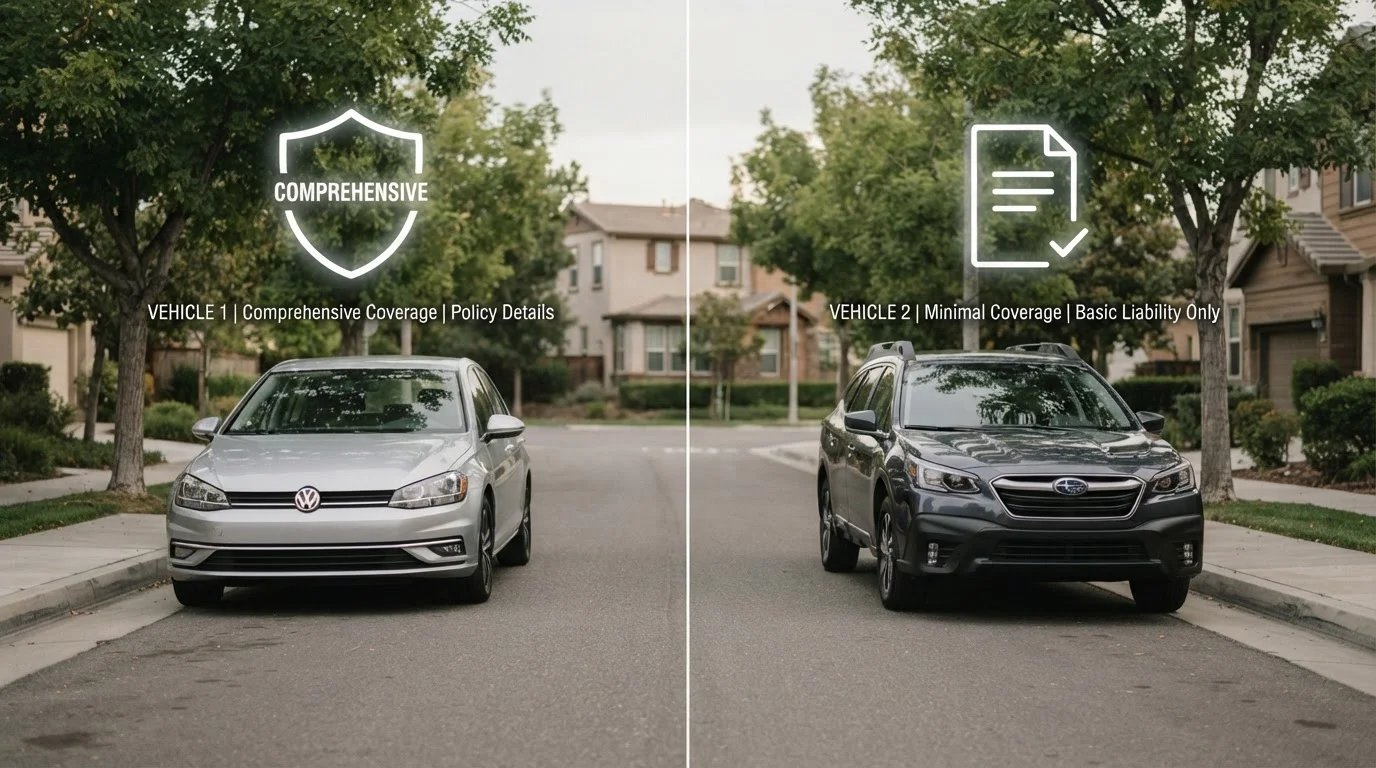
Option A
Liability-Only Coverage
The legally required minimum that protects others, not your vehicle.
Best for: Owners of older, lower-value vehicles who can absorb out-of-pocket repair or replacement costs.
Option B
Full Coverage
Broader protection that includes your own vehicle alongside liability.
Best for: Drivers with newer or financed vehicles who want financial protection against collision, theft, and weather damage.
If you own an older vehicle outright with a low market value
Liability-Only Coverage
When the cost of full coverage premiums approaches or exceeds the vehicle's value, liability-only often makes more financial sense - just ensure you can cover repair or replacement costs yourself.
If you are financing or leasing your vehicle
Full Coverage
Lenders and lessors contractually require collision and comprehensive coverage to protect their financial interest in the vehicle.
If you drive a newer or higher-value vehicle you own outright
Full Coverage
The potential financial loss from a total loss or major collision far outweighs the incremental cost of broader protection.
If your emergency fund could comfortably replace your current vehicle
Liability-Only Coverage
Self-insuring the physical damage risk on a modest vehicle is a reasonable choice when you have the liquidity to back it up.
What Each Coverage Level Actually Includes
The term "full coverage" isn't an official insurance category - it's shorthand for a bundle that typically includes three components: liability, collision, and comprehensive coverage. Liability-only, by contrast, stops after the first layer.
Liability coverage pays for bodily injury and property damage you cause to others in an at-fault accident. Nearly every state requires drivers to carry at least a minimum amount. It does not pay to repair or replace your own vehicle.
Collision coverage pays for damage to your vehicle resulting from a collision with another car or object, regardless of fault. Comprehensive coverage handles losses from events outside a collision - theft, vandalism, fire, falling objects, hail, or flooding.
Together, collision and comprehensive form the layer that protects your own asset. For a thorough explanation of the policy terms involved, see our plain-language policy guide.
| Criterion | Liability-Only | Full Coverage |
|---|---|---|
| Covers damage you cause others | Yes | Yes |
| Covers your own vehicle in a collision | No | Yes (collision) |
| Covers theft, weather, vandalism | No | Yes (comprehensive) |
| Meets typical state minimums | Yes | Yes |
| Required by lenders/lessors | No | Yes |
| Typical relative premium cost | Lower | Higher |
| Best suited for vehicle value | Older, lower-value vehicles | Newer or higher-value vehicles |
The Factors That Should Drive Your Decision
There's no single correct answer here, but several concrete factors sharpen the choice considerably.
Your Vehicle's Market Value
A common rule of thumb in the insurance industry is to reconsider full coverage when the annual premium for collision and comprehensive exceeds roughly 10% of the vehicle's actual cash value (ACV). If your car is worth $4,000 and those two coverages cost $700 a year with a $1,000 deductible, the math gets tight quickly. Use resources like published used-car valuation guides to ground your estimate.
Loan or Lease Status
If a lender holds a lien on your vehicle, the decision is largely made for you. Lenders require full coverage to protect their collateral. If you drop it, your lender may force-place insurance on your behalf - often at a far higher cost and with less favorable terms. The same logic applies to leased vehicles. Leasing carries distinct insurance obligations worth understanding before you sign.
Your Financial Safety Net
Liability-only is essentially a self-insurance decision for your vehicle. If your car were totaled tomorrow with no payout, could you absorb that loss without serious financial hardship? Your honest answer matters more than any rule of thumb.
Your Risk Profile and Driving Environment
Where and how much you drive affects your exposure. Frequent highway miles, dense urban parking, or regions prone to hail or flooding all increase the probability that comprehensive or collision coverage pays off. Multiple factors quietly shape your overall premium as well - see what insurers actually look at.
State Minimums Are a Floor, Not a Recommendation
Every state sets minimum liability limits, but those minimums are often low enough that a serious accident could leave you personally responsible for costs that exceed them. Many insurance professionals suggest carrying liability limits well above state minimums if your personal assets are worth protecting. Review your state's specific requirements and consider your own financial exposure before settling on limit amounts.
Common Misconceptions Worth Clearing Up
A few misunderstandings regularly lead drivers to the wrong coverage level.
- "Liability covers me if I'm not at fault." Not exactly. If another driver hits you and they carry adequate liability insurance, their policy covers your damages. But if they're uninsured or underinsured, you may need your own UM/UIM coverage - a separate add-on not automatically included in either level discussed here.
- "Full coverage means everything is covered." It doesn't. Gap insurance, rental reimbursement, and roadside assistance are distinct add-ons. Review your declarations page carefully to know exactly what you're paying for.
- "Dropping to liability saves money no matter what." It often does - but not always. Your deductible choice, driving history, and ZIP code affect the premium spread between levels significantly.
Understanding your policy terms precisely is the foundation of any coverage decision. Auto insurance operates differently from other types of insurance - unlike renters insurance, it involves mandatory state minimums and lender requirements that constrain your options.
This article provides general information about auto insurance concepts and is not personalized insurance or financial advice. Consult a licensed insurance professional to evaluate the coverage appropriate for your specific situation.