

Key Takeaways
Our Verdict
Neither interior nor exterior waterproofing is universally superior - they solve different problems. Exterior systems protect the foundation structure from hydrostatic pressure and are the most comprehensive long-term solution, while interior drainage systems are more practical for managing active water entry with less disruption. The right choice depends on your moisture source, budget, and structural condition.
| Best for | Recommended |
|---|---|
| Homeowners dealing with active water seepage through walls or floor joints | Interior drainage system |
| Those with high hydrostatic pressure or foundation wall damage from soil saturation | Exterior waterproofing |
| Those working within strict time or cost constraints | Interior drainage system |
| New construction or full foundation replacement projects | Exterior waterproofing |
Understanding the Moisture Problem First
Before choosing a waterproofing method, you need to identify where the moisture is coming from. Basement water intrusion generally falls into two categories: liquid water infiltration (water actively entering through cracks, joints, or porous concrete) and condensation (humidity from interior air condensing on cool surfaces). Waterproofing systems only address the first category - if you're dealing primarily with condensation, improved ventilation or a dehumidifier is the starting point.
For true water infiltration, the source matters enormously. Water can enter through the foundation wall, the floor-wall joint, floor cracks, or window wells. A licensed waterproofing contractor or structural engineer can help pinpoint the source and rule out more serious structural concerns before any work begins. Understanding your home's drainage situation - including how it connects to underground systems - is foundational. Our guide on how residential plumbing is organized can help provide broader context on what's happening beneath and behind your home's surfaces.
Interior Waterproofing: Managing Water After Entry
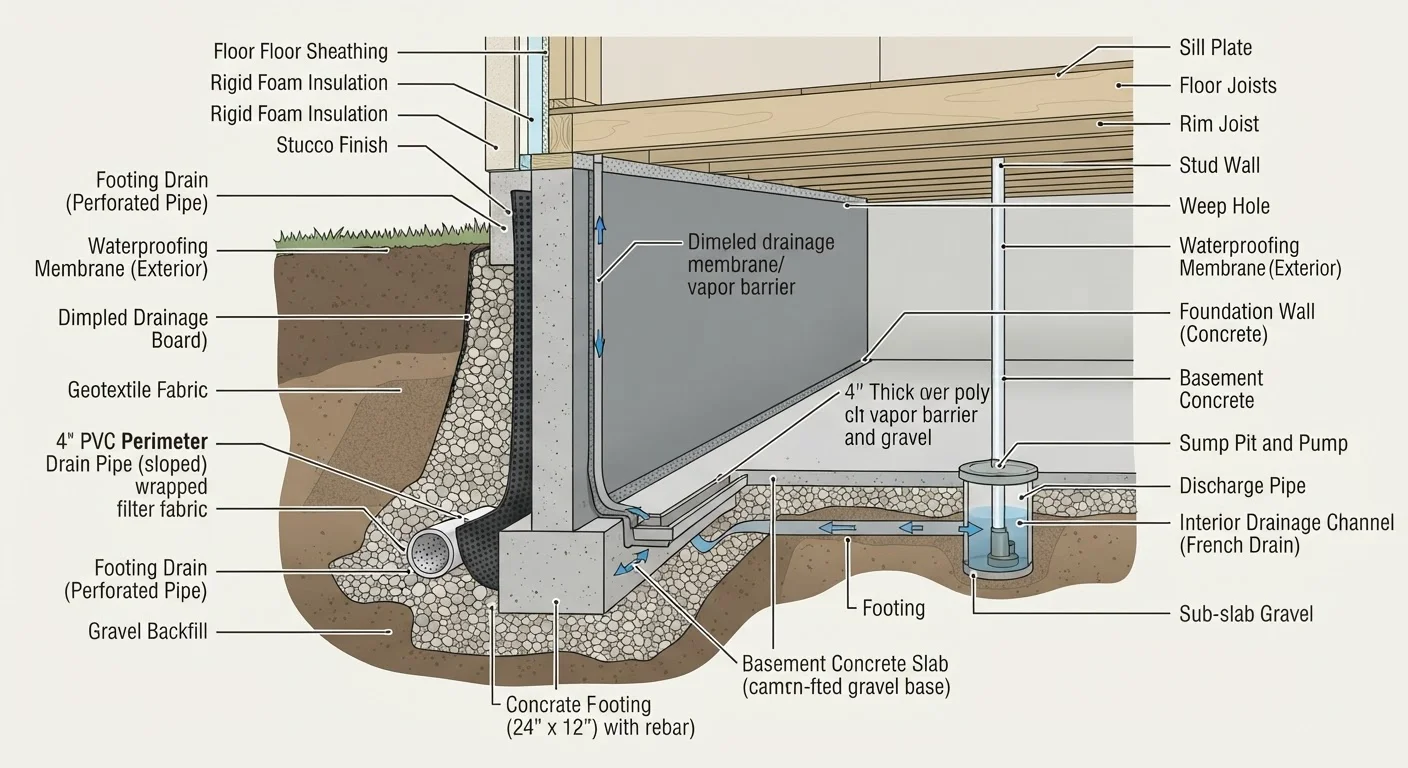
Interior waterproofing systems don't prevent water from entering the foundation - they intercept it and redirect it away before it can cause damage. The most common approach is an interior French drain (also called a perimeter drainage system): a channel is cut into the concrete floor along the foundation walls, a perforated pipe is laid in gravel, and the floor is patched over. Water that seeps through the wall or floor-wall joint flows into this channel and is directed to a sump pump, which ejects it outside.
Interior systems are considerably less invasive than excavating the exterior. Work is confined inside the basement, disruption to landscaping and utilities is minimal, and installation is generally faster. Costs are typically lower than full exterior waterproofing, though they vary widely based on basement size and local labor rates.
The key limitation: interior systems manage symptoms rather than causes. They don't stop hydrostatic pressure from pushing against your foundation wall, and they won't prevent ongoing structural deterioration if the wall itself is compromised. They're best suited to homes where seepage is the primary issue and the foundation walls are structurally sound.
Test Before You Invest
If you're unsure whether your basement moisture is condensation or true water infiltration, tape a piece of plastic sheeting to the wall and seal all edges. Leave it for 24-48 hours. If moisture appears on the room-facing side, you likely have a condensation issue. Moisture on the wall-facing side points to water infiltrating through the foundation - and a reason to consult a waterproofing professional.
Exterior Waterproofing: Stopping Water at the Source
Exterior waterproofing addresses the problem at its origin - before water ever contacts the foundation. The process involves excavating the soil around the entire perimeter of the foundation down to the footing. The exposed wall is then cleaned, repaired if cracked, and coated with a waterproof membrane or drainage board. A new perforated drain pipe is installed at the footing level and covered with gravel to carry groundwater away from the foundation.
This approach provides the most comprehensive protection and directly reduces hydrostatic pressure - the force exerted by saturated soil pressing against foundation walls. It's the method typically used in new construction and is often recommended when foundation walls show active cracking or bowing.
The significant drawbacks are cost and disruption. Excavating around a full foundation requires heavy equipment, takes considerable time, and means tearing up landscaping, driveways, or decks that run adjacent to the home. Costs can run substantially higher than interior systems. Permits are typically required, and the work must comply with local building codes - always verify requirements with your local building department before proceeding.
Don't Skip the Structural Check
Horizontal cracks or inward-bowing foundation walls are warning signs that go beyond standard waterproofing. These can indicate soil pressure causing structural movement - a condition that requires evaluation by a licensed structural engineer before any waterproofing work is done. Applying a drainage system over a structurally failing wall does not address the underlying risk.
Comparing the Two Approaches
Choosing between interior and exterior waterproofing isn't simply a matter of preference - it depends on your specific conditions. Use the comparison below to weigh the key factors.
| Interior Drainage System | Exterior Waterproofing | |
|---|---|---|
| How it works | Intercepts and redirects water that enters | Blocks water before it reaches the foundation |
| Addresses hydrostatic pressure | No | Yes |
| Invasiveness | Low - work confined to basement interior | High - full perimeter excavation required |
| Relative cost | Generally lower | Generally higher |
| Disruption to landscaping | Minimal | Significant |
| Best suited for | Active seepage, structurally sound walls | High water table, wall damage, new construction |
| Permit typically required | Often, varies by locality | Yes, in most jurisdictions |
| Longevity | Durable if maintained; pump needs upkeep | Long-lasting when properly installed |
Some situations call for a combined approach: exterior waterproofing on the most vulnerable wall, paired with an interior drainage system for comprehensive coverage. A qualified waterproofing contractor or structural engineer can help you evaluate whether one method or a hybrid solution fits your home's needs.
It's also worth considering how your property's overall drainage - including gutters, grading, and any buried drainage infrastructure - interacts with your basement moisture. Issues like a poorly functioning underground drainage system can compound foundation moisture problems if not addressed alongside waterproofing work.
What to Do Before You Commit
Rushing into a waterproofing project without proper diagnosis is one of the most common - and costly - homeowner mistakes. Before signing any contract, take these steps:
- Get multiple evaluations. Have at least two or three contractors assess your basement. Look for professionals who offer diagnosis without immediately pushing a particular solution.
- Check for structural issues. Horizontal cracks, bowing walls, or stair-step cracking in block foundations may indicate structural concerns that require a licensed structural engineer's assessment - not just a waterproofing contractor.
- Review your drainage landscape. Make sure gutters are clean and downspouts direct water at least 6 feet from the foundation. Confirm that the grade of soil around your home slopes away from the foundation. These lower-cost fixes sometimes resolve minor seepage on their own.
- Understand warranty terms. Waterproofing warranties vary significantly. Ask exactly what is covered, for how long, and whether the warranty is transferable if you sell the home.
Waterproofing is a significant investment. Taking time to understand the source of your moisture and the scope of each solution will help you make a decision that genuinely protects your home long-term.