

Key Takeaways
Disc Braking System
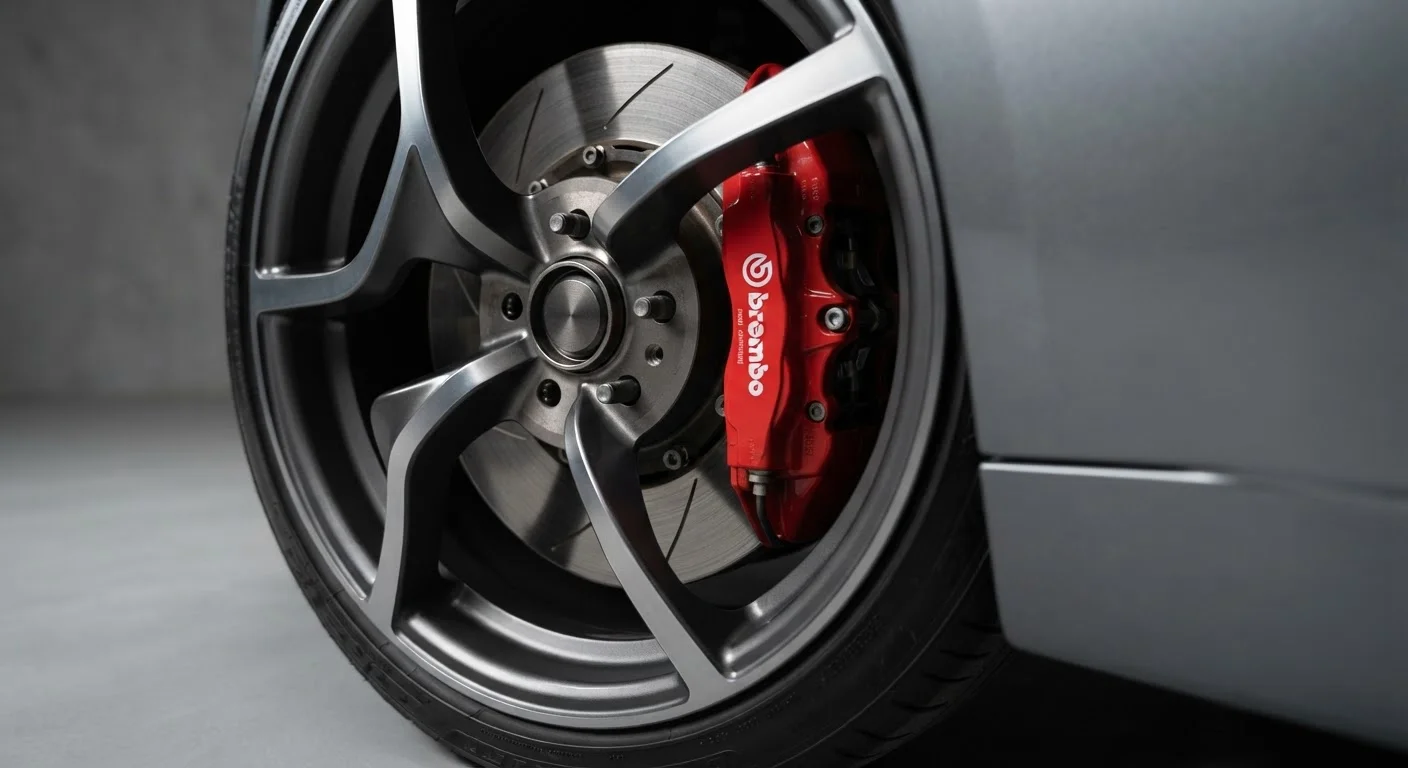
A disc braking system is the mechanism that slows and stops your vehicle by converting kinetic energy into heat through friction. When you press the brake pedal, hydraulic pressure forces brake pads against a spinning metal disc (the rotor), while the caliper holds and squeezes those pads in place. Most modern passenger vehicles use disc brakes on all four wheels.
Older and economy vehicles may use drum brakes at the rear axle instead of disc brakes; the friction and hydraulic principles are similar, but the components differ in shape and replacement procedure.
The Three Core Components - and What Each One Does
Your braking system is a team effort. Three components do most of the work, and understanding each one makes warning signs much easier to interpret.
Brake pads are the friction material that actually contacts the rotor. They're designed to wear down gradually - that's intentional. Most pads include a small metal tab called a wear indicator that produces a high-pitched squeal when the pad material gets thin enough to need replacement. Ignoring that sound long enough leads to metal-on-metal contact, which damages the rotor and dramatically reduces stopping power.
Rotors (also called brake discs) are the large metal discs that spin with your wheels. When the caliper clamps the pads against the rotor's flat surface, friction converts the vehicle's forward motion into heat, slowing the wheel. Rotors wear over time and can also warp from repeated heat cycles - particularly common after extended hard braking, such as descending a long grade. A warped rotor causes the pulsating sensation some drivers feel in the pedal.
Calipers house the brake pads and contain hydraulic pistons. When you press the pedal, brake fluid pressure pushes those pistons outward, squeezing the pads against the rotor. A seized or sticking caliper - where the piston fails to retract fully - causes uneven pad wear, excess heat, and can make the vehicle pull to one side when braking.
Drum Brakes: Still Common at the Rear
Some vehicles - particularly older models and certain economy cars - use drum brakes at the rear axle rather than disc brakes. Drum brakes use brake shoes that press outward against the inside of a drum rather than pads clamping a rotor. The hydraulic principles are similar, but the components, wear patterns, and service procedures differ. If you're unsure which type your vehicle has, your owner's manual or a mechanic can confirm.
How Hydraulics Connect Your Foot to the Wheels
The physical clamping at each wheel doesn't happen by mechanical cable - it happens through hydraulic pressure. When you depress the brake pedal, it activates the master cylinder, which pushes brake fluid through a network of lines to each caliper. That fluid pressure is what moves the caliper pistons and engages the pads.
This is why brake fluid condition matters. As our plain-language guide to car fluids explains, brake fluid absorbs moisture from the air over time. Moisture lowers the fluid's boiling point, which can cause the fluid to vaporize under sustained hard braking - a condition known as brake fade. A spongy or soft pedal feel is a common sign of compromised brake fluid or air in the lines, both of which need professional attention promptly.
~12,000-20,000 miles
Typical brake pad inspection interval range
Actual intervals vary by vehicle and driving conditions; consult your owner's manual for the manufacturer-specified schedule.
~70%
Braking force handled by front brakes on most vehicles
Weight transfer to the front during braking means front pads and rotors generally wear faster than rear components on most passenger cars.
Warning Signs Worth Knowing
Because these three components work interdependently, a problem with one typically shows up as a symptom that's easy to notice while driving.
- Squealing or squeaking: Often the wear indicator doing its job - pads may be nearing the end of their service life.
- Grinding or metal-on-metal sound: Pads are likely worn through. Immediate inspection is warranted; continued driving will damage the rotors.
- Pulling to one side when braking: Often indicates a sticking caliper or uneven pad wear.
- Pulsating pedal: Typically points to warped or unevenly worn rotors.
- Soft or spongy pedal: Suggests a hydraulic issue - air in the lines or degraded brake fluid.
- Brake warning light: Never ignore this. It can indicate low fluid, worn pads, or a hydraulic fault.
Any of these symptoms should prompt a professional inspection. Brakes are a safety-critical system, and diagnosis is best left to a qualified mechanic who can measure component wear with the right tools. See what mechanics look for during a multi-point inspection to understand how brake components are evaluated during routine service visits.
Ask for Measurements, Not Just an Opinion
When a mechanic says your brakes need work, ask them to show you the pad thickness measurement and rotor thickness reading. Both have manufacturer-specified minimums. These numbers give you objective information to understand the urgency of the repair and compare recommendations across shops.
Staying Ahead of Brake Wear
The most reliable maintenance guide for your brakes isn't general advice - it's your vehicle's owner's manual. As covered in our article on reading your owner's manual, that document contains inspection intervals and fluid specs specific to your make, model, and trim. Brake service intervals in the manual account for the engineering of your particular braking system, not a generic estimate.
Beyond intervals, driving behavior significantly influences brake longevity. Frequent hard stops, heavy loads, and mountain driving all accelerate wear. Drivers who routinely haul trailers or navigate hilly terrain should plan for more frequent brake inspections than those who primarily drive flat highway miles.
For a broader view of how brakes fit into overall vehicle care, our complete guide to car maintenance covers how brake service integrates with other routine upkeep schedules. Staying informed about how these components work makes you a more confident vehicle owner - better equipped to recognize problems early and have productive conversations with the mechanics who service your car.