

Key Takeaways
Vehicle Depreciation
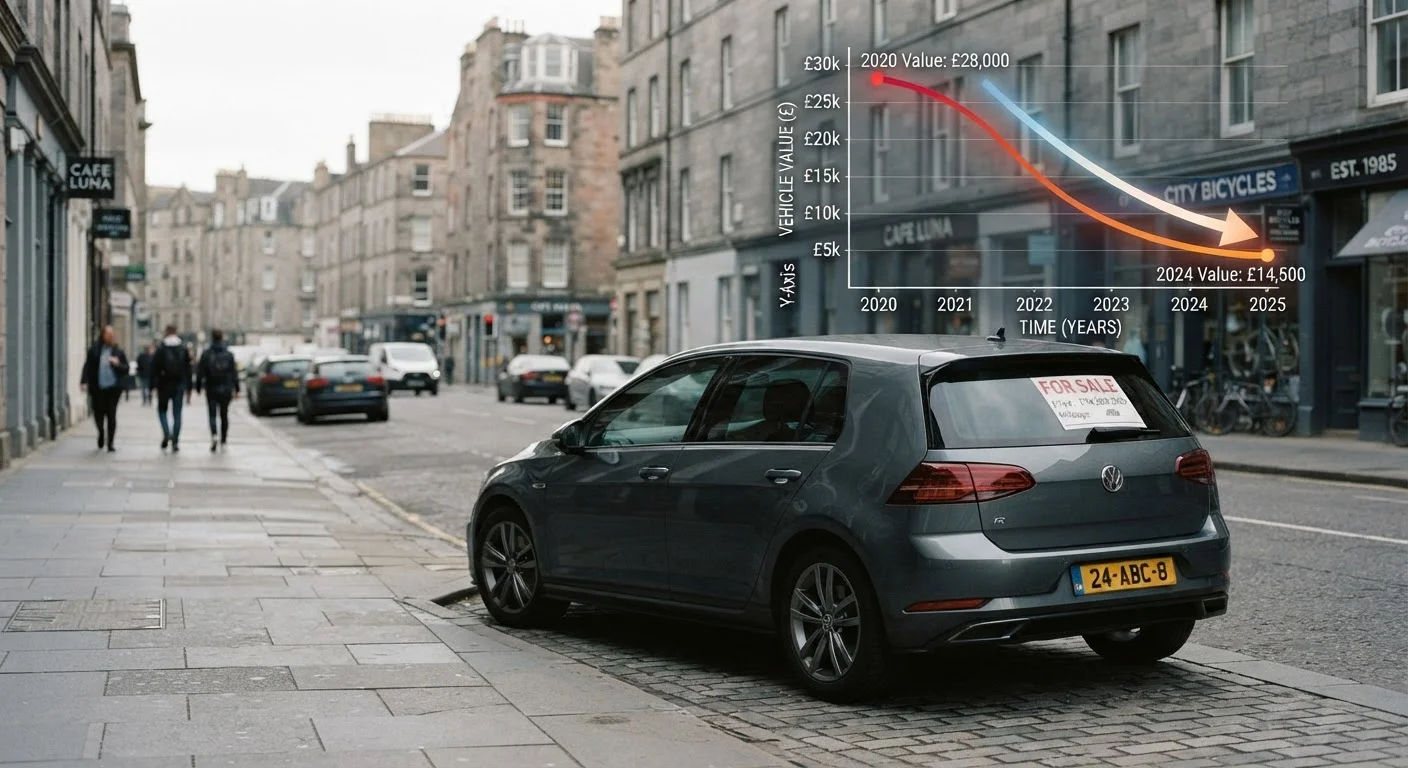
Depreciation is the gradual loss in a vehicle's market value over time. It happens to virtually every car, regardless of brand or condition. The difference between what you paid for a vehicle and what it's worth when you sell or trade it in represents your depreciation cost - often the single largest expense of car ownership.
In accounting terms, depreciation is a non-cash cost, but for car owners it has very real financial consequences when selling, refinancing, or insuring a vehicle.
What Depreciation Actually Means for Car Owners
When you buy a car, you're not just paying for transportation - you're also absorbing a predictable but unavoidable loss in value. Depreciation is the gap between what you paid and what the vehicle is worth at any given point later. Unlike a mortgage that builds equity, most car loans work against a declining asset.
For many owners, depreciation is invisible until the moment they try to sell or trade in their vehicle. That sticker shock - realizing a car bought for $35,000 is now worth $22,000 just three years later - is depreciation made suddenly visible. Understanding how it works before you buy, not after, puts you in a much stronger financial position.
~20%
Average value lost in the first year
Industry estimates consistently show new vehicles lose roughly 15-25% of their value within the first 12 months of ownership.
~50%
Value retained after five years
Many new vehicles retain only around 40-60% of their original purchase price after five years, depending on make, model, and condition.
#1
Ranking among hidden ownership costs
Automotive finance educators frequently identify depreciation as the largest single cost of vehicle ownership, often exceeding fuel, insurance, or maintenance over a typical ownership period.
Why Cars Lose Value: The Key Factors
Several forces drive depreciation, and most of them start working immediately:
- Age: The passage of time alone reduces a vehicle's market value. Newer cars carry a premium simply because they're newer.
- Mileage: Higher mileage signals more wear on critical components. Cars with significantly above-average annual mileage typically depreciate faster.
- Condition: Dents, interior wear, mechanical issues, and a patchy maintenance history all drag down resale value. A well-documented service record, on the other hand, reassures buyers.
- Market demand: Supply, fuel prices, economic conditions, and consumer preferences all shift what buyers are willing to pay. A segment that's popular today may be less in demand years from now.
- Technology changes: As newer models introduce updated safety systems, efficiency improvements, or infotainment features, older versions become less desirable by comparison.
These factors don't operate in isolation. A high-mileage vehicle in poor condition depreciates far faster than one with modest miles and complete maintenance records - even if they started at the same price.
Protect Resale Value With Service Records
Every oil change, tire rotation, and scheduled service you document adds credibility when you eventually sell. Keep receipts and dealer visit summaries in a folder in your glove box or a simple digital folder. A complete paper trail can meaningfully increase what a private buyer or dealership is willing to pay.
The First-Year Drop and the Long View
The sharpest depreciation happens early. A brand-new car typically loses a significant portion of its value in the first 12 months - partly because it's no longer "new" and partly because used-car buyers can now purchase a nearly identical vehicle for considerably less. This is why a one- or two-year-old car with low mileage often represents a different financial proposition than a factory-fresh model.
By years three through five, the rate of decline usually moderates. After about five years, many vehicles have stabilized to a slower, steadier depreciation curve. This pattern is why long-term ownership - driving a vehicle well past its initial steep decline - can be one of the more economical approaches to car costs overall. The expense of depreciation shrinks as a share of your total ownership cost the longer you keep the vehicle.
For a broader look at how depreciation fits into the full picture of car ownership expenses, see our guide to overlooked car ownership costs.
How Depreciation Connects to Bigger Ownership Decisions
Depreciation doesn't exist in a vacuum - it intersects directly with decisions about financing, insurance, and whether to buy or lease. If a car loses value faster than your loan balance shrinks, you can end up owing more than the vehicle is worth. Gap insurance exists precisely to cover this scenario if the car is totaled, and it's worth understanding before you sign financing paperwork.
Leasing, by contrast, essentially means you're paying for the depreciation that occurs during the lease term rather than the full vehicle value. Whether that trade-off makes sense depends on your driving habits and financial priorities. Our article on owning vs. leasing a car walks through those differences in detail.
Maintenance choices also play a direct role. Vehicles with complete service histories and no deferred repairs command better resale prices. As our coverage of why skipping scheduled maintenance costs more explains, keeping up with routine service isn't just about reliability - it protects your vehicle's value too.
For anyone just getting started, our guide to navigating car ownership as a first-time buyer covers how depreciation fits alongside the other responsibilities of owning a vehicle.
A buyer purchases a new midsize sedan for $32,000. After two years and 24,000 miles, a trade-in appraisal comes back at $22,000.
A driver buys a three-year-old compact with 28,000 miles for $18,000, while the same model costs $26,000 new.
Two identical vehicles are sold after five years. One has complete dealer service records; the other has no documented maintenance history.