

Key Takeaways
Our Verdict
No single finish works perfectly in every room. Matte and eggshell suit low-traffic living spaces and bedrooms, while satin strikes the balance most homeowners want in kitchens, hallways, and children's rooms. Gloss is best reserved for trim, doors, and cabinetry where durability and easy cleaning matter most.
| Best for | Recommended |
|---|---|
| Bedrooms and formal living rooms with minimal traffic | Matte |
| General living spaces, dining rooms, and home offices | Eggshell |
| Kitchens, bathrooms, hallways, and kids' rooms | Satin |
| Trim, baseboards, doors, and cabinetry | Gloss |
What Paint Sheen Actually Means
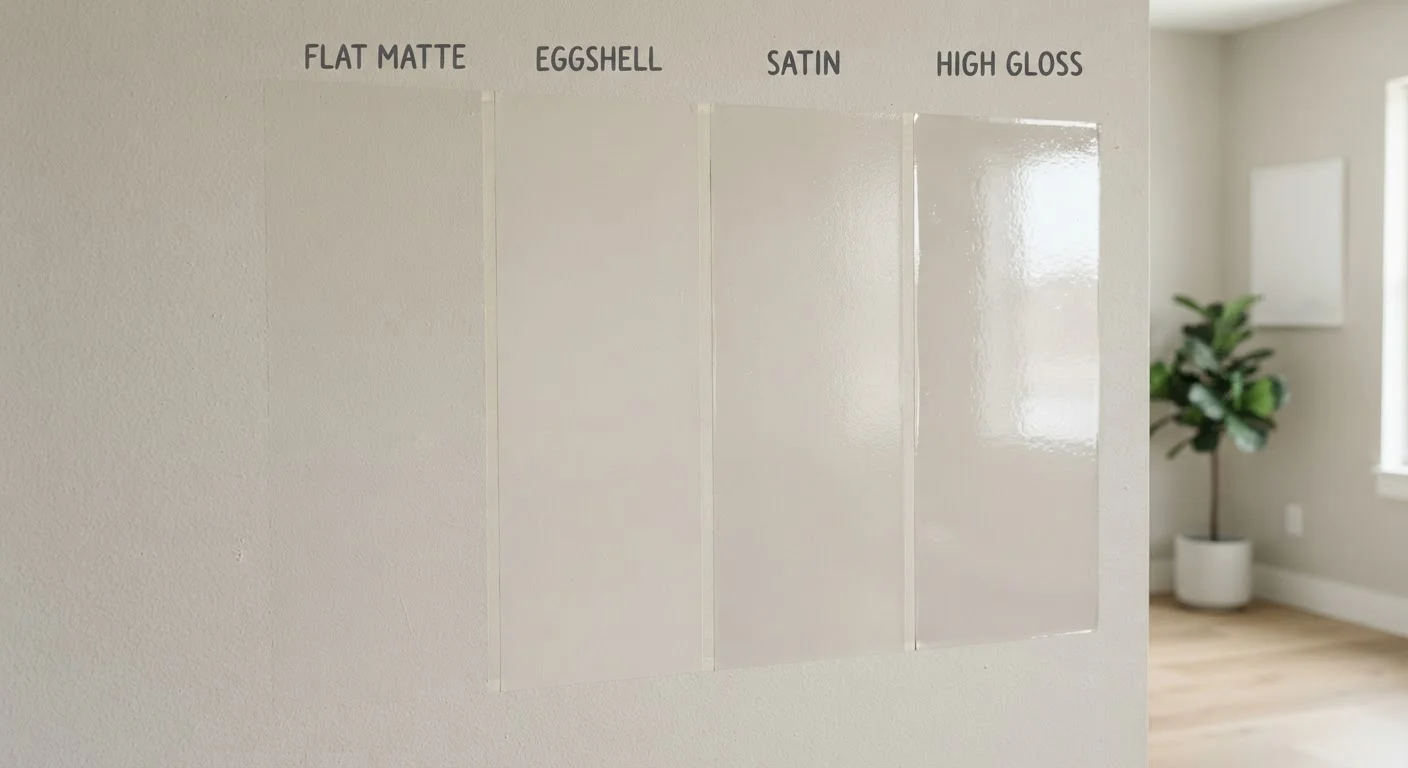
Paint sheen - sometimes called finish - describes how much light a dried paint surface reflects. Manufacturers measure this using a gloss unit scale. The higher the gloss unit rating, the shinier and more light-reflective the surface. This matters for three practical reasons: how the room looks under different lighting, how well the surface resists moisture and stains, and how easily you can clean it without damaging the finish.
Most interior paints fall into four main sheen categories: matte (also labeled flat), eggshell, satin, and gloss (which includes semi-gloss and high-gloss variants). Understanding where each one sits on the reflectivity spectrum - and what that means day-to-day - is the foundation for making a smart choice before you open a single can.
| Matte | Eggshell | Satin | Gloss | |
|---|---|---|---|---|
| Light reflectivity | Very low | Low to slight | Medium pearl | High to very high |
| Hides imperfections | Excellent | Good | Moderate | Poor |
| Washability | Low | Moderate | Good | Excellent |
| Moisture resistance | Low | Moderate | Good | Excellent |
| Best room application | Bedrooms, ceilings | Living rooms, offices | Kitchens, hallways | Trim, doors, cabinets |
| Surface prep required | Minimal | Moderate | Moderate | Extensive |
Matte Finish: Best for Low-Traffic Rooms
Matte paint reflects very little light, which gives walls a smooth, velvety appearance that many homeowners find sophisticated. Because it scatters rather than reflects light, matte is highly effective at concealing surface imperfections - nail holes, minor dings, and uneven texture are far less visible than they would be under a glossy coat.
The trade-off is durability. Matte finishes are more porous and less resistant to moisture, meaning repeated scrubbing can lift or burnish the paint. For this reason, matte works best in bedrooms, formal dining rooms, ceilings, and other spaces that see minimal touching, splashing, or grease. If you do need to clean a matte wall, use a lightly damp cloth and gentle pressure.
Eggshell and Satin: The Practical Middle Ground
Eggshell sits just above matte on the sheen scale, offering a soft, low-luster appearance reminiscent of - as the name suggests - the surface of an eggshell. It reflects slightly more light and tolerates occasional wiping without showing wear. Eggshell is a dependable choice for living rooms, home offices, and dining areas where you want a polished look without the reflectivity of a higher sheen.
Satin takes washability a meaningful step further. Its smooth, pearl-like finish stands up to regular cleaning, humidity, and the kind of handprint and scuff traffic that kitchens, hallways, bathrooms, and children's rooms generate. Satin reflects enough light to feel bright and clean without creating the mirror-like effect of gloss paint. It is the finish most professional painters reach for when covering large areas of a high-use home.
Test Before You Commit
Purchase small sample sizes of your shortlisted finishes and apply them as large swatches directly on the wall - at least 12 inches square. Let them dry fully, then observe the result in morning light, afternoon light, and under artificial lighting at night. A finish that looks perfect at the paint store may behave very differently in your specific room, so this step can save you from repainting an entire space.
Gloss Finish: Maximum Durability for Trim and Detail Work
Semi-gloss and high-gloss paints are the most reflective finishes available. They create a hard, slick surface that resists moisture, repels stains, and can be wiped down repeatedly without degrading. That durability makes gloss paint the standard choice for trim, baseboards, window casings, doors, and kitchen cabinetry - surfaces that take a beating and need frequent cleaning.
The significant limitation of gloss is that it highlights every surface imperfection with unforgiving clarity. Any crack, brush stroke, or uneven patch will catch the light and become visible. This means proper surface preparation - filling holes, sanding, and priming - is even more critical before applying a gloss finish. Gloss paint on large wall areas can feel visually overwhelming and is generally not recommended for full-room walls.
How Lighting Affects Your Sheen Choice
A finish that looks understated in a well-lit showroom can behave very differently in your home. Natural north-facing light is cool and consistent, which tends to make higher-sheen finishes look crisper. South-facing rooms with warmer, stronger light may cause satin or gloss walls to feel harsh at certain times of day. Artificial lighting - particularly recessed or directional fixtures - can create hot spots on glossier surfaces that draw the eye to texture flaws.
As a practical rule: the more light a room receives, the lower the sheen you may want on walls. Conversely, a darker room benefits from a slight sheen bump - moving from matte to eggshell, for example - to reflect available light and prevent the space from feeling heavy. Always test a paint sample on the actual wall and observe it at different times of day before committing to a full application.