

Key Takeaways
Option A
Checking Account
The everyday transaction hub.
Best for: Best for managing daily spending, paying bills, and receiving direct deposits.
Option B
Savings Account
The dedicated money-holding vehicle.
Best for: Best for setting aside funds you don't need immediately and earning interest over time.
If you need to pay bills, make purchases, and receive your paycheck
Checking Account
Checking accounts are designed for unlimited, frequent transactions and give you immediate access to funds through debit cards, checks, and electronic transfers.
If you want to build an emergency fund or save toward a goal
Savings Account
Savings accounts earn interest on your balance and create a useful separation between money you're storing and money you're spending.
If you want to maximize interest earned on idle cash
Savings Account
Even standard savings accounts pay more interest than most checking accounts, and high-yield options can significantly outpace inflation over time.
If you need flexibility to move money frequently without restrictions
Checking Account
Checking accounts impose no meaningful limits on how often you can withdraw or transfer, making them better suited for active cash flow management.
What Each Account Is Actually Designed to Do
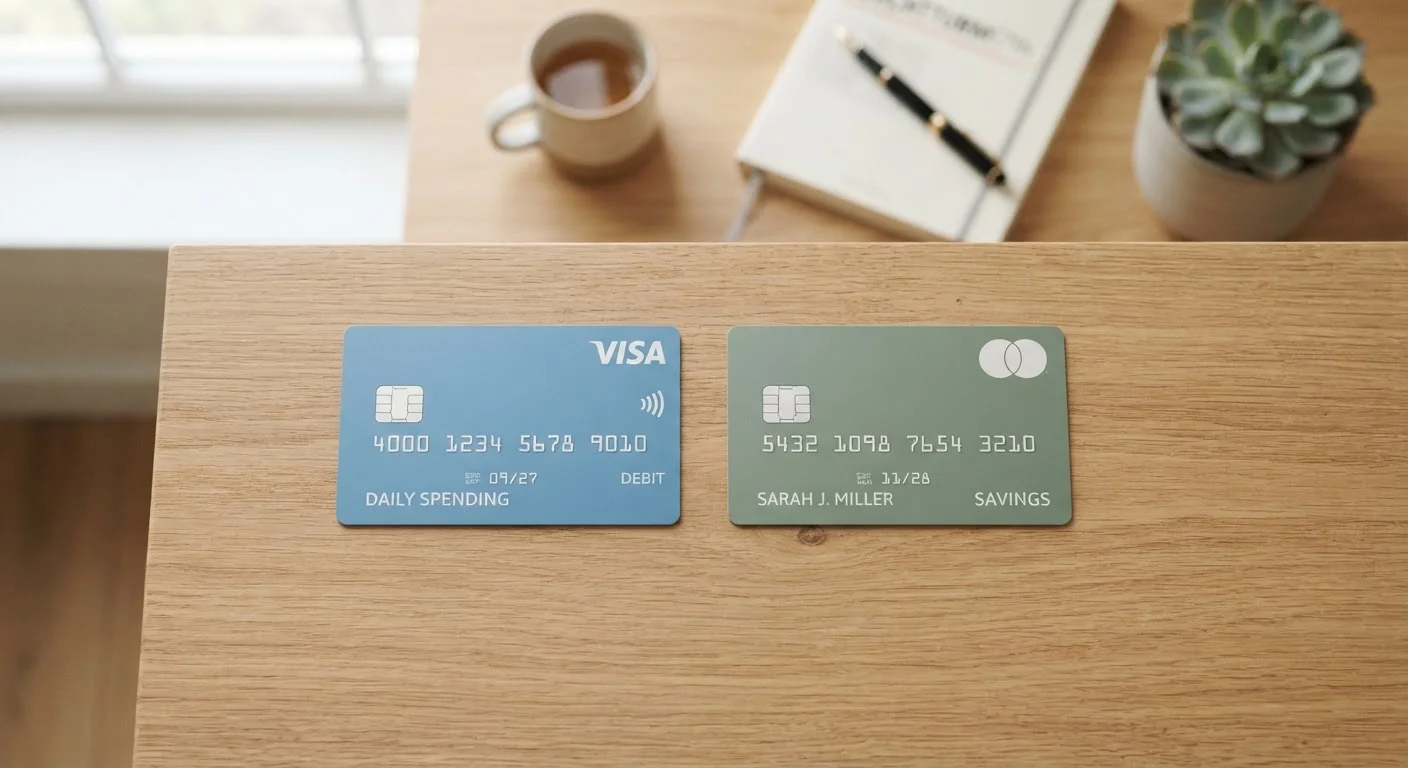
A checking account is a deposit account built for liquidity - the ability to access your money quickly and repeatedly. It supports debit card purchases, bill payments, ACH transfers, and check writing. There is generally no limit on how many transactions you can make per month, which makes it the natural home for your regular income and day-to-day spending.
A savings account serves a different purpose: holding money you don't need to spend right now. Banks use the funds you deposit to extend loans to other customers, and in return, they pay you interest on your balance. The rate is typically expressed as an Annual Percentage Yield (APY), which accounts for the effect of compounding. To understand more about what happens to your deposits behind the scenes, see what banks actually do with your money.
Neither account type is superior - they complement each other. Thinking of them as two tools in the same toolkit is more accurate than choosing one over the other.
Key Differences at a Glance
The table below summarizes the most important functional contrasts between a standard checking account and a standard savings account. Note that specific terms vary by institution.
| Criterion | Checking Account | Savings Account |
|---|---|---|
| Primary purpose | Daily transactions and cash flow | Storing and growing money |
| Interest earned | Rarely; minimal if so | Yes, expressed as APY |
| Transaction limits | Unlimited | Often limited per month |
| Debit card access | Standard | Uncommon |
| Check-writing ability | Yes | No |
| Overdraft risk | Yes | Not typically |
| FDIC/NCUA insured | Yes, up to applicable limits | Yes, up to applicable limits |
One regulatory note worth understanding: the Federal Reserve's Regulation D historically capped savings account withdrawals at six per month. The Fed suspended that limit in 2020, but many banks still enforce their own version of it or charge excess withdrawal fees. Check your account's terms before assuming unlimited access.
Fees, Minimums, and Common Costs
Both account types may carry monthly maintenance fees, though many institutions waive them if you meet conditions like maintaining a minimum balance or setting up direct deposit. Common costs to review before opening any account include:
- Monthly maintenance fees: Can range from a few dollars to $15 or more if waiver conditions aren't met.
- Overdraft fees: Charged on checking accounts when a transaction exceeds your available balance. Some banks offer overdraft protection linked to a savings account.
- Excess withdrawal fees: May apply to savings accounts if you exceed the institution's transaction limit.
- Minimum balance requirements: Some accounts require a minimum daily or average balance to avoid fees or earn the advertised APY.
Running a quick monthly banking audit is a practical way to catch fee creep before it quietly drains your balance.
~$15
Typical monthly checking fee if waiver missed
According to Bankrate's annual checking account survey, the average monthly maintenance fee at large banks has hovered around $12-$15 when waiver conditions are not met.
~4-5%
APY range for high-yield savings accounts
During periods of elevated federal funds rates, many online banks have offered high-yield savings APYs in this range - significantly above traditional savings account rates of under 0.5%.
How to Use Both Accounts Together
The most effective banking setup for most people involves using a checking account as a cash-flow hub and a savings account as a holding area for money with a specific purpose. A simple structure might look like this:
- Direct deposit your paycheck into your checking account.
- Automatically transfer a fixed amount to savings each pay period - before discretionary spending.
- Keep only what you need for monthly expenses plus a small buffer in checking.
- Let savings accumulate for your emergency fund, a planned purchase, or a longer-term goal.
This separation is more than organizational - it reduces the temptation to spend money you've mentally earmarked for savings. For guidance on building that emergency cushion, emergency fund basics covers how much to set aside and where to keep it.
If your savings account's interest rate feels low, it may be worth exploring your options. High-yield savings accounts vs. traditional savings accounts explains the trade-offs between the two structures.
This article is for general informational and educational purposes only and does not constitute personalized financial advice. Consult a qualified financial professional for guidance specific to your situation.