

Key Takeaways
Lease Agreement
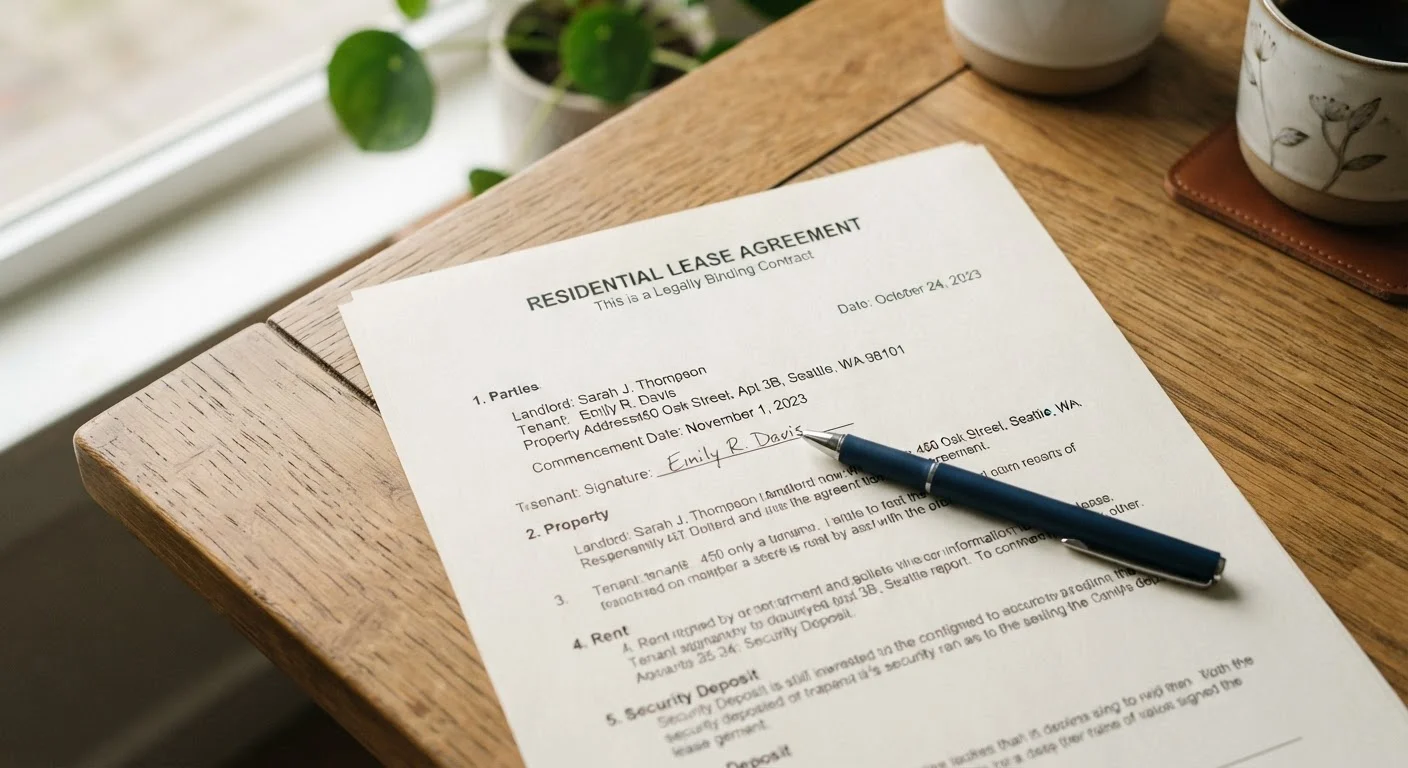
A lease agreement is a legally binding contract between a landlord and a tenant that outlines the terms under which a rental property may be occupied. It defines the rent amount, lease duration, rules for the property, and each party's responsibilities. Once signed, both parties are obligated to follow its terms for the duration specified.
Lease agreements are governed by a combination of state landlord-tenant law and contract law. Certain clauses may be unenforceable if they violate state statutes, regardless of what the document says.
Why Lease Language Is Worth Decoding
Most renters sign their lease after a quick scan. That's understandable - lease documents are dense, often several pages long, and written in formal legal language. But the clauses buried in that document govern nearly every aspect of your tenancy: how much notice you'll receive before your rent increases, who pays if a pipe bursts, and what happens if you need to leave before the term ends.
Understanding the key provisions isn't about looking for loopholes - it's about knowing your rights and responsibilities before a dispute arises. For a broader orientation to the renting process, see our guide for first-time renters.
~44M
Renter-occupied housing units in the US
According to the U.S. Census Bureau's American Community Survey, approximately 44 million households in the United States are renter-occupied.
1 in 3
Renters who report not fully reading their lease
Surveys conducted by renter advocacy groups consistently find that a significant share of tenants do not read their lease agreement in full before signing.
30 days
Typical security deposit return window
Many states require landlords to return security deposits within 14 to 30 days of move-out, though the exact timeframe varies by jurisdiction.
The Clauses That Matter Most
Rent and payment terms. Beyond the monthly dollar amount, look for the due date, the grace period (if any), and the late fee structure. Some leases specify exactly how and where payment must be made - deviating from this, even with the landlord's informal approval, can create complications.
Security deposit terms. The lease should state the deposit amount, what it can be applied to, and the timeline for its return after move-out. State law often caps how much a landlord can collect and sets strict deadlines for itemized deductions.
Maintenance and repair responsibilities. Leases typically split responsibilities: landlords are usually obligated to maintain the unit's habitability (functioning heat, plumbing, structural safety), while tenants are responsible for minor upkeep and damage they cause. Read this section carefully - some leases shift unusual burdens to tenants that local law may not permit.
Entry and notice requirements. Most states require landlords to provide advance written notice - commonly 24 to 48 hours - before entering a rental unit except in emergencies. Your lease should reflect this, and if it grants the landlord broader rights than state law allows, that provision may not be enforceable.
Lease term and renewal. Fixed-term leases (typically 12 months) convert to month-to-month arrangements or expire entirely at the end of the term, depending on lease language and state law. Understand whether your lease auto-renews and what notice you must give to avoid being locked into another term. Learn more about how these two structures compare in our overview of month-to-month versus fixed-term leases.
Read the Renewal Clause Before You Need It
Many fixed-term leases include an automatic renewal provision - if you don't give written notice of your intent to vacate within a specified window (often 30 to 60 days before the lease ends), you may be locked into another full term. Mark your lease end date on your calendar and track the required notice window from day one.
Early termination clause. This spells out what it costs you to exit before the lease ends. If there's no clause, your state's default rules apply. Some leases allow early exit without penalty under specific circumstances - job relocation, military deployment, domestic violence situations - which are often codified in state law regardless of what the lease says. For a detailed look at your exit options, see subletting, assignment, and lease transfers explained.
Clauses That Can Catch Renters Off Guard
Occupancy limits and guest policies. Many leases restrict the number of occupants or limit how long guests may stay. Violations can constitute a lease breach. These provisions are generally enforceable, though they must comply with fair housing rules - for example, occupancy standards cannot be applied in ways that discriminate based on familial status.
Subletting restrictions. Most residential leases either prohibit subletting entirely or require written landlord approval. Subletting without permission can result in eviction. If you anticipate needing this flexibility, try to negotiate the language before signing.
Pet clauses. Pet addendums often include a refundable pet deposit, a non-refundable pet fee, or additional monthly pet rent. Understand which applies - and note that service animals and emotional support animals occupy different legal territory under federal fair housing law, regardless of a no-pets policy.
When your lease term is approaching its end, the terms don't just reset automatically in your favor. Lease renewal negotiations offer a real opportunity to revisit terms - but only if you know what you're working with.
State Law Often Sets the Floor
Landlords can offer tenants more protections than state law requires, but they generally cannot offer less. If your lease contains a clause that strips away a right guaranteed by your state's landlord-tenant statute - such as the right to withhold rent for an uninhabitable unit - that clause is typically void. Local tenant rights organizations and state attorney general offices often publish plain-language summaries of applicable law.
What You Can - and Can't - Negotiate
Contrary to common assumption, lease terms are not always take-it-or-leave-it. In competitive rental markets, landlords may have less flexibility. In slower markets - or when a unit has been sitting vacant - there can be more room to negotiate. Common items tenants successfully negotiate include: a longer grace period before late fees apply, permission to sublet, pet approval, minor rent reductions in exchange for a longer term, and specific repair commitments before move-in.
Whatever you agree to verbally, insist on a written addendum or amendment to the lease. Oral modifications are nearly impossible to enforce if a dispute arises later.
This article is for general informational and educational purposes only and does not constitute legal advice. Lease terms and tenant rights vary significantly by state and locality. Consult a qualified attorney or local tenant rights organization for guidance specific to your situation.