

Key Takeaways
Instant response without warm-up delays
Devices that stay connected can respond to commands, triggers, or alerts in seconds. A security camera that must boot from a cold state would miss the event it's meant to capture.
Enables automation that runs while you sleep
Scheduled routines - such as adjusting a thermostat overnight or activating outdoor lights at dusk - depend on a hub or controller that is always listening and ready to act.
Routers and hubs anchor your entire network
These devices are infrastructure, not accessories. Powering them off to save a few watts would disable every other connected device in the home, making the trade-off impractical.
Per-device energy cost is often modest
A typical Wi-Fi router draws 5-15 watts; many smart plugs draw 1-3 watts at idle. At average U.S. electricity rates, the annual cost per device is often between $2 and $20 - a manageable figure for most households.
Some devices offset costs through energy management
Smart thermostats and energy-monitoring plugs, while always-on themselves, can reduce consumption in heating, cooling, or other appliances by a larger margin than their own standby draw.
Cumulative draw grows quickly with device count
A home with 15-25 always-on connected devices can see standby loads of 50-150 watts or more running continuously. Over a year, that can represent a meaningful share of total electricity consumption.
Many devices offer no easy low-power mode
Unlike a laptop that can hibernate, most smart home hubs, routers, and cameras have no meaningful sleep state - they are either fully on or unplugged entirely, leaving little middle ground.
Energy cost is invisible without active monitoring
Because standby draw is continuous and silent, most households have no practical sense of how much their connected devices cost to run. The impact only becomes apparent with deliberate measurement.
Older or budget devices tend to be less efficient
Device efficiency varies considerably. Older routers or lower-cost smart home hardware may draw two to three times more power than modern equivalents performing the same function.
Contributes to broader residential carbon footprint
Depending on a household's electricity source, continuous device operation contributes to grid load and associated emissions. In regions with carbon-intensive grid mixes, this consideration carries more weight.
Our Verdict
Always-on home technology devices provide genuine convenience and functionality, but their continuous power draw is a real and measurable cost. The trade-off is usually acceptable for core infrastructure like routers and hubs, but becomes worth examining more carefully as device counts climb. With a basic understanding of wattage and standby consumption, most households can find a balance that works for their needs and budget.
Readers who already have or are planning a connected home setup and want a clear-eyed view of the energy implications before adding more devices.
What 'Always-On' Actually Means for Home Devices
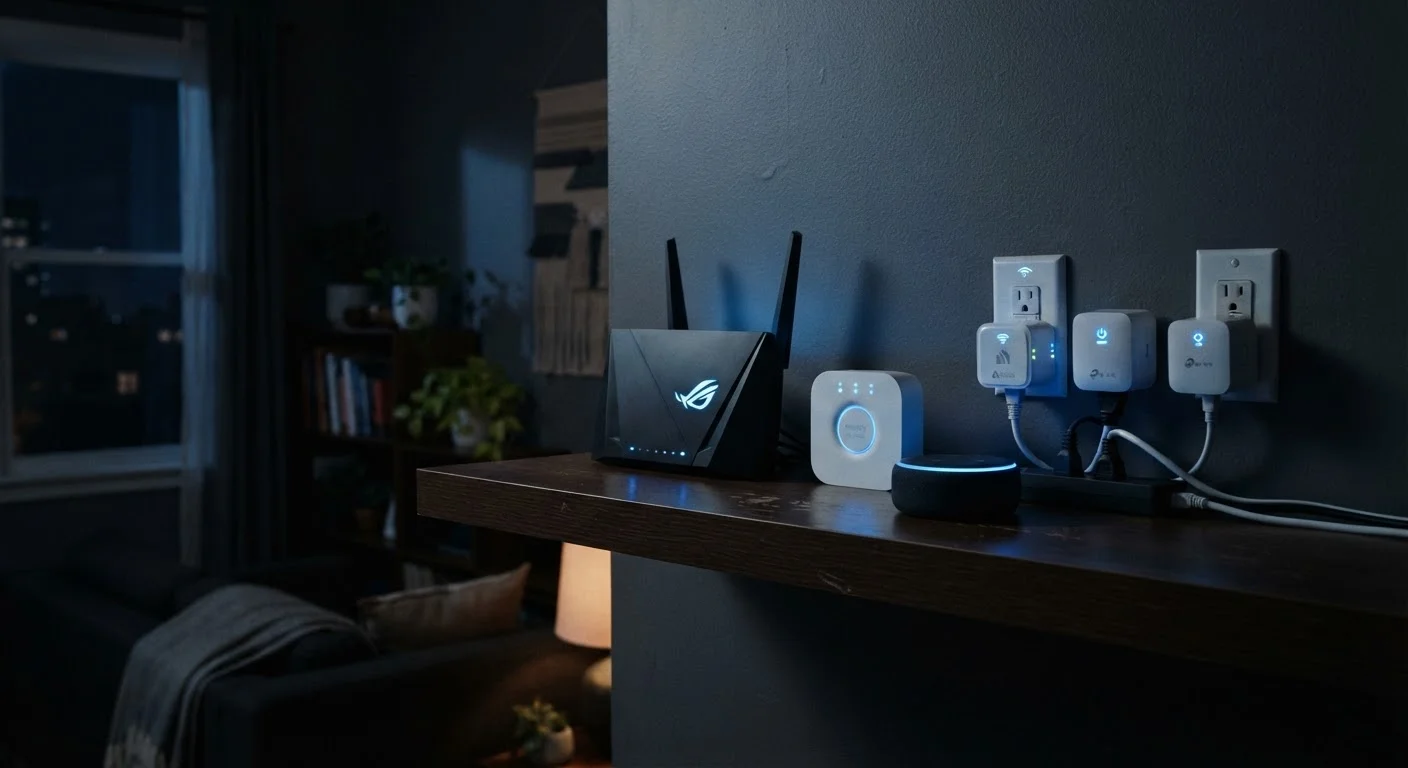
A growing number of household devices are designed to stay powered around the clock. Routers, smart home hubs, voice assistants, security cameras, streaming sticks, and smart plugs all fall into this category. Unlike a television or laptop that enters a true off state, these devices maintain a persistent connection - to the internet, to your local network, or to a cloud service - so they can respond instantly when called upon.
This continuous operation requires a continuous draw of electricity, even when you're asleep or away from home. That draw is often small on a per-device basis - typically measured in single-digit watts - but it runs for all 8,760 hours in a year. The U.S. Department of Energy has noted that standby power consumption across all devices in a typical U.S. home can account for roughly 5 to 10 percent of residential electricity use, though this varies considerably by household.
Understanding this baseline is important before evaluating whether your setup makes sense for your energy goals. See our guide to planning a connected home for a broader look at how to build a system thoughtfully.
The Pros: Why Continuous Power Often Makes Sense
Always-on operation isn't inherently wasteful - for many devices, it's what makes them useful in the first place. Here's a look at the genuine advantages.
Instant response without warm-up delays
Devices that stay connected can respond to commands, triggers, or alerts in seconds. A security camera that must boot from a cold state would miss the event it's meant to capture.
Enables automation that runs while you sleep
Scheduled routines - such as adjusting a thermostat overnight or activating outdoor lights at dusk - depend on a hub or controller that is always listening and ready to act.
Routers and hubs anchor your entire network
These devices are infrastructure, not accessories. Powering them off to save a few watts would disable every other connected device in the home, making the trade-off impractical.
Per-device energy cost is often modest
A typical Wi-Fi router draws 5-15 watts; many smart plugs draw 1-3 watts at idle. At average U.S. electricity rates, the annual cost per device is often between $2 and $20 - a manageable figure for most households.
Some devices offset costs through energy management
Smart thermostats and energy-monitoring plugs, while always-on themselves, can reduce consumption in heating, cooling, or other appliances by a larger margin than their own standby draw.
5-10%
Share of home electricity from standby devices
The U.S. Department of Energy estimates standby and idle power can account for roughly 5 to 10 percent of a typical household's electricity consumption.
~$100+
Estimated annual standby cost for a device-heavy home
Lawrence Berkeley National Laboratory research has suggested that homes with many connected devices can spend over $100 per year on standby power alone, depending on device mix and local electricity rates.
1-15W
Typical wattage range for always-on home tech
Smart plugs, hubs, and routers typically consume between 1 and 15 watts at idle, with variation based on device type, age, and network activity.
The Cons: Where the Energy Costs Start to Add Up
The downsides of always-on devices are real, particularly as the number of connected devices in a home grows. Understanding them helps you make smarter decisions about what stays plugged in.
Cumulative draw grows quickly with device count
A home with 15-25 always-on connected devices can see standby loads of 50-150 watts or more running continuously. Over a year, that can represent a meaningful share of total electricity consumption.
Many devices offer no easy low-power mode
Unlike a laptop that can hibernate, most smart home hubs, routers, and cameras have no meaningful sleep state - they are either fully on or unplugged entirely, leaving little middle ground.
Energy cost is invisible without active monitoring
Because standby draw is continuous and silent, most households have no practical sense of how much their connected devices cost to run. The impact only becomes apparent with deliberate measurement.
Older or budget devices tend to be less efficient
Device efficiency varies considerably. Older routers or lower-cost smart home hardware may draw two to three times more power than modern equivalents performing the same function.
Contributes to broader residential carbon footprint
Depending on a household's electricity source, continuous device operation contributes to grid load and associated emissions. In regions with carbon-intensive grid mixes, this consideration carries more weight.
Not All Standby Draws Are Equal
The term 'standby power' covers a wide range of actual behaviors. Some devices - like a smart speaker waiting for a wake word - process audio continuously and draw more power than a device that simply maintains a Wi-Fi heartbeat signal. When evaluating your setup, it helps to look at the actual wattage of each device rather than assuming all connected devices behave the same way.
How to Get a Clearer Picture of Your Own Usage
Rather than relying on estimates alone, households can measure actual consumption using inexpensive plug-in energy monitors. These devices display real-time wattage and track cumulative kilowatt-hour (kWh) usage over time, making it straightforward to calculate the annual energy cost of any device at a given electricity rate.
A simple calculation: multiply a device's wattage by 8,760 hours per year, then divide by 1,000 to convert to kWh. Multiply that figure by your local per-kWh electricity rate to get an annual dollar estimate. A 5-watt device, for example, consumes roughly 43.8 kWh annually - at a rate of $0.16 per kWh, that's approximately $7 per year. One device may seem trivial; 20 devices at similar draws adds up to a more meaningful number.
If you notice devices frequently losing connectivity despite being powered on, that's a separate but related concern. Our article on why smart devices drop off networks covers common causes and fixes. For readers also thinking about data privacy alongside energy, what smart home devices do with your data offers useful context.