

Key Takeaways
Why Catching Battery Problems Early Matters
A dead battery rarely announces itself dramatically. More often, it sends quiet signals for weeks before it finally quits - usually at the worst possible moment, like a cold Monday morning or the start of a long drive. The good news is that most failing batteries give you enough advance warning to act, as long as you know what to look for.
Car batteries typically last between three and five years, though that range shifts depending on your climate, driving habits, and how often your vehicle sits unused. Hot climates can shorten battery life by accelerating internal corrosion, while frequent short trips prevent a full recharge cycle. Understanding these stressors helps you stay ahead of failure rather than react to it. Before hitting the road, it's also worth checking our road trip safety prep guide, which includes battery inspection as part of a full pre-departure checklist.
Slow or Labored Engine Cranking
When you turn the key or press the start button and the engine turns over sluggishly - almost like it's struggling to wake up - that's a textbook sign of reduced battery capacity. A healthy battery delivers a strong, consistent burst of current to the starter motor. A weakening one can't supply that current as reliably, especially in cold weather when the engine demands even more power to turn over. If cranking feels noticeably slower than it used to, have the battery tested soon.
Sluggish cranking is one of the clearest early warnings a battery gives before it fails.
Dimming Headlights or Interior Lights
Your vehicle's lighting is directly powered by the electrical system, and a battery that's losing capacity will struggle to maintain steady voltage output. You might notice headlights that seem dimmer than normal, or interior lights that flicker or fade when you start the car. Some drivers spot this first when idling - the lights brighten when you rev the engine because the alternator kicks in to compensate. That pattern is worth paying attention to.
Lights that dim at idle but brighten when you rev the engine suggest the battery isn't holding its charge.
Electrical Components Acting Erratically
Modern vehicles rely heavily on electrical power for everything from power windows and door locks to infotainment systems and climate controls. When a battery starts to fail, these systems may behave unpredictably - windows moving slower than usual, radio resetting, or seat memory functions losing their settings. These glitches can seem random at first, which is why they're easy to dismiss. If multiple electrical features start acting up simultaneously, the battery is a logical place to start investigating.
Multiple electrical glitches appearing at the same time often share a single root cause: insufficient battery voltage.
The Battery Warning Light Comes On
The battery-shaped warning light on your dashboard doesn't always mean the battery itself is failing - it monitors the entire charging system, including the alternator and voltage regulator. But it should never be ignored. If this light illuminates while driving, pull over safely when you can and have the system checked. It's possible the alternator isn't keeping the battery charged, which will drain even a healthy battery quickly. Either way, the warning light is your car telling you something in the charging loop needs attention.
The battery warning light covers your whole charging system - it's a signal to act, not to wait.
Visible Corrosion or a Swollen Battery Case
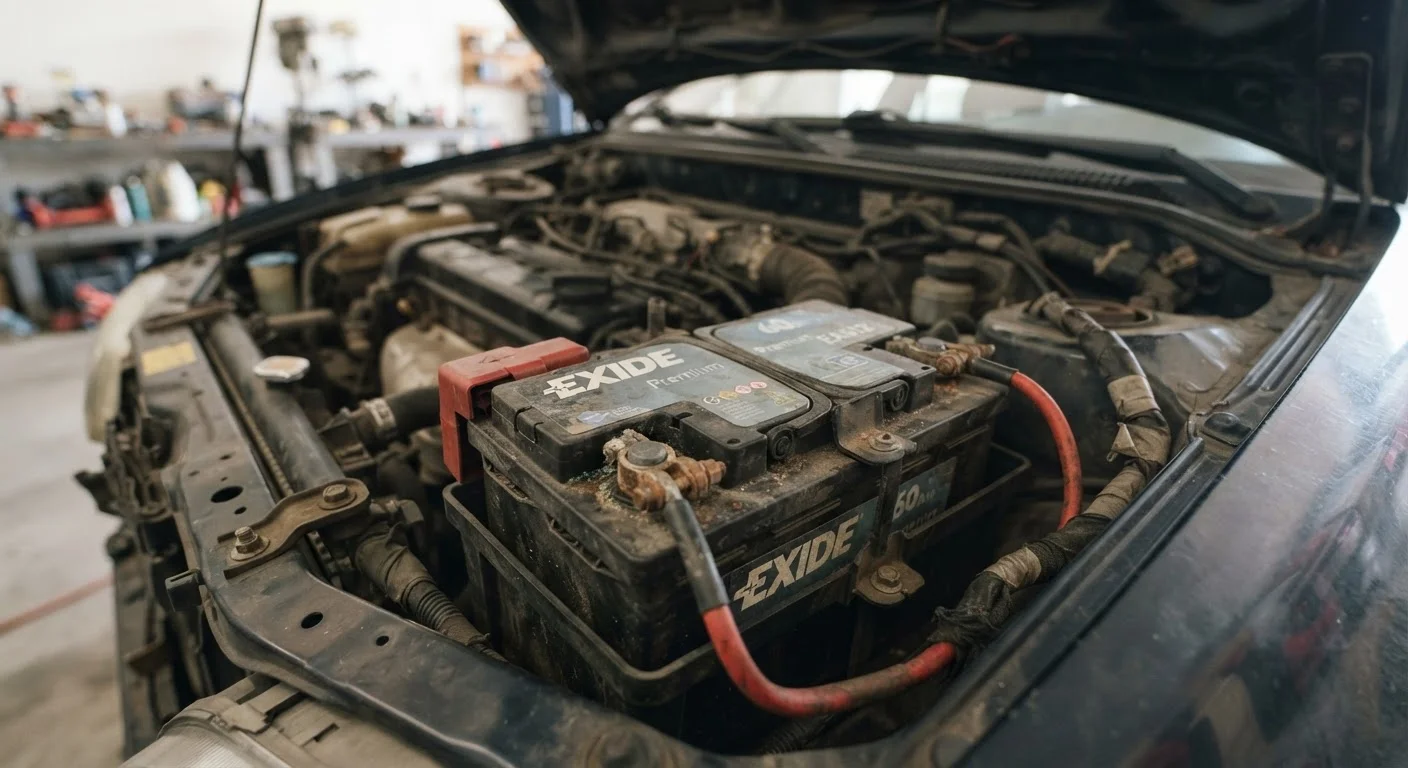
Pop the hood and take a look at the battery periodically. White or bluish powdery buildup around the terminals - known as corrosion - can impede the electrical connection and accelerate battery wear. A swollen or bloated battery case is a more urgent sign: it typically indicates the battery has been exposed to excessive heat, causing internal damage. A visibly swollen battery should be replaced promptly and handled carefully. Terminal corrosion can sometimes be cleaned by a mechanic, but it often signals the battery is already well past its prime.
A swollen battery case is a serious physical warning sign that warrants prompt replacement.
The Battery Is Three or More Years Old
Age is a reliable predictor of battery risk even when no obvious symptoms have appeared yet. After three years, it's worth having your battery tested annually. After five years, most automotive technicians consider proactive replacement a reasonable precaution regardless of test results, since internal degradation isn't always detectable until the battery fails under load. Knowing your battery's age - usually printed on a sticker on the battery itself - is a simple piece of information that can prevent an inconvenient breakdown.
After three years, annual battery testing is a straightforward precaution that most drivers overlook.
What to Do If You Spot These Signs
If two or more of these symptoms show up together, treat it as a clear signal to get your battery tested - don't wait for a complete failure. Most auto shops and many auto parts retailers offer free or low-cost load testing, which measures how well your battery holds a charge under real operating conditions. A voltage reading alone doesn't tell the full story; load testing does.
Get a Load Test, Not Just a Voltage Check
A resting voltage reading can look normal even when a battery is close to failure. A load test simulates real starting conditions and gives a far more accurate picture of remaining capacity. Ask a technician to perform a load test rather than a simple voltage check - it takes only a few minutes and delivers much more useful information.
Keep in mind that some of these symptoms - particularly electrical glitches and warning lights - can also stem from a failing alternator or loose connections rather than the battery itself. A technician can quickly distinguish between the two. For a broader look at what your dashboard indicators might be telling you, see our guide to decoding your car's warning lights. Pairing timely battery checks with consistent maintenance habits is the most reliable way to avoid expensive, avoidable repairs.