

Key Takeaways
Summary
18 items · 20-45 minutes
Why the Paper Trail Matters
Car ownership comes with a surprising amount of paperwork - and letting it pile up unorganized (or go missing entirely) can create real problems. Whether you're pulled over, filing an insurance claim, selling the vehicle, or disputing a repair bill, the right document at the right moment can make the difference between a smooth resolution and a stressful ordeal.
This checklist is designed to help you audit what you already have, identify what's missing, and set up a simple system to keep everything accessible. Think of it as building a file that protects your rights and your investment. For a broader look at staying on top of ownership duties year-round, see our annual car ownership checklist.
In-Vehicle Documents (Keep in the Car)
At-Home Secure Storage
Maintenance and Service Records
Warranty and Extended Coverage
What Goes in Your Glove Box vs. a Safe at Home
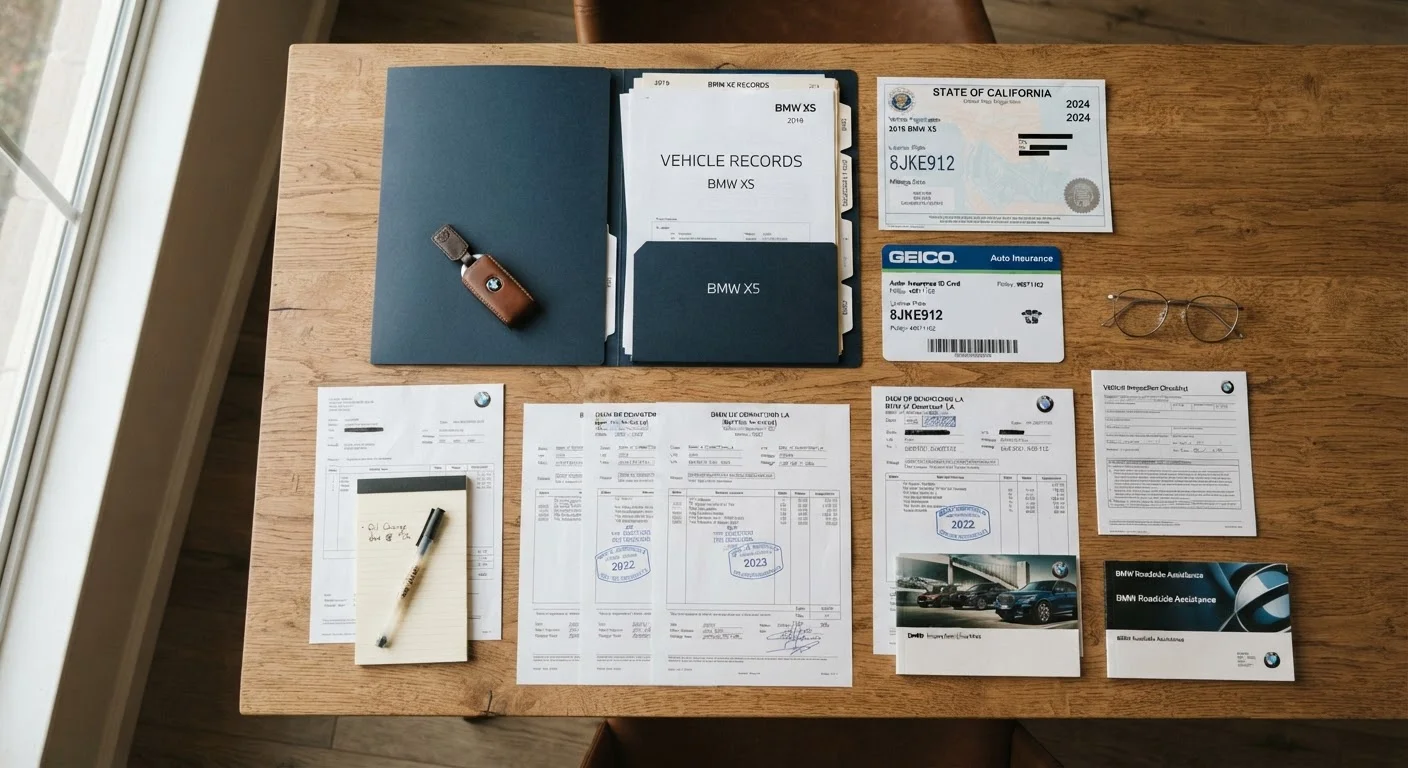
Not every document belongs in the car. Your vehicle title, for instance, is a legal instrument proving ownership - if the car is stolen or broken into, losing it creates significant extra hassle. The rule of thumb: keep documents you may need at roadside in the vehicle, and documents tied to ownership and financial agreements at home in a secure location.
Fireproof document box or home safe
Secure storage for your title, purchase agreement, and loan documents - protects against fire, theft, and water damage.
Dedicated folder or accordion file
Keeps in-vehicle documents - registration, insurance card, roadside assistance info - organized and easy to locate quickly.
Digital document scanner or phone scanning app
Creates backup copies of key documents that can be stored securely in cloud storage or emailed to yourself for remote access.
Simple spreadsheet or notebook
Logs maintenance history by date and mileage, making it easy to track service intervals and share records with mechanics or buyers.
Maintenance records deserve special attention. A well-kept log of oil changes, tire rotations, and major repairs does more than help you stay on schedule - it can be persuasive evidence during a warranty dispute and a selling point when you eventually transfer ownership. Our guide on keeping a car maintenance log walks through exactly what to record and how to organize it effectively.
Don't Store Your Title in the Vehicle
Leaving your vehicle title in the glove box is a common mistake. If your car is stolen, a thief in possession of the title may be able to transfer ownership fraudulently. Keep the title at home in a secure location and only bring it out when conducting a sale or transfer. If you've lost your title, contact your state's motor vehicle agency to request a duplicate.
If you have a loan or lease, review those documents periodically. They spell out your obligations around insurance minimums, mileage limits, and modification restrictions - details that are easy to forget but costly to violate. For general maintenance guidance that can help you stay within lease-friendly upkeep standards, the Car Maintenance hub is a useful reference point.