

Key Takeaways
What a Maintenance Log Actually Is
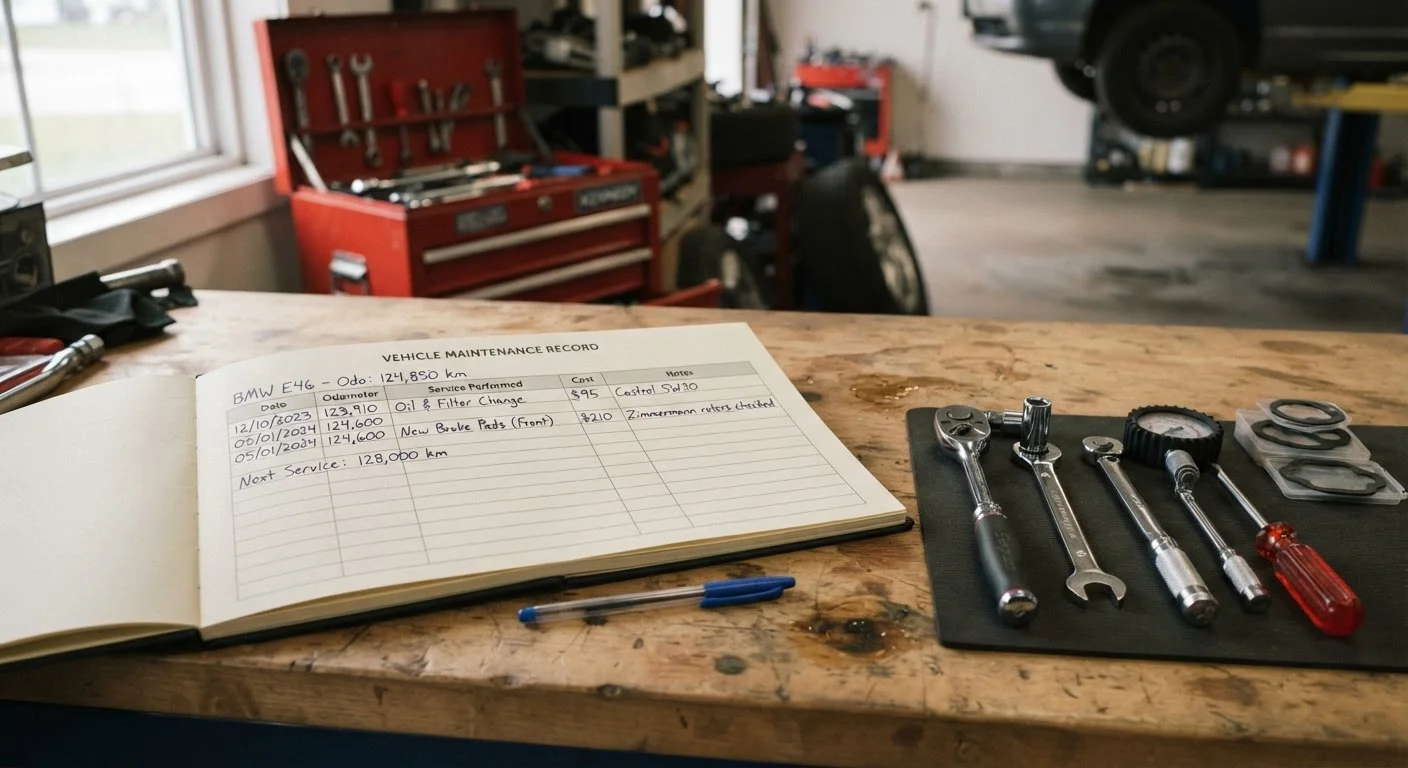
A car maintenance log is a running record of every service, inspection, and repair performed on your vehicle. It doesn't need to be elaborate. At its core, it's a dated list of what was done, when it was done, how many miles were on the odometer, what it cost, and who performed the work.
Some owners keep a small spiral notebook in the glove box. Others use a spreadsheet or a dedicated app. The format is far less important than the habit. What matters is that the record is consistent, accurate, and easy to retrieve when you need it - whether that's at the shop, during a resale negotiation, or when filing a warranty or insurance claim. See what documents every driver should keep on hand for a broader picture of the records worth maintaining.
Best Practices for Keeping Your Log
The difference between a log that helps you and one that collects dust comes down to a handful of reliable habits.
Record every service entry at the time of service, not later from memory.
Memory is unreliable, especially for routine tasks. Logging immediately while you have the receipt in hand ensures accuracy and prevents gaps that undermine the log's usefulness.
Include the odometer reading alongside the date for every entry.
Many service intervals are mileage-based, not calendar-based. Without mileage, you lose the ability to anticipate when the next service is actually due, which is the whole point of the log.
Keep receipts or photos of receipts attached or linked to your log entries.
A log entry you wrote yourself is useful, but a matching receipt from a shop adds a layer of third-party verification that matters during resale or warranty disputes.
Note who performed the work, including self-performed maintenance.
Recording whether work was done by a dealership, independent shop, or yourself preserves the full history and helps identify if recurring issues trace back to a particular service provider or DIY task.
Review the log before every service appointment.
Walking into a shop with a clear picture of recent service history lets you decline unnecessary repeat services and ask informed questions about what's actually due. It also builds maintenance habits that prevent expensive repairs.
Where the Log Pays Off Most
Keeping records is a low-effort task. The payoff, however, shows up in high-stakes moments.
Up to $500+
Potential resale premium for documented service history
Industry observers and used-car dealers widely note that verifiable maintenance records can support a meaningfully higher asking price compared to identical vehicles with no documentation.
1 in 3
Drivers who cannot locate their last service date
Consumer surveys on vehicle ownership habits consistently find that a significant share of drivers have no reliable record of when routine services were last performed.
At resale: A documented service history gives prospective buyers confidence that the vehicle wasn't neglected. In private-party sales especially, a complete log can support your asking price and differentiate your car from comparable listings with no documentation.
At the shop: Arriving with a log means you know exactly when the last oil change, tire rotation, or brake inspection happened. That knowledge protects you from being upsold services you just had done - and helps you ask specific questions rather than relying on the shop's records alone.
Under warranty: Most factory and extended warranties require that maintenance be performed at manufacturer-specified intervals. If a warranty claim is disputed, your log is evidence that you held up your end of the agreement.
For a structured view of what to check and when, the seasonal car maintenance checklist pairs well with any log you keep.
Making the Habit Stick
The most common reason maintenance logs fail is timing - owners mean to update the record but forget between the parking lot and the front door. Two strategies work consistently well: update the log before you start the car after any service, or photograph the receipt immediately and file it digitally the same day.
Pair your log reviews with moments you already do, like your annual registration renewal or a seasonal tire swap. The annual car ownership checklist is a natural anchor for this kind of review. And if you want to understand how consistent recordkeeping fits into broader vehicle longevity, the complete picture on car maintenance covers the full spectrum of upkeep habits worth building.
Digital Apps vs. Paper: Both Work
Apps designed for vehicle maintenance tracking can auto-calculate next service intervals and send reminders, which is genuinely useful. That said, a paper notebook kept in the glove box has zero battery life requirements and is always accessible. If you already use a spreadsheet for other tracking, adding a vehicle tab costs nothing. Choose the format you'll actually maintain - not the one that seems most sophisticated.