

Key Takeaways
Road Pavement Markings
Road pavement markings are painted lines, symbols, and patterns applied to the road surface to guide, warn, and regulate drivers. Each color, style, and pattern has a specific meaning defined by the Manual on Uniform Traffic Control Devices (MUTCD), the federal standard that governs road markings across the United States. Understanding these markings is a legal and safety requirement for all licensed drivers.
The MUTCD is published by the Federal Highway Administration (FHWA) and is adopted - sometimes with state-specific additions - by all 50 states as the authoritative reference for traffic control devices, including pavement markings.
Color Is the First Signal: Yellow vs. White
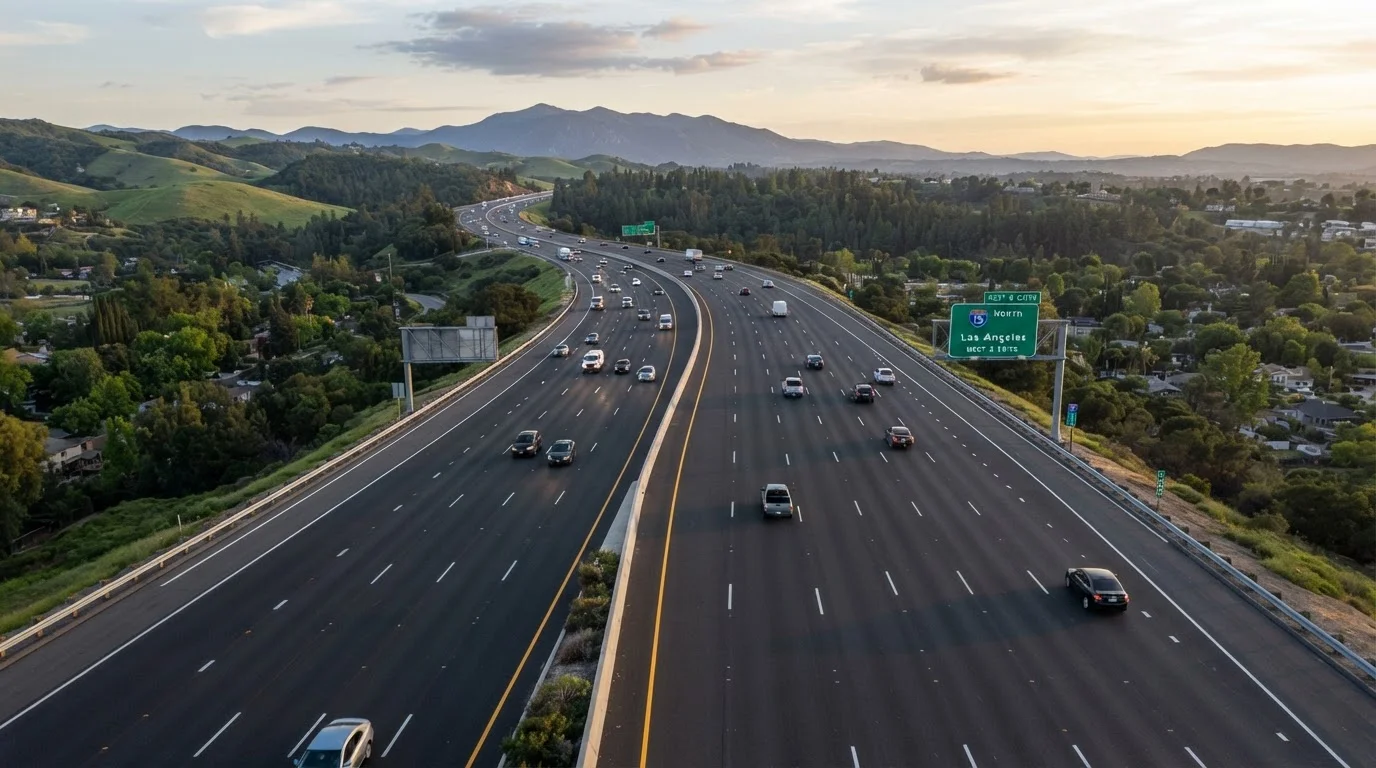
The most fundamental rule of road markings is color. Yellow lines always separate traffic moving in opposite directions. You'll find them at the center of two-way roads, in no-passing zones, and along the left edge of divided highways. White lines separate traffic moving in the same direction - think lane lines on a multi-lane highway or the edge line on the right side of any road.
This color distinction alone answers many common driver questions. If you're unsure whether a line relates to oncoming traffic or adjacent lanes traveling with you, start with the color.
State Variations Do Exist
While the MUTCD sets the national standard, individual states may have supplemental rules about specific markings. For example, some states explicitly permit left turns across double yellow lines to access private driveways while others restrict this. Always verify the rules in your specific state, particularly if you frequently drive in multiple states.
Solid vs. Dashed: The Permission Signal
Once you know the color, the line's style tells you whether a maneuver is permitted. The rule is consistent across yellow and white markings:
- Solid line: Do not cross. A solid yellow center line prohibits passing. A solid white line (such as at an intersection or gore area on a highway) means stay in your lane.
- Dashed line: Crossing is permitted when safe. Dashed yellow center lines mean passing is allowed if the road ahead is clear. Dashed white lines between lanes mean you may change lanes if traffic permits.
- Combination lines: A solid yellow line paired with a dashed yellow line means passing is allowed only from the side with the dashes. Drivers next to the solid line must not pass.
These distinctions are not suggestions - they reflect specific legal permissions and restrictions established by the MUTCD and adopted by state traffic codes.
~56%
Of fatal crashes occurring on two-lane roads
According to FHWA data, a disproportionate share of fatal roadway crashes occur on two-lane undivided roads, where yellow center line compliance is especially critical.
~1 in 3
Fatal crashes involving roadway departure
The FHWA estimates that roadway departure crashes - where a vehicle crosses an edge line or center line - account for roughly one-third of all traffic fatalities in the U.S.
Edge Lines, Turn Lanes, and Special Markings
Beyond center and lane lines, several other markings shape everyday driving decisions:
- White edge lines (fog lines): The solid white line along the right edge of the roadway defines the travel lane's outer boundary. Especially useful in low visibility or at night, these lines keep drivers from drifting onto the shoulder.
- Yellow left-edge lines: On divided highways or one-way roads, a yellow edge line on the left indicates the left boundary. Crossing it is prohibited.
- Two-way left-turn lanes: A center lane marked with double yellow dashed lines on each side is a shared left-turn lane. Drivers from either direction may use it to turn left, but it is never a travel or passing lane.
- Crosswalk and stop lines: White lines across the roadway mark pedestrian crosswalks and stop positions at intersections. Stopping beyond a stop line at a red light is a traffic violation in most jurisdictions.
- Bicycle lane lines: Solid white lines with accompanying bike symbols designate bike lanes. Motor vehicles may cross into a bike lane only to make a turn, and only within the designated dashed section near intersections.
Just as dashboard symbols communicate critical vehicle status - see our guide to warning lights for a breakdown - road markings communicate traffic rules you're expected to act on in real time.
Why These Markings Matter Beyond the Test
Many drivers learned road markings for their written license exam and haven't thought critically about them since. But misreading a line - or ignoring one - carries real consequences. Passing in a no-passing zone is among the most common causes of head-on collisions on two-lane rural roads. Drifting across edge lines contributes significantly to run-off-road crashes, particularly at night.
Refresh Your Knowledge Periodically
Traffic marking standards can be updated, and state DMVs occasionally revise how specific markings are applied locally. Reviewing your state's driver handbook every few years - especially if you've moved to a new state - ensures your understanding stays current and legally accurate.
Pavement markings also change in construction zones, where temporary orange markings may override the standard painted lines. Always follow the most recently applied markings in active work zones, even if older lines are still visible beneath them.
State DMV handbooks and the FHWA's publicly available MUTCD are reliable references if you want to review the specific rules for your state or look up an unfamiliar marking. When in doubt on the road, the safe default is to treat any solid line as a boundary you should not cross.