

Key Takeaways
Why Movement Beyond Formal Workouts Matters
Many Americans associate exercise with gym memberships, scheduled classes, or structured training plans. But public health research has consistently shown that the body responds to physical effort regardless of the setting or format. According to the U.S. Department of Health and Human Services, adults benefit from movement that raises their heart rate and challenges their muscles - and that movement can come from a wide range of daily and recreational activities.
This distinction matters because it makes physical activity more accessible. Not everyone has reliable access to a gym, a flexible schedule, or the financial means for fitness equipment. Understanding the full spectrum of movement that counts can help more people meet the physical activity guidelines for adults without overhauling their lives.
Below are eight forms of movement that contribute genuinely to health - each backed by evidence and worth integrating into your weekly routine.
Brisk Walking
Walking is one of the most studied forms of physical activity, and brisk walking - defined roughly as a pace that raises your breathing but still allows conversation - qualifies as moderate-intensity aerobic activity. Research links regular walking to improved cardiovascular health, better blood sugar regulation, and reduced all-cause mortality risk. It requires no equipment beyond supportive footwear and can be integrated into daily errands, lunch breaks, or commuting.
Brisk walking qualifies as moderate aerobic activity and requires nothing beyond supportive shoes.
Gardening and Yard Work
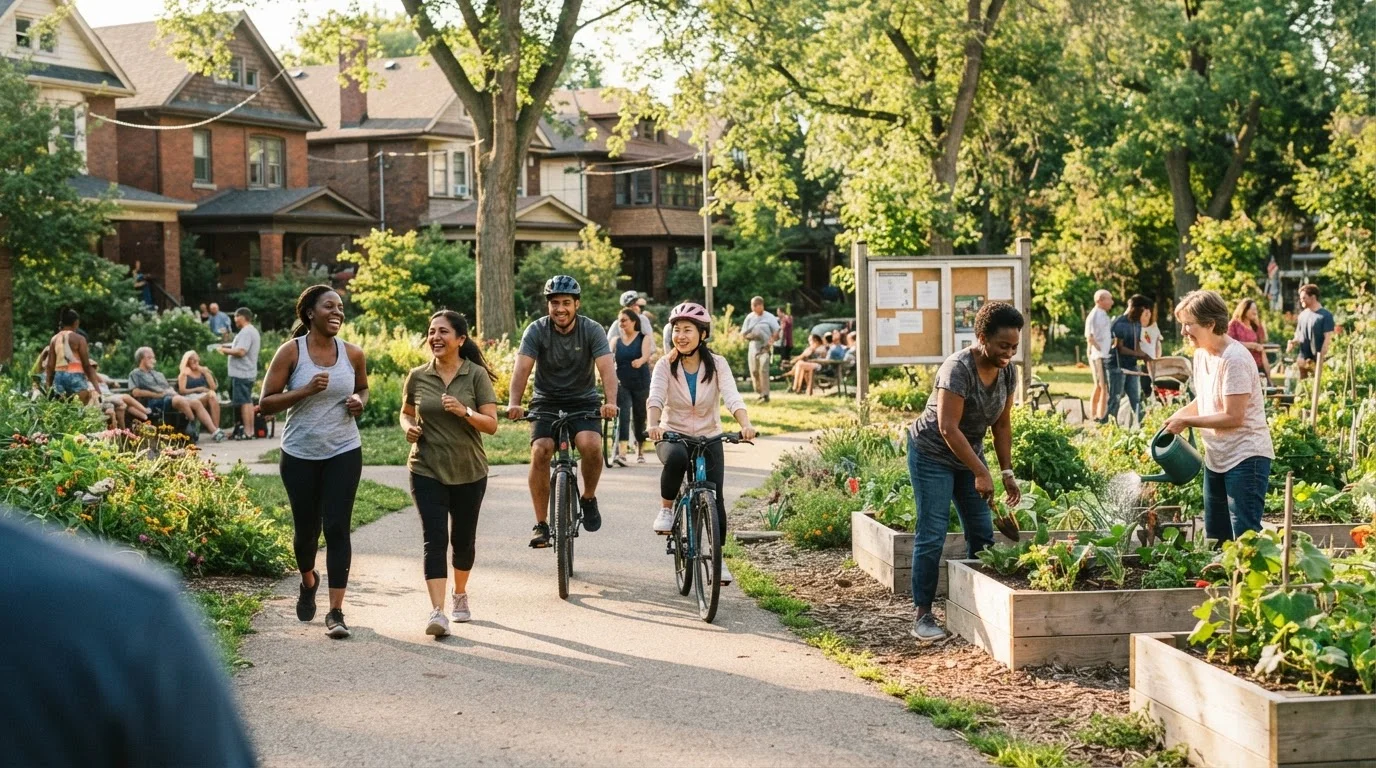
Digging, raking, mowing, and planting all engage major muscle groups and elevate heart rate into the moderate-intensity range. Gardening also involves squatting, lifting, and carrying - movements that build functional strength. Studies have associated regular gardening with lower stress levels and improved mood, adding a mental wellness dimension to the physical benefits.
Digging and raking engage major muscle groups while pushing heart rate into moderate-intensity territory.
Dancing
Whether it's social ballroom, Zumba, line dancing, or simply moving to music at home, dancing combines aerobic effort with coordination and balance training. Depending on intensity, it can qualify as moderate or vigorous activity. Research suggests dance-based movement also supports cognitive function and social connection, making it a particularly well-rounded option across age groups.
Dancing combines aerobic conditioning with balance, coordination, and meaningful social engagement.
Swimming and Water-Based Movement
Swimming laps is a well-recognized vigorous aerobic exercise, but water aerobics and recreational pool movement also count as moderate activity. Water provides natural resistance that challenges muscles without high joint impact - a meaningful advantage for people managing arthritis, recovering from injury, or seeking lower-impact options. The buoyancy effect makes it accessible across a wide fitness range.
Water's natural resistance builds muscular endurance while reducing joint stress significantly.
Cycling for Transportation or Recreation
Cycling - whether commuting to work, running errands, or riding recreationally - provides sustained aerobic conditioning and lower-body strengthening. Moderate cycling is roughly equivalent in cardiovascular benefit to brisk walking at the same effort level. It also substitutes motorized travel, compressing exercise into time that would otherwise be sedentary. Stationary cycling indoors offers the same cardiorespiratory benefit with fewer weather or safety variables.
Cycling for transportation turns commute time into aerobic conditioning without adding extra hours.
Active Play with Children
Chasing, kicking a ball, swimming at the beach, or even extended bouts at a playground generate meaningful physical effort for adults - not just children. These activities often reach moderate intensity without feeling like exercise. Beyond caloric expenditure, active play tends to improve mood and reinforces physical activity habits for both generations involved.
Active play with children frequently reaches moderate intensity while feeling nothing like a workout.
Yoga and Tai Chi
While typically lower in aerobic intensity than other entries on this list, yoga and tai chi develop flexibility, balance, and muscular endurance - components of fitness that structured cardio programs often neglect. Both practices have documented benefits for stress reduction, fall prevention in older adults, and joint health. For an in-depth look at how movement affects joint range and function, the distinction explored in mobility versus flexibility is worth understanding.
Yoga and tai chi build balance and joint health in ways that cardio-focused routines often overlook.
Household Chores Done with Effort
Vigorous vacuuming, scrubbing floors, washing windows, and carrying laundry all require sustained physical effort. When performed at a sustained pace, these tasks can reach moderate aerobic intensity. Research on NEAT - Non-Exercise Activity Thermogenesis - shows that cumulative physical effort from daily tasks contributes meaningfully to overall energy expenditure and metabolic health, particularly for people with sedentary desk jobs.
Sustained household effort contributes to NEAT - a measurable driver of metabolic health in sedentary adults.
Building a More Active Life
The common thread across all these movement forms is that effort and consistency matter more than location or equipment. If your weekly schedule is unpredictable, consider how building a flexible movement routine might help you stay active without relying on fixed gym slots.
Short Bouts Add Up Over the Day
You don't need continuous 30-minute sessions to gain health benefits from movement. Evidence supports accumulating activity in shorter increments - even 10-minute bouts spread across the day count toward your weekly totals. If a full workout isn't feasible, look for natural opportunities to move: a short walk at lunch, stairs instead of an elevator, or an active errand on foot.
Movement needs also shift meaningfully with age. If you're curious about how activity priorities evolve over time, our guide on fitness across every decade provides a useful long-view framework.
This article is for general informational and educational purposes only and does not constitute medical advice. Always consult a qualified healthcare professional before starting or significantly changing a physical activity routine, especially if you have an existing health condition.