

Key Takeaways
Low barrier to entry and wide accessibility
Apps are available around the clock and don't require a referral, waitlist, or insurance. This makes them accessible to people who face financial, geographic, or stigma-related obstacles to formal care.
Supports consistent daily habit formation
Structured daily prompts, reminders, and progress tracking can help users build and maintain small wellness habits, such as brief mindfulness practice or mood logging, more reliably than unassisted intention.
Delivers evidence-based skill practice for some users
A subset of apps incorporate CBT, dialectical behavior therapy (DBT), or mindfulness techniques that have demonstrated effectiveness in peer-reviewed research for mild to moderate anxiety and stress.
Private and stigma-reducing environment
For people who feel uncomfortable seeking in-person help, an app offers a private entry point to mental wellness tools without social exposure or judgment.
Useful for tracking patterns over time
Mood and symptom tracking features can help users notice emotional trends or triggers they might not recognize otherwise, which can also be useful context to share with a therapist or doctor.
Most apps lack rigorous clinical validation
The large majority of commercially available mental wellness apps have not been tested in randomized controlled trials. Claims on app store pages frequently exceed what the underlying evidence supports.
Cannot replace the therapeutic relationship
A licensed therapist adapts in real time to a client's history, responses, and risk factors. Apps operate on algorithms and preset content, which cannot replicate the responsiveness of a trained professional.
Significant variation in data privacy practices
Mental health data is among the most sensitive personal information. Privacy policies for wellness apps vary widely, and some platforms share or sell user data in ways that may not be immediately obvious.
Engagement design may conflict with genuine well-being
Features like streaks, badges, and push notifications are designed to maximize app opens, not necessarily to support lasting mental health improvement - a distinction that matters when evaluating whether an app is actually helping.
Risk of substituting apps for necessary professional care
People with moderate-to-severe depression, trauma, or other clinical conditions may delay or avoid seeking professional help if they believe an app is adequately addressing their needs - a potentially serious consequence.
Feature complexity can create friction and abandonment
Apps with extensive onboarding, multiple modules, and overlapping tools can overwhelm users, leading to disengagement before any meaningful benefit is achieved.
Our Verdict
Self-help mental wellness apps offer real value for building daily habits, practicing evidence-based skills like cognitive restructuring or mindfulness, and reducing the friction of accessing support. However, their limitations are equally real: inconsistent clinical validation, potential for over-reliance, and an inability to provide the responsive, personalized care a licensed professional offers. They occupy a meaningful but bounded role in mental wellness.
Best suited for adults managing everyday stress, mild anxiety, or low-level mood concerns who want structured self-care tools - and who view apps as a complement, not a replacement, to professional mental health support when needed.
What Self-Help Mental Wellness Apps Actually Are
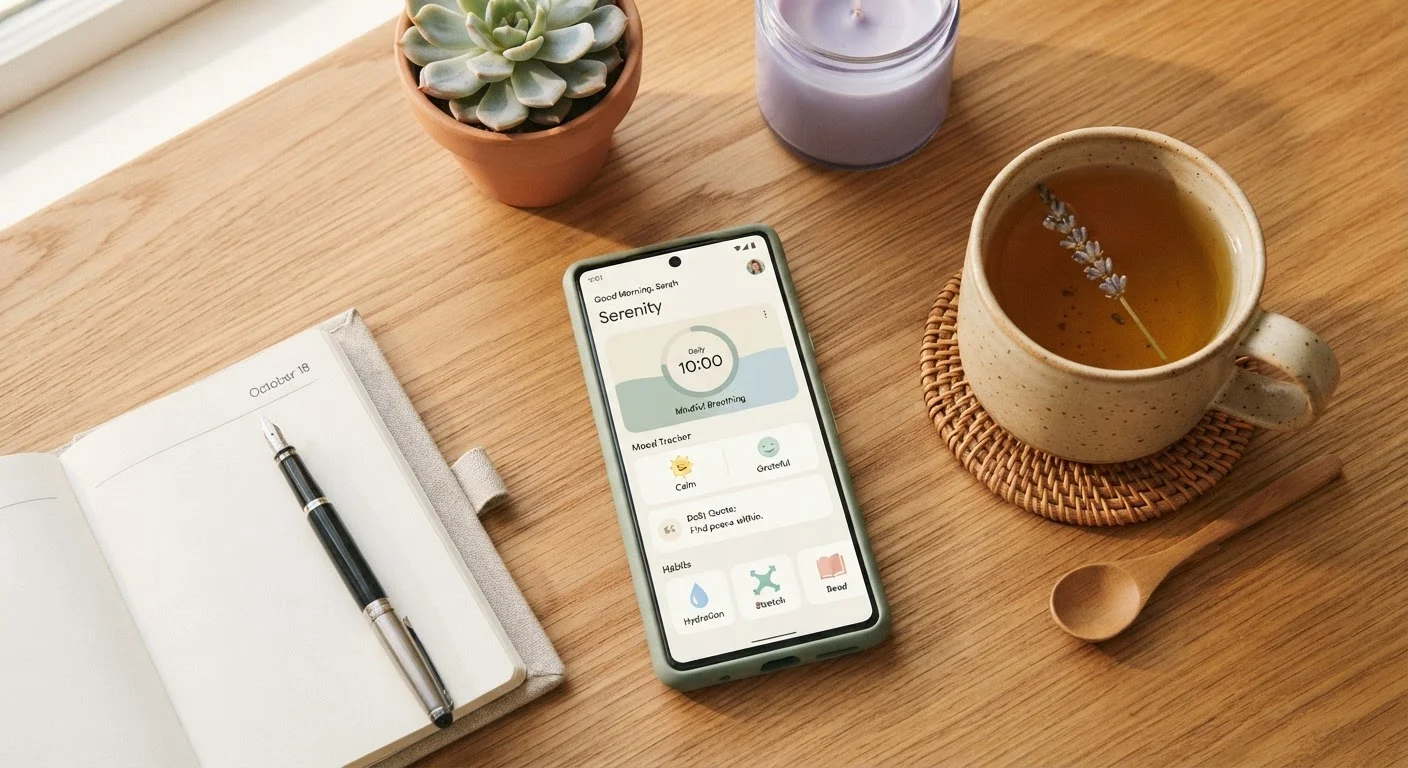
Mental wellness apps are smartphone or tablet-based tools designed to support psychological well-being outside of formal clinical settings. They typically offer features like guided meditation, mood tracking, cognitive behavioral therapy (CBT) exercises, breathing techniques, sleep support, and journaling prompts.
The category spans a wide spectrum. Some apps are developed in partnership with clinical researchers and have published peer-reviewed evidence behind them. Others are built primarily around user engagement and have little scientific validation. Understanding where a particular app falls on that spectrum is one of the most important things a user can do before committing to one. The relationship between mindfulness and meditation is a useful example: while both concepts appear frequently in these apps, they are distinct practices with different mechanisms and supporting research.
This article is for general informational purposes only and is not a substitute for professional mental health advice, diagnosis, or treatment.
The Real Advantages
There are genuine, documented reasons why millions of people find these tools useful.
Low barrier to entry and wide accessibility
Apps are available around the clock and don't require a referral, waitlist, or insurance. This makes them accessible to people who face financial, geographic, or stigma-related obstacles to formal care.
Supports consistent daily habit formation
Structured daily prompts, reminders, and progress tracking can help users build and maintain small wellness habits, such as brief mindfulness practice or mood logging, more reliably than unassisted intention.
Delivers evidence-based skill practice for some users
A subset of apps incorporate CBT, dialectical behavior therapy (DBT), or mindfulness techniques that have demonstrated effectiveness in peer-reviewed research for mild to moderate anxiety and stress.
Private and stigma-reducing environment
For people who feel uncomfortable seeking in-person help, an app offers a private entry point to mental wellness tools without social exposure or judgment.
Useful for tracking patterns over time
Mood and symptom tracking features can help users notice emotional trends or triggers they might not recognize otherwise, which can also be useful context to share with a therapist or doctor.
Accessibility is perhaps the strongest argument for mental health apps. Cost, geography, stigma, and waitlists create real obstacles for many people seeking professional support. An app can offer a structured, private starting point that doesn't require an appointment or insurance coverage. For someone building a daily mental health routine, a well-designed app can provide consistent prompts and low-friction habit reinforcement.
Apps also offer something static resources like books or articles can't easily replicate: interactivity and personalization. Mood tracking over time can surface patterns a person might not recognize on their own. Some apps deliver CBT-based exercises that have been studied and found to reduce symptoms of mild to moderate anxiety and depression in specific populations - though results vary and are not guaranteed for any individual.
10,000+
Mental health apps available in major app stores
Research published in health informatics journals has estimated tens of thousands of mental health-related apps exist across platforms, with clinical validation available for only a small fraction.
~20%
Adults in the U.S. experiencing a mental illness annually
According to the National Institute of Mental Health, roughly one in five U.S. adults experiences a mental illness in a given year, highlighting the scale of unmet need that apps are often positioned to address.
The Honest Disadvantages
The limitations of mental wellness apps deserve equal attention - and they are significant.
Most apps lack rigorous clinical validation
The large majority of commercially available mental wellness apps have not been tested in randomized controlled trials. Claims on app store pages frequently exceed what the underlying evidence supports.
Cannot replace the therapeutic relationship
A licensed therapist adapts in real time to a client's history, responses, and risk factors. Apps operate on algorithms and preset content, which cannot replicate the responsiveness of a trained professional.
Significant variation in data privacy practices
Mental health data is among the most sensitive personal information. Privacy policies for wellness apps vary widely, and some platforms share or sell user data in ways that may not be immediately obvious.
Engagement design may conflict with genuine well-being
Features like streaks, badges, and push notifications are designed to maximize app opens, not necessarily to support lasting mental health improvement - a distinction that matters when evaluating whether an app is actually helping.
Risk of substituting apps for necessary professional care
People with moderate-to-severe depression, trauma, or other clinical conditions may delay or avoid seeking professional help if they believe an app is adequately addressing their needs - a potentially serious consequence.
Feature complexity can create friction and abandonment
Apps with extensive onboarding, multiple modules, and overlapping tools can overwhelm users, leading to disengagement before any meaningful benefit is achieved.
The clinical evidence gap is substantial. A review published in research literature has found that the vast majority of commercially available mental health apps have not been subject to rigorous randomized controlled trials. Marketing language often outpaces the supporting science. This makes it genuinely difficult for a non-specialist consumer to evaluate whether an app's claims are grounded in evidence.
There is also the question of what apps fundamentally cannot do. They cannot assess risk, respond to crisis, adjust recommendations based on clinical judgment, or provide the therapeutic relationship that research consistently identifies as a core mechanism of effective mental health care. For anyone navigating more serious mental health concerns, professional support - as outlined in our overview of therapy, counseling, and psychiatry - is not replaceable by an app.
Finally, the engagement design of many apps is not always aligned with user well-being. Streaks, notifications, and gamification elements are built to drive daily opens, which is not the same as driving meaningful mental health outcomes. As explored in our look at feature overload, more options don't always mean better results.
A Note on Crisis Situations
Mental wellness apps are not designed for mental health crises. If you or someone you know is experiencing a mental health emergency, thoughts of self-harm, or suicidal ideation, contact the 988 Suicide and Crisis Lifeline by calling or texting 988, or go to your nearest emergency room. No app is a substitute for immediate professional crisis support.
How to Use Apps Wisely
If you decide to use a mental wellness app, a few practical principles can help you get value from it without overstating what it can deliver.
- Look for evidence disclosures. Reputable apps will reference the specific frameworks or studies behind their approach. Be skeptical of vague claims about being "clinically proven."
- Review the privacy policy. Mental health data is sensitive. Understand what the app collects, how it's stored, and whether it's shared with third parties before entering personal information.
- Treat it as one layer, not the whole structure. Apps work best when paired with other supports: social connection (which research shows matters significantly), physical activity, and where appropriate, professional care.
- Set a usage intention. Decide what you want from the app - sleep support, daily mood check-ins, breathing exercises - and evaluate periodically whether it's delivering that.
If you are experiencing symptoms that interfere significantly with daily life, or if you have any concerns about your mental health, please consult a licensed mental health professional. Apps are not equipped to address clinical needs.
This article provides general health information and education only. It is not medical advice and should not replace consultation with a qualified healthcare provider.