

Key Takeaways
Macronutrients
Macronutrients are the three main categories of nutrients - carbohydrates, protein, and fat - that your body needs in relatively large amounts to function. They provide the energy (measured in calories) that powers everything from breathing to exercise. Unlike vitamins and minerals, which are needed in much smaller quantities, macronutrients form the structural and fuel foundation of your diet.
Each macronutrient yields a specific caloric value per gram: carbohydrates and protein each provide 4 calories per gram, while fat provides 9 calories per gram.
Why Macronutrients Matter
Every time you eat, you are delivering a combination of carbohydrates, protein, and fat to your body. These three macronutrients are not just calorie counters - they each perform specific, irreplaceable roles that keep your body running. Understanding what each one does helps you make more intentional food choices without falling into the trap of eliminating entire food groups.
For a broader look at how macros fit into overall daily eating, see building a balanced plate. And if you want to understand how macronutrients differ from the vitamins and minerals your body also depends on, micronutrients explained is a useful companion reference.
45-65%
Recommended daily calories from carbohydrates
According to the Dietary Guidelines for Americans, carbohydrates should make up roughly 45-65% of total daily caloric intake for most adults.
10-35%
Recommended daily calories from protein
The Dietary Reference Intakes established by the National Academies of Medicine suggest protein should account for 10-35% of daily calories for adults.
20-35%
Recommended daily calories from fat
Current U.S. dietary guidelines recommend that fat comprise approximately 20-35% of total daily caloric intake for healthy adults.
Carbohydrates: Your Body's Primary Fuel
Carbohydrates are broken down into glucose, which cells use as their preferred energy source - particularly the brain, which relies almost exclusively on glucose to function. When you eat carbs, your digestive system converts them into glucose that enters the bloodstream. Your body then uses insulin to shuttle that glucose into cells for immediate energy or stores it in the liver and muscles as glycogen for later use.
Not all carbohydrates behave the same way. Simple carbohydrates - found in table sugar and many processed foods - are digested quickly, causing faster rises in blood sugar. Complex carbohydrates - found in whole grains, legumes, and vegetables - digest more slowly, providing more sustained energy and delivering fiber, which supports digestive health. Fiber also plays a role in cholesterol regulation and helping you feel full after meals.
Cutting carbohydrates drastically can leave you feeling fatigued, irritable, and mentally foggy, which reflects how central they are to normal body function.
Protein: The Body's Builder and Repairer
Protein is made up of amino acids - often described as the building blocks of the body. Your body uses amino acids to construct and repair tissues including muscle, skin, hair, nails, and internal organs. Protein also plays a critical role in producing enzymes (which drive chemical reactions), hormones (such as insulin), and antibodies that support immune function.
Of the 20 amino acids the body uses, nine are considered essential - meaning your body cannot make them on its own and must obtain them through food. Animal-based foods such as meat, poultry, fish, eggs, and dairy typically supply all nine essential amino acids in one source, earning the label "complete proteins." Many plant foods are lower in one or more essential amino acids, but eating a varied diet of legumes, grains, nuts, and seeds throughout the day reliably meets protein needs for most people.
Protein is also notably satiating - it takes longer to digest than simple carbohydrates, which can help regulate appetite over the course of a day.
A runner fuels up with oatmeal and a banana before a morning race.
Someone recovering from surgery is advised to eat adequate protein to support wound healing.
A salad with colorful vegetables is dressed with olive oil and topped with sliced avocado.
A person who skips dietary fat entirely finds they feel cold, experience dry skin, and notice hormonal changes.
Fat: Essential, Not the Enemy
Dietary fat has a complicated reputation, but it is a fundamental macronutrient your body cannot do without. Fat supports the absorption of fat-soluble vitamins - A, D, E, and K - which means eating vegetables alongside a small amount of fat actually improves how well your body accesses certain nutrients. Fat also insulates and protects organs, contributes to cell membrane integrity, and is a key raw material for producing hormones including estrogen and testosterone.
The brain is roughly 60% fat by dry weight, making dietary fat critical for neurological function throughout life. Fat also serves as a dense, long-lasting energy reserve - particularly useful during prolonged activity when glycogen stores run low.
Type matters considerably. Saturated and unsaturated fats differ in structure and how they affect cardiovascular health markers. Current dietary guidance generally encourages prioritizing unsaturated fats (found in foods like olive oil, fatty fish, and avocado) and limiting saturated fat, while avoiding trans fats where possible.
Prioritize Whole-Food Sources of Each Macro
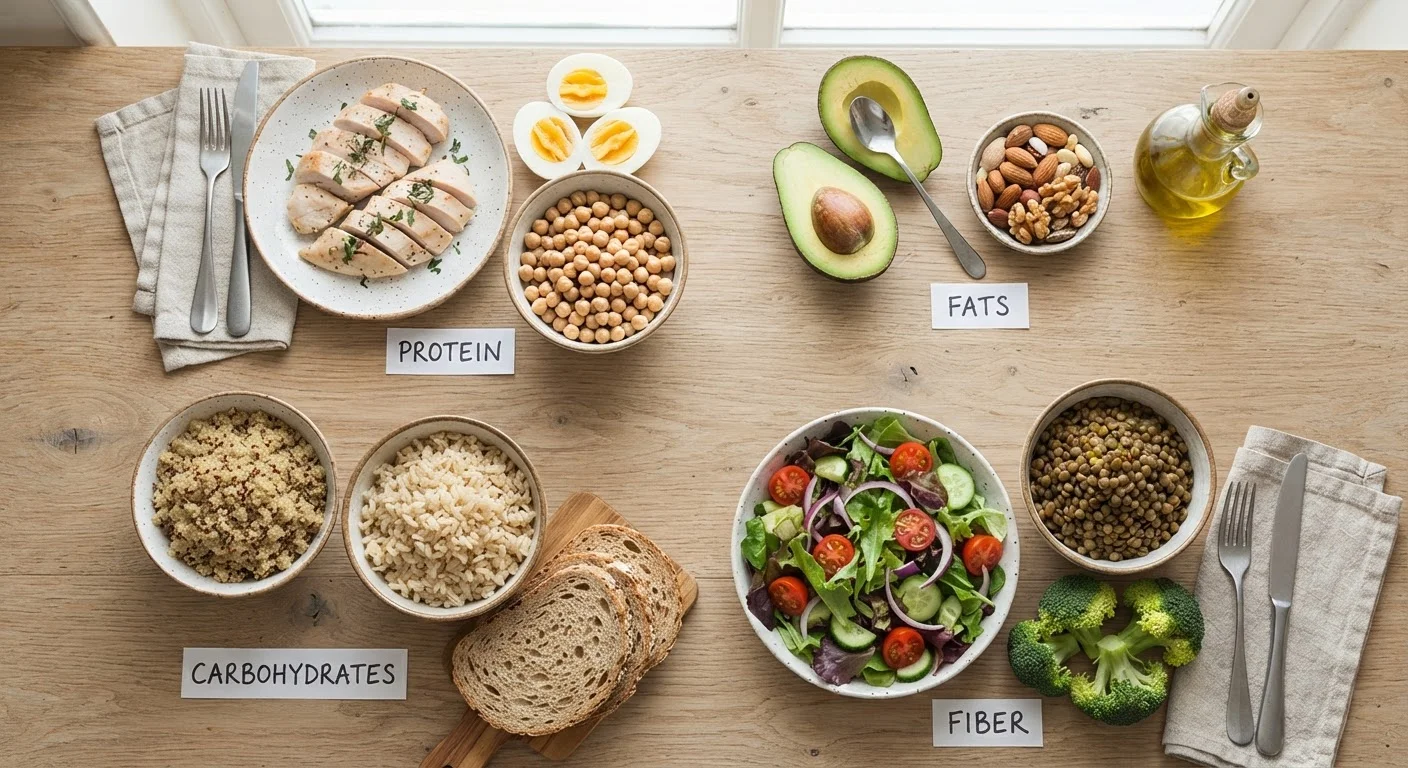
When choosing carbohydrates, opt for whole grains, legumes, and fruit over refined starches and added sugars. For protein, lean meats, fish, eggs, and plant-based options like lentils and tofu offer additional vitamins and minerals alongside their amino acids. For fat, foods like nuts, seeds, avocado, and olive oil provide unsaturated fats that most nutrition research associates with better long-term health outcomes.
How the Three Work Together
Macronutrients rarely act in isolation - your body uses them as a coordinated system. A meal containing all three tends to digest more slowly than a carbohydrate-only meal, producing a more gradual energy release. The presence of fat and protein alongside carbohydrates moderates how quickly glucose enters the bloodstream, which is one reason whole meals tend to provide more sustained energy than snacks built around refined sugar alone.
This interplay also explains why very low-fat or very low-carbohydrate diets often require careful planning to avoid downstream effects on energy, mood, hormone balance, and nutrient absorption. Eating for energy covers practical strategies for putting this balance to work in everyday meals.
This article is for general informational and educational purposes only and is not a substitute for professional medical or nutritional advice. Consult a qualified healthcare provider or registered dietitian before making significant changes to your diet.