

Key Takeaways
Why the Nutrition Facts Label Matters
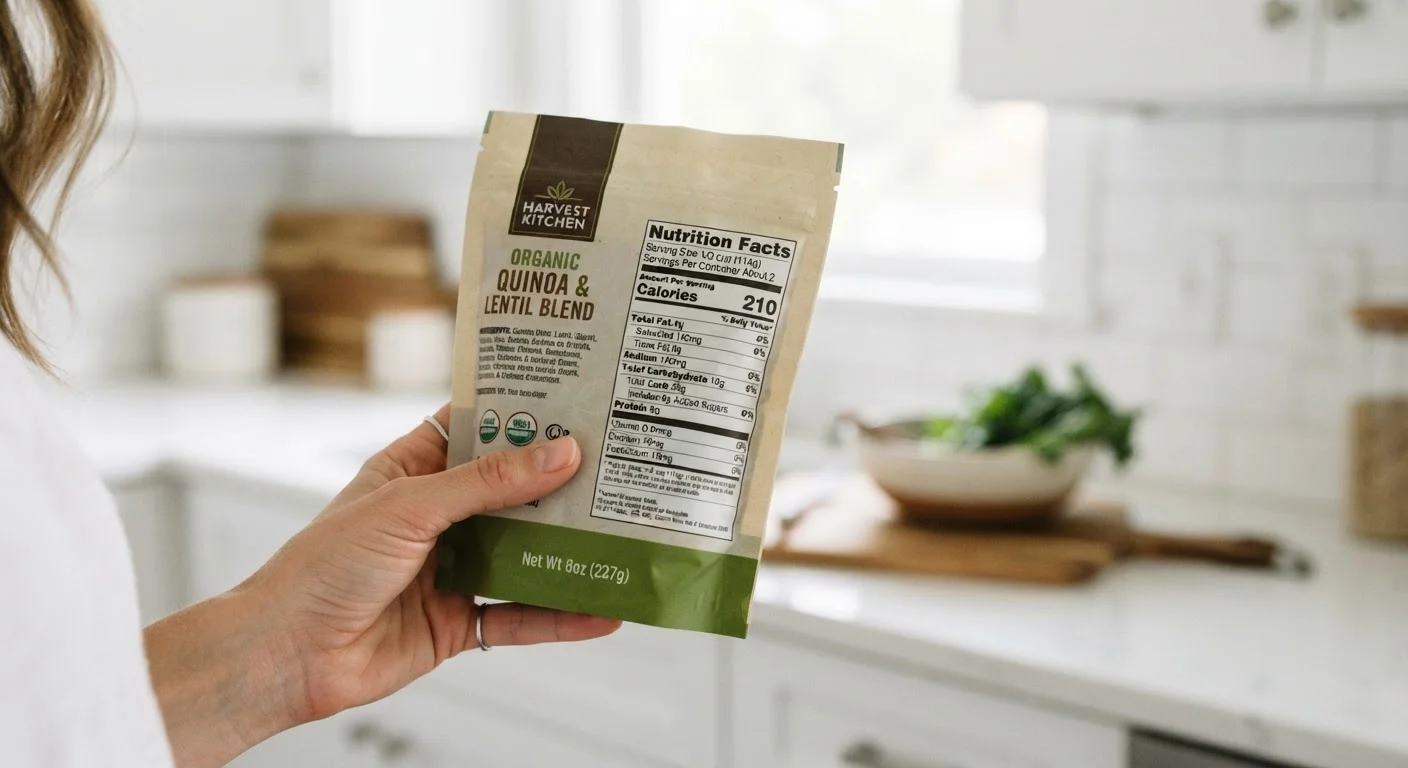
The U.S. Nutrition Facts label is a federally regulated information panel required on most packaged foods by the Food and Drug Administration (FDA). Unlike front-of-package marketing language, the label follows a standardized format designed to give consumers consistent, comparable data. Learning to read it systematically transforms it from a wall of numbers into a practical decision-making tool.
Understanding labels is one component of broader nutritional literacy. If you're new to thinking about diet as a whole, our guide on balanced nutrition for beginners offers a helpful starting framework. And if you've encountered popular nutrition claims that didn't quite add up, common nutrition myths Americans still believe addresses many of them directly.
This Is General Nutrition Education
The information in this article is intended for general educational purposes and does not constitute medical or dietary advice tailored to any individual. Nutritional needs vary based on age, health status, and other factors. Consult a registered dietitian or qualified healthcare provider for guidance specific to your situation.
The steps below walk through each section of a standard U.S. Nutrition Facts label in the order it appears, from top to bottom.
What you will need
Step-by-Step: Reading Every Section of the Label
Don't Stop at the Front of the Package
Terms like 'natural,' 'light,' 'multigrain,' and 'low-fat' appear on packaging but are not strictly regulated the same way the Nutrition Facts panel is. These phrases can be misleading. Always flip the package and consult the label directly. See our article on foods often labeled healthy for a deeper look at common marketing claims.
Find the Serving Size and Servings Per Container
The label's very first line after the title is Serving Size, followed by Servings Per Container. Every number on the rest of the label - calories, grams of fat, milligrams of sodium - refers to one serving, not the entire package.
If a bag of chips lists a serving size as 1 oz (about 28 g) and contains 3.5 servings, eating the whole bag means multiplying every value by 3.5. This single step prevents the most common label-reading mistake.
Read the Calorie Count
Calories appear in large, bold type directly below the serving information. This figure tells you how much energy one serving provides. For context, calorie counting has real uses and real limits - it's a useful data point, not the only measure of a food's value.
Calorie density matters: 200 calories from almonds behaves differently in the body than 200 calories from a sweetened beverage, even though the number is identical.
Examine Fats: Total, Saturated, and Trans
Total Fat includes all fat types. Indented beneath it are Saturated Fat and Trans Fat, which current dietary guidance recommends limiting. Unsaturated fats - listed separately as monounsaturated and polyunsaturated - are generally considered beneficial at appropriate intake levels.
For a fuller explanation of how these fat types differ, see our guide on saturated vs. unsaturated fat.
Check Sodium, Cholesterol, and Carbohydrates
Sodium is measured in milligrams and is worth close attention - processed foods can contribute a significant portion of the daily recommended limit in a single serving. Cholesterol appears here as well, though current research has nuanced its relationship to cardiovascular health beyond simple limits.
Under Total Carbohydrate you'll find Dietary Fiber and Total Sugars, with Added Sugars listed separately beneath. Added sugars are those introduced during processing, distinct from sugars naturally present in fruit or dairy.
Review Protein and Key Micronutrients
Protein is listed in grams. The label does not currently require a % DV for protein unless the product makes a protein-related claim. Below protein, the label displays four nutrients the FDA highlights as important for public health: Vitamin D, Calcium, Iron, and Potassium. These are shown with their % Daily Value, making it simple to gauge contribution to daily needs.
For those building meals around plant-based foods, protein content on labels pairs well with resources like our plant-based protein reference.
Understand the % Daily Value Column
The right-hand column shows % Daily Value (% DV) for each nutrient. These percentages are calculated based on a 2,000-calorie-per-day reference diet set by the FDA - a standard benchmark, not a personal prescription. Your actual needs may differ.
Use % DV to compare products quickly and to gauge whether a food is a meaningful source of a nutrient or a significant contributor to something you want to limit.
Read the Ingredients List
The ingredients list appears below or beside the Nutrition Facts panel and is regulated separately. Ingredients are listed in descending order by weight - the first ingredient is the most abundant. A product with 'whole wheat flour' listed first is substantially different from one where it appears fifth after several refined ingredients.
Short ingredient lists with recognizable items generally indicate less processing. For context on why that distinction matters, see our piece on whole foods vs. processed foods.
Use % Daily Value as a Quick Compass
The FDA's general guidance: 5% DV or less is considered low for a nutrient, while 20% DV or more is considered high. This rule of thumb works whether you're trying to get more of something (like fiber) or less of something (like sodium). It removes the need to do any math on the spot.
Once you've worked through these steps a few times, the process becomes second nature. The goal isn't to analyze every product exhaustively - it's to know which sections answer which questions so you can look up exactly what you need. For a broader view of how label reading fits into daily eating habits, see our comprehensive resource on building a balanced plate.
This article is for general informational and educational purposes only and does not constitute medical, dietary, or clinical advice. Individual nutritional needs vary. Please consult a qualified healthcare professional or registered dietitian for guidance specific to your health circumstances.