

Key Takeaways
Why Insulation Myths Are So Persistent
Insulation is one of those home systems that's mostly invisible - tucked inside walls, packed into attic floors, and hidden behind finished surfaces. Because homeowners rarely interact with it directly, misconceptions spread easily and often go unchallenged for years. The stakes are real: poor insulation decisions can mean chronic comfort problems, higher energy bills, and in some cases, moisture damage that leads to mold.
Understanding how insulation actually works - and where common thinking goes wrong - is the first step toward making decisions that genuinely pay off. For a broader look at how these kinds of misunderstandings affect home systems, see our guide on HVAC myths that cost homeowners real money.
Myth
More insulation always means better energy efficiency, so piling it on can only help.
Fact
Insulation follows the law of diminishing returns - beyond a climate-appropriate R-value threshold, additional layers yield very little measurable benefit.
Every climate zone has a recommended R-value range established by the U.S. Department of Energy. Once you've met that target, the marginal gain from adding more insulation shrinks rapidly. Spending on excess insulation may deliver almost no improvement in energy performance, while leaving other real problems - like air leaks or duct losses - unaddressed. Focus on meeting the recommended range for your zone first, then evaluate other efficiency upgrades.
Myth
Insulation seals your home against drafts and air infiltration.
Fact
Insulation slows heat transfer; it does not block airflow. Air sealing is a completely separate process that requires caulk, spray foam, or weatherstripping.
This is one of the most consequential misunderstandings in home performance. Fiberglass batts, for example, are highly permeable to air movement - a draft can pass straight through them. Air sealing gaps around electrical boxes, plumbing penetrations, and top plates must happen before or alongside insulation installation. Building scientists consistently find that many homes lose more energy to air infiltration than to conduction through walls, making air sealing at least as important as R-value.
Myth
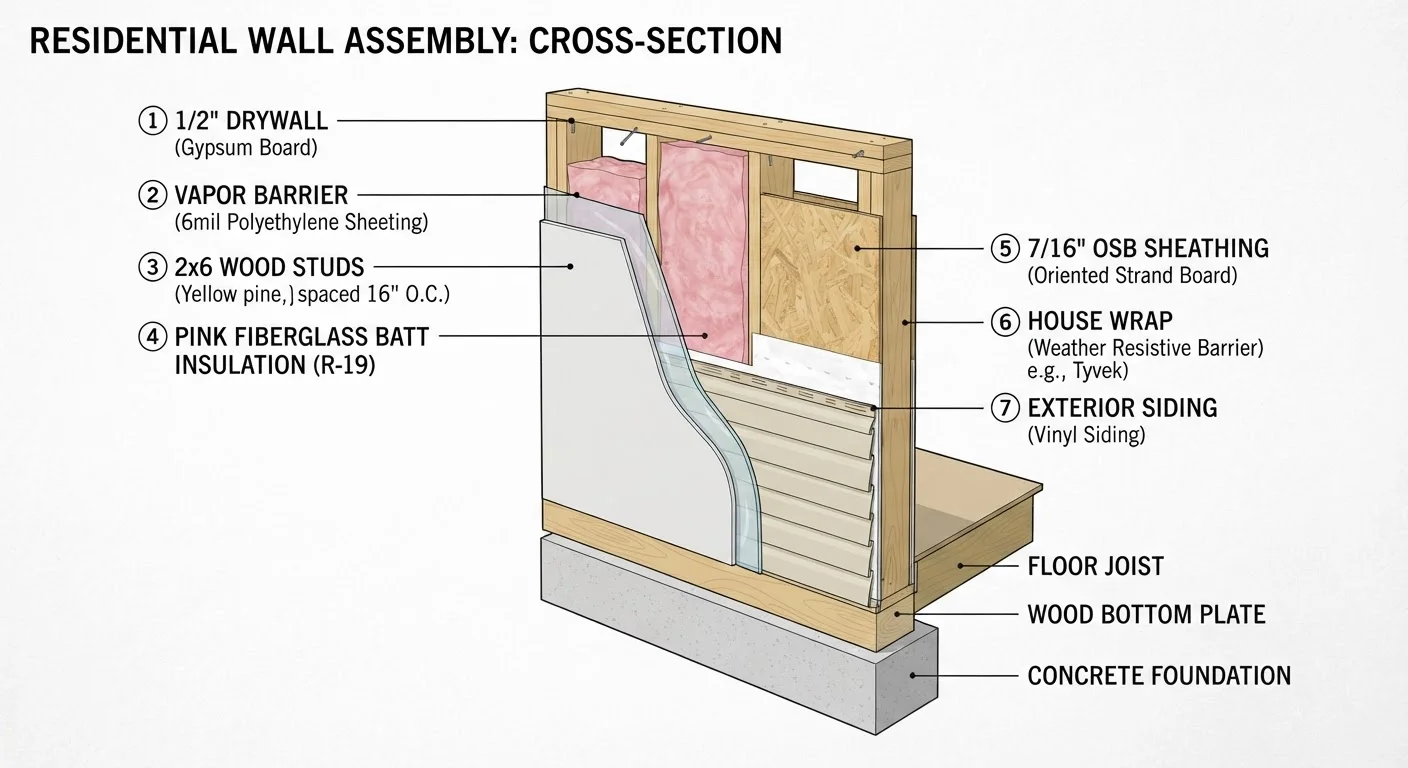
The vapor barrier always goes on the inside of the wall, closest to living space.
Fact
Vapor barrier placement depends entirely on your climate. In hot-humid climates, it may belong on the exterior side - or not be used at all.
In cold climates, interior vapor retarders make sense because warm indoor air carries moisture that would otherwise condense inside the wall cavity. But in mixed or hot-humid climates, putting a barrier on the interior face can trap moisture driven inward from the outside, creating ideal conditions for mold. The International Residential Code and your local building department can tell you what's appropriate for your region. When in doubt, consult a building scientist or licensed contractor rather than defaulting to a one-size-fits-all rule.
Myth
Once attic insulation is in place, you don't need to worry about how it's distributed.
Fact
Thin spots and gaps - even small ones - dramatically reduce whole-attic thermal performance because heat concentrates at the weakest points.
Thermal bridging means heat will find and flow through the path of least resistance. A few compressed or missing areas in an attic floor can account for a disproportionate share of total heat loss. When inspecting or adding attic insulation, use a ruler or insulation depth gauge to confirm consistent coverage across the entire field, including corners and eave areas where settling is common. Also ensure soffit vents remain unobstructed, since blocking them creates moisture and ventilation problems.
Myth
Spray foam insulation is always the superior choice over batts or blown-in materials.
Fact
Each insulation type has specific strengths; the right choice depends on the application, the existing structure, and project budget.
Closed-cell spray foam offers an excellent air barrier and high R-value per inch, making it useful in tight spaces or cathedral ceilings. But it is significantly more expensive, and in some applications - like unvented crawlspaces with moisture concerns - it requires careful detailing. Blown-in cellulose or fiberglass can outperform batts in irregular cavities and is more affordable for large attic areas. The best insulation material is the one correctly installed for the specific location and conditions of your home.
What Homeowners Should Actually Focus On
Effective insulation is about more than picking a product with a high R-value and stapling it in place. The combination of air sealing, correct vapor management, and consistent coverage matters far more than any single number on a label.
90%
U.S. homes that are under-insulated
The North American Insulation Manufacturers Association estimates roughly 90% of existing U.S. homes lack adequate insulation, leaving significant energy savings on the table.
Up to 30%
Energy lost through air leaks in a typical home
According to the U.S. Department of Energy, air infiltration can account for up to 30% of a home's heating and cooling energy loss - separate from conduction through walls and ceilings.
15%
R-value reduction from modest batt compression
Research from Oak Ridge National Laboratory has demonstrated that compressing batt insulation even slightly can reduce its effective R-value by 15% or more depending on the degree of compression.
Before adding insulation, conduct or commission a home energy audit. Many utility companies offer subsidized audits that include blower-door testing - a diagnostic that quantifies how much air your home is leaking and pinpoints the sources. This data-driven approach prevents the common mistake of insulating over problems that really needed to be air-sealed first.
Compressing Batt Insulation Undermines Its R-Value
Forcing fiberglass or mineral wool batts into spaces that are too small significantly reduces their effective R-value. The trapped air within the material - not the fibers themselves - provides thermal resistance. Compression eliminates that air space. Always use batts sized to match the cavity depth, and never stuff excess material behind pipes or wiring.
If your home was built before 1980, have an inspector check for asbestos-containing insulation materials before disturbing anything. Older vermiculite attic insulation in particular may contain hazardous material and requires professional remediation - not a DIY project. Local building codes and permit requirements vary widely, so always verify what applies to your specific municipality before beginning any significant insulation work.
Electrical and Structural Work Requires a Professional
Some insulation projects - particularly in walls, around recessed lighting, or near knob-and-tube wiring - involve risks that go beyond DIY scope. Always consult a licensed insulation contractor or building professional before disturbing existing insulation near electrical components or load-bearing structures. Many jurisdictions also require permits for significant insulation upgrades; check your local building department before starting any project.
Getting insulation right supports the rest of your home's systems too. For a fuller picture of how home systems interconnect, explore the Home Systems hub.