

Key Takeaways
Home Water Pressure Problems
Water pressure problems refer to any condition where water flows too weakly, too forcefully, or inconsistently from fixtures in your home. While these symptoms appear at the tap, their root causes typically lie elsewhere in your plumbing system - or even beyond your property line. Understanding where pressure actually comes from helps homeowners diagnose issues more accurately and avoid unnecessary repairs.
Residential water pressure is measured in pounds per square inch (PSI). Most home systems operate optimally between 40 and 80 PSI; readings outside this range can indicate a systemic problem rather than a localized fixture issue.
The Symptom vs. the Source
When a faucet delivers a weak stream or a shower feels more like a drizzle, most homeowners conclude their water pressure is low. That's a reasonable instinct - but it's often only the first layer of a more complex story. Water pressure at any given fixture is the end result of a chain of components working in sequence: the municipal supply, the main shutoff, the pressure regulator, the supply lines, and finally the fixture itself.
A problem anywhere along that chain shows up as a pressure symptom. Treating the symptom without identifying which link has failed wastes time and money. The most useful thing a homeowner can do first is determine the scope of the problem: is it one faucet, one room, or the entire house?
Scope Determines the Cause
Whether a pressure problem affects one fixture or every tap in your house is the single most diagnostic question you can answer. Whole-house issues point to the PRV, the main shutoff, or the municipal supply. Single-fixture issues almost always have a localized cause - aerator blockage, a partially closed valve, or a corroded branch line.
If the issue is whole-house, the cause is almost certainly upstream of your interior plumbing - typically the pressure regulator valve (PRV) or the municipal supply. If it's isolated to one fixture, look for a clogged aerator, a partially closed valve, or a corroded section of pipe serving that area.
The Pressure Regulator: A Commonly Overlooked Culprit
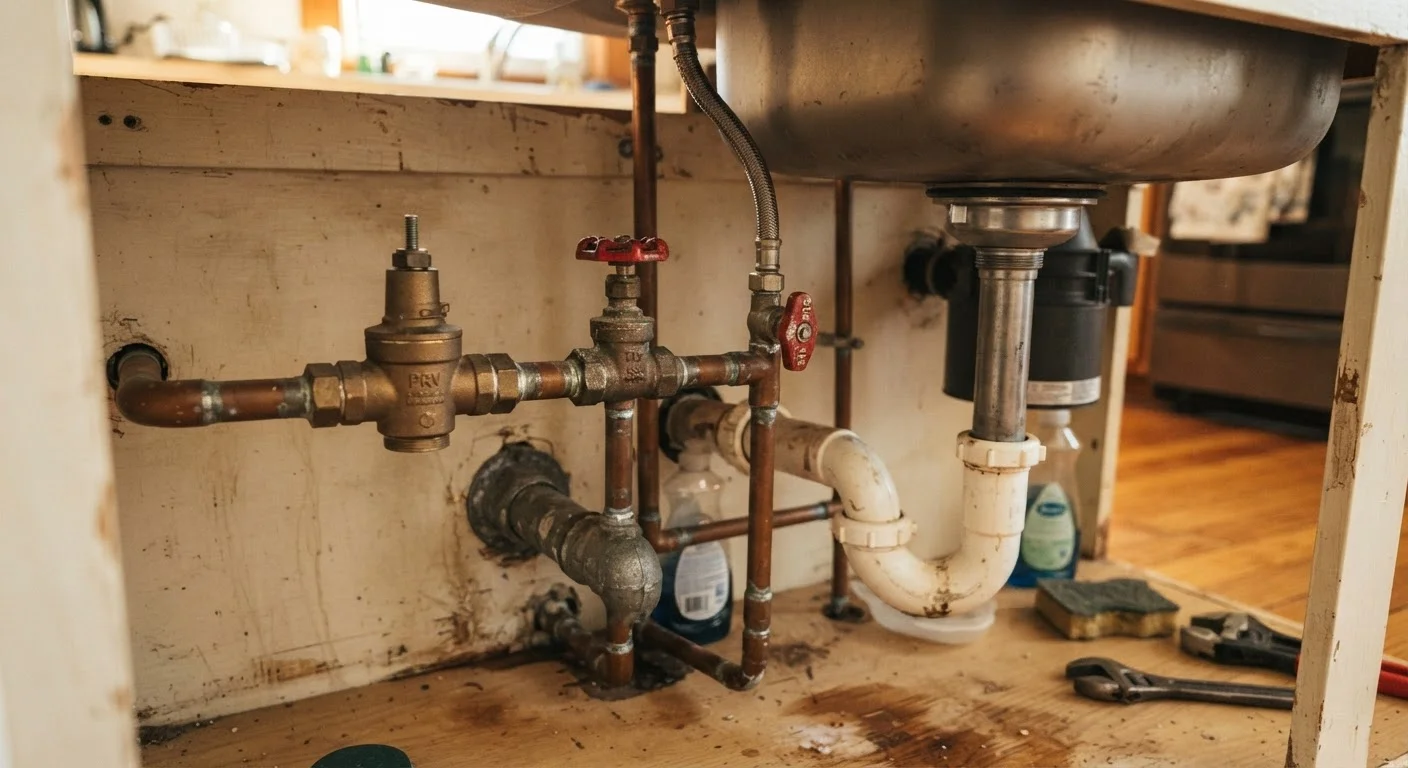
Many homes connected to a municipal water system have a pressure regulator valve (PRV) - a small, bell-shaped device usually located where the main supply line enters the house. Its job is to reduce the street pressure (which can exceed 100 PSI) to a safe residential range, typically 50-70 PSI.
PRVs don't last forever. As they age, the internal diaphragm and spring weaken, causing them to either underregulate (allowing high pressure that stresses appliances and joints) or fail closed (dropping pressure throughout the house). A PRV that fails can also cause pressure to fluctuate noticeably as demand changes - a telltale sign that something upstream is unstable.
Test Before You Replace
Before replacing a suspected PRV, have a plumber measure the actual PSI on both the inlet and outlet sides of the valve. A failed PRV that's stuck partially closed will show a significant pressure differential. This simple test confirms the diagnosis and prevents replacing a valve that's actually working correctly.
Replacing a PRV is a job for a licensed plumber, both because it involves shutting off the main water supply and because an incorrectly set PRV can cause ongoing damage. If you suspect your PRV is the culprit, have a plumber test supply and post-regulator pressure with a gauge before replacing it outright.
Corroded Pipes and Mineral Buildup
In older homes - particularly those built before the late 1970s - galvanized steel pipe was the standard. Over decades, these pipes corrode from the inside, and mineral deposits from hard water accumulate in layers. The result is a progressively narrower channel for water to travel through, which reduces effective flow even when supply pressure remains adequate.
This type of restriction is insidious because it develops slowly. Homeowners often adapt to gradually worsening pressure without realizing the system has changed significantly. By the time the problem becomes noticeable, pipe replacement may be the only viable solution. This pattern is a textbook example of how deferred plumbing maintenance can compound into large-scale repairs over time.
40-80 PSI
Recommended residential water pressure range
Most plumbing codes and fixture manufacturers consider this the safe operating range for home water systems.
10-15 years
Typical lifespan of a pressure regulator valve
PRVs are mechanical devices subject to wear; failure rates increase significantly beyond this range according to general plumbing industry guidance.
Pre-1970s
Era of widespread galvanized pipe use in U.S. homes
Homes from this era are most likely to experience flow restrictions from internal pipe corrosion - a common source of pressure symptoms.
Municipal Supply and Shared Infrastructure
Not every pressure problem originates inside your home. Municipal water systems deliver water at varying pressures depending on your distance from pumping stations, the elevation of your property, and the current demand on the system. Pressure can drop during peak usage hours - typically early morning and early evening - and can also fall during nearby fire suppression activity, main breaks, or infrastructure maintenance.
If your pressure problem is intermittent and seems to correlate with time of day, it's worth contacting your water utility to ask about known pressure zones in your area or scheduled maintenance. Some utilities also offer pressure data for your service address. This information helps you and any plumber you hire distinguish between a systemic neighborhood issue and a problem specific to your home's plumbing.
Practical First Steps for Homeowners
Before calling a plumber, a few simple checks can narrow down the cause significantly:
- Test one fixture at a time. Remove and clean the aerator on the affected faucet - mineral clogs here are extremely common and easy to fix.
- Check valve positions. Make sure the main shutoff and any fixture-specific valves are fully open. A partially closed valve upstream causes exactly the symptoms homeowners attribute to low pressure.
- Test hot and cold separately. If only the hot water has low pressure, the issue may be with your water heater's shutoff valve or an internal heater component.
- Use a pressure gauge. Screw a simple gauge onto an outdoor hose bib to get an actual PSI reading. This takes guesswork out of the equation and helps a plumber diagnose faster.
For anything beyond these basic checks - suspected PRV failure, corroded pipes, or leaks - bring in a licensed plumber. Accurate diagnosis before repair is what separates a smart maintenance decision from an expensive misfire.
This article is for general informational purposes only. Plumbing work involving main supply lines, pressure regulators, or pipe replacement should be performed by a licensed professional. Always verify local permit and code requirements before undertaking any home plumbing project.