

Key Takeaways
Why Small Problems Rarely Stay Small
Home systems are interdependent. A modest inefficiency in your HVAC unit stresses the blower motor. A slow drain quietly corrodes pipe joints. A loose electrical connection generates heat that degrades surrounding wiring over months or years. What makes deferred maintenance so costly isn't the original defect - it's the chain reaction it sets off.
Inspectors and experienced contractors consistently report the same pattern: the most expensive repairs they see weren't sudden failures. They were gradual deteriorations that crossed a tipping point. Understanding how your home's core systems work together is the first step toward catching problems before they cascade.
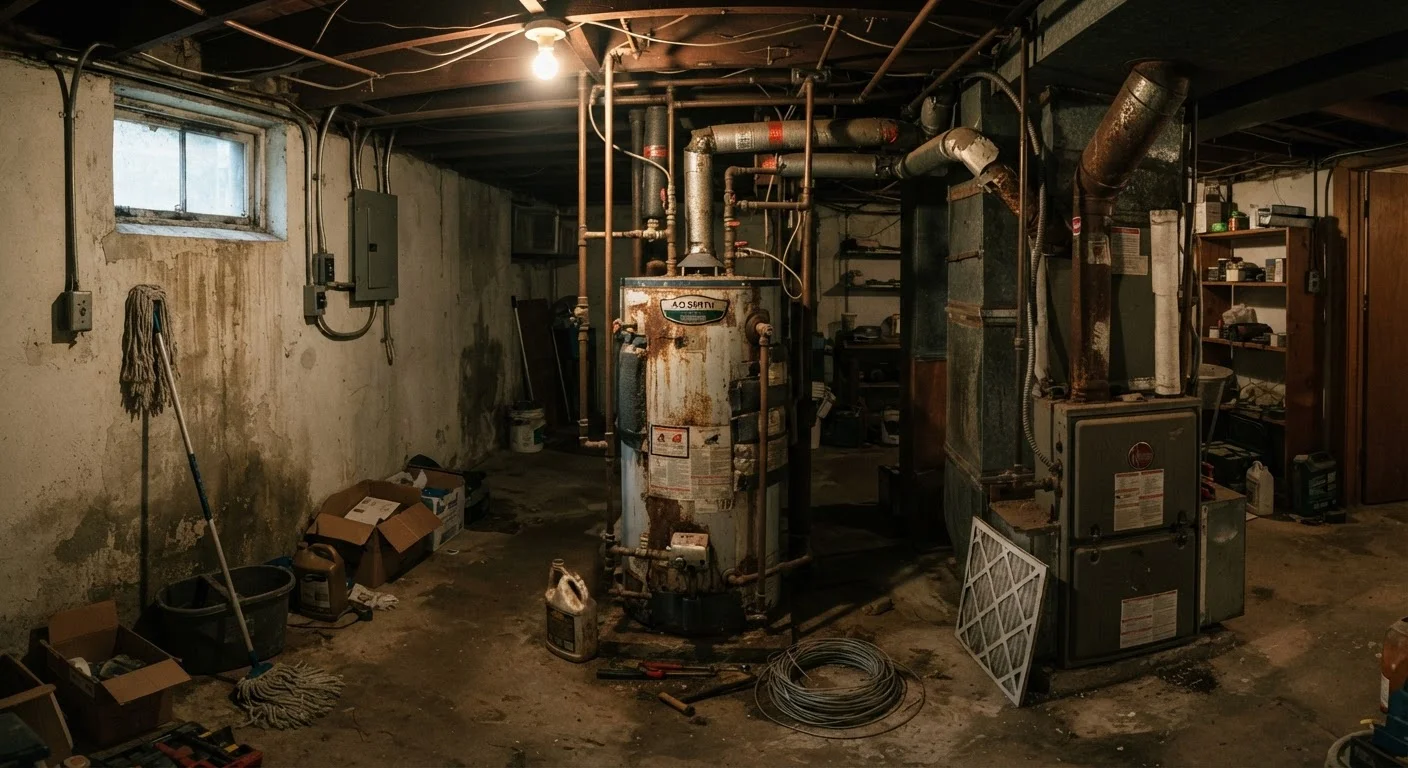
Ignoring a clogged or dirty HVAC filter for multiple seasons.
Why it happens: Filters are out of sight, and replacements feel like an optional expense rather than a critical maintenance task.
Leaving a slow or gurgling drain unaddressed for weeks or months.
Why it happens: A slow drain still functions, so it rarely feels urgent enough to act on immediately.
Dismissing a frequently tripping circuit breaker as a nuisance rather than a symptom.
Why it happens: Resetting a breaker is quick and easy, so the underlying cause often goes uninvestigated.
Skipping annual water heater maintenance, including sediment flushing.
Why it happens: Water heaters operate quietly and out of the way, making them easy to forget until they fail completely.
Delaying roof or gutter maintenance until visible interior damage appears.
Why it happens: Roof and gutter problems develop slowly and are difficult to observe from ground level, so they rarely feel immediate.
Ignoring small HVAC refrigerant or airflow issues until the system stops cooling or heating entirely.
Why it happens: Gradual performance decline is hard to notice day-to-day, and homeowners often attribute it to outdoor weather conditions.
The Real Cost of Waiting
Deferred maintenance doesn't just raise repair bills - it can affect your home's insurability, resale value, and in some cases, occupant safety. Lenders and home inspectors flag systemic neglect, and some insurance carriers may decline or limit coverage if critical systems are found in poor condition during a claim investigation.
~$15,000
Average cost of water damage repairs
Industry estimates from restoration contractors suggest that interior water damage from plumbing or roof failures - often traced to deferred maintenance - routinely exceeds $15,000 once structural drying and material replacement are factored in.
5-15 years
HVAC lifespan lost to neglect
HVAC contractors commonly observe that systems receiving no routine maintenance fail significantly earlier than the 15-20 year service life that properly maintained equipment can reach.
Beyond finances, delayed action on electrical or gas-adjacent systems introduces genuine safety risk. Overloaded circuits, corroded flue pipes, and water intrusion near electrical panels are among the hazards that develop silently when maintenance is skipped season after season. Work involving your electrical panel, gas lines, or load-bearing structural elements should always be evaluated by a licensed professional - these are not areas for DIY experimentation.
Building a habit of proactive checks is the most practical defense. A structured annual home systems walkthrough can surface small issues before they become urgent, and it takes far less time than managing an emergency repair.
Electrical and Gas Work Requires a Licensed Professional
Symptoms like flickering lights, burning smells near outlets, or a rotten-egg odor near gas appliances should never be investigated with DIY methods. These are potential safety hazards requiring immediate attention from a licensed electrician or your gas utility provider. In the case of a gas smell, leave the home and call your utility's emergency line before doing anything else.
Turning Awareness Into Action
None of the mistakes covered here require specialized training to recognize - they require attention. Scheduling brief seasonal checks, logging anything that looks or sounds different, and calling a licensed professional when in doubt are habits that compound in your favor over time, much like the neglect they prevent.
The same principle applies beyond the home. Skipping routine upkeep on any complex system - whether a furnace or a vehicle - rarely saves money in the long run. Small, consistent investments in maintenance are almost always cheaper than the repairs that follow inaction. If you're building better habits across the board, the guidance in home improvement basics can help you prioritize where to focus first.