

Key Takeaways
Our Verdict
Each budgeting method has genuine strengths and real limitations. Zero-based budgeting offers the most control but demands the most time; pay-yourself-first automates good savings habits with minimal effort. The envelope method and 50/30/20 rule sit in between, depending on how hands-on you want to be. Consulting a financial professional can help you determine what structure fits your specific income, expenses, and goals.
| Best for | Recommended |
|---|---|
| Detail-oriented people who want full control over every dollar | Zero-Based Budgeting |
| Those who struggle to save before spending | Pay-Yourself-First |
| Cash spenders prone to overspending in specific categories | Envelope Method |
| Beginners who want a simple, low-effort starting point | 50/30/20 Rule |
Why the Method You Choose Matters
A budget is only useful if you actually use it. The mechanics of tracking dollars matter far less than how well a system fits your habits, income type, and personality. That's why understanding the trade-offs between common budgeting frameworks - rather than just picking the most popular one - is worth your time.
Before diving in, two terms worth knowing: discretionary spending means money you choose how to spend (dining out, entertainment), while fixed expenses are set costs that don't change month to month (rent, loan payments). See the full budgeting glossary for plain-English definitions of these and other terms you'll encounter. And if you're building a budget for the first time, the first-budget walkthrough is a practical companion to this comparison.
| Zero-Based | Envelope Method | Pay-Yourself-First | 50/30/20 Rule | |
|---|---|---|---|---|
| Time required | High - rebuild monthly | Medium - set up categories | Low - mostly automated | Very low - check percentages |
| Best for income type | Stable income | Any income type | Stable income | Stable income |
| Savings focus | Explicit, by category | Requires separate envelope | Core feature | Fixed 20% allocation |
| Spending detail | Very granular | Category-level | Minimal oversight | Broad buckets only |
| Works without cash | Yes | Partially (needs app) | Yes | Yes |
| Ideal user | Detail-oriented planner | Overspender in categories | Set-it-and-forget-it saver | Budget beginner |
Zero-Based Budgeting: Maximum Control, Maximum Effort
Zero-based budgeting (ZBB) requires you to assign every dollar of income to a specific category - expenses, savings, or debt repayment - until your income minus your planned spending equals zero. The goal isn't to spend everything; it's to give every dollar a deliberate purpose before the month begins.
Strengths: Highly effective for people with irregular expenses or those paying down debt aggressively. It forces you to confront spending patterns you might otherwise ignore. It pairs well with the saving and debt strategies needed to make real financial progress.
Limitations: Time-intensive to set up and maintain each month. Works best when income is predictable; variable earners may find it frustrating to rebuild the budget repeatedly.
Combine Methods for a Custom Fit
Most people benefit from blending approaches. For example, you might use pay-yourself-first to automate savings, then apply zero-based budgeting only to your discretionary categories. Experimenting with combinations lets you keep what works and drop what doesn't - there's no rule requiring you to pick just one method.
The Envelope Method: Tangible, Category-by-Category Spending
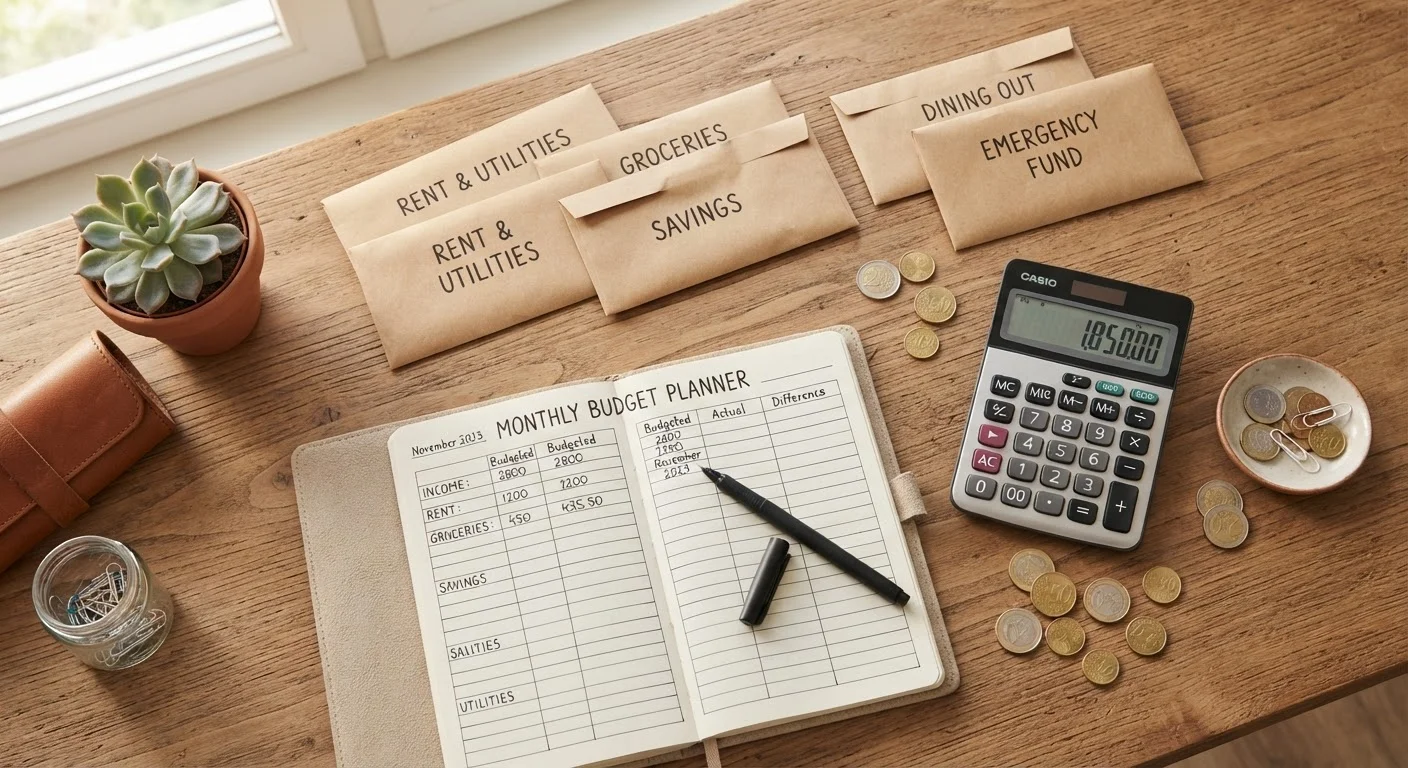
The envelope method involves allocating a set amount of cash into physical (or digital) envelopes labeled by spending category - groceries, gas, dining. When an envelope is empty, spending in that category stops for the month.
Strengths: Creates a visceral, real-time awareness of spending. Particularly effective for people who overspend on discretionary categories. Understanding which categories to create is easier when you review where your money actually goes.
Limitations: Less practical in an increasingly cashless world, though digital envelope apps adapt the concept. Requires discipline to not borrow between envelopes. Doesn't automatically address savings goals.
Pay-Yourself-First: Automate Savings Before Anything Else
Pay-yourself-first (PYF) flips the typical budgeting sequence. Instead of spending first and saving whatever's left, you transfer a set amount to savings or investments immediately when your paycheck arrives - then live on the remainder.
Strengths: Removes the willpower problem entirely for savings. Automation makes it easy to maintain consistently. It naturally supports building an emergency fund and long-term goals simultaneously. Works well for people with relatively stable, predictable expenses.
Limitations: Does not provide detailed oversight of where the remaining money goes. If spending habits are chaotic, you may still run into shortfalls even after automating savings. Periodic check-ins are still needed.
The 50/30/20 Rule: A Simple Starting Framework
The 50/30/20 rule divides after-tax income into three broad buckets: 50% toward needs (housing, utilities, groceries), 30% toward wants (entertainment, dining, hobbies), and 20% toward savings and debt repayment. It's less a precise system and more a set of proportional guardrails.
Strengths: Low maintenance. Requires no detailed category tracking. Accessible for people who find granular budgeting overwhelming. A reasonable sanity check for whether your overall spending mix is balanced.
Limitations: The fixed percentages don't account for high cost-of-living areas, where housing alone can exceed 50% of income. It offers little guidance for people managing multiple financial priorities at once. Think of it as a starting point, not a destination - a more detailed framework like those above may be necessary as your financial picture grows more complex. For a comprehensive approach, see the complete guide to personal budgeting.
This article is for general informational and educational purposes only and does not constitute personalized financial advice. Consult a licensed financial professional for guidance tailored to your individual circumstances.