

Key Takeaways
Start here
What a Budget Actually Is (and Isn't)
Next
Step 1: Map Your Real Income
Then
Step 2: Track and Categorize Your Spending
Apply it
Step 3: Choose a Simple Framework
Refine it
Step 4: Build in Flexibility
Keep going
Making Your Budget a Monthly Habit
What a Budget Actually Is (and Isn't)
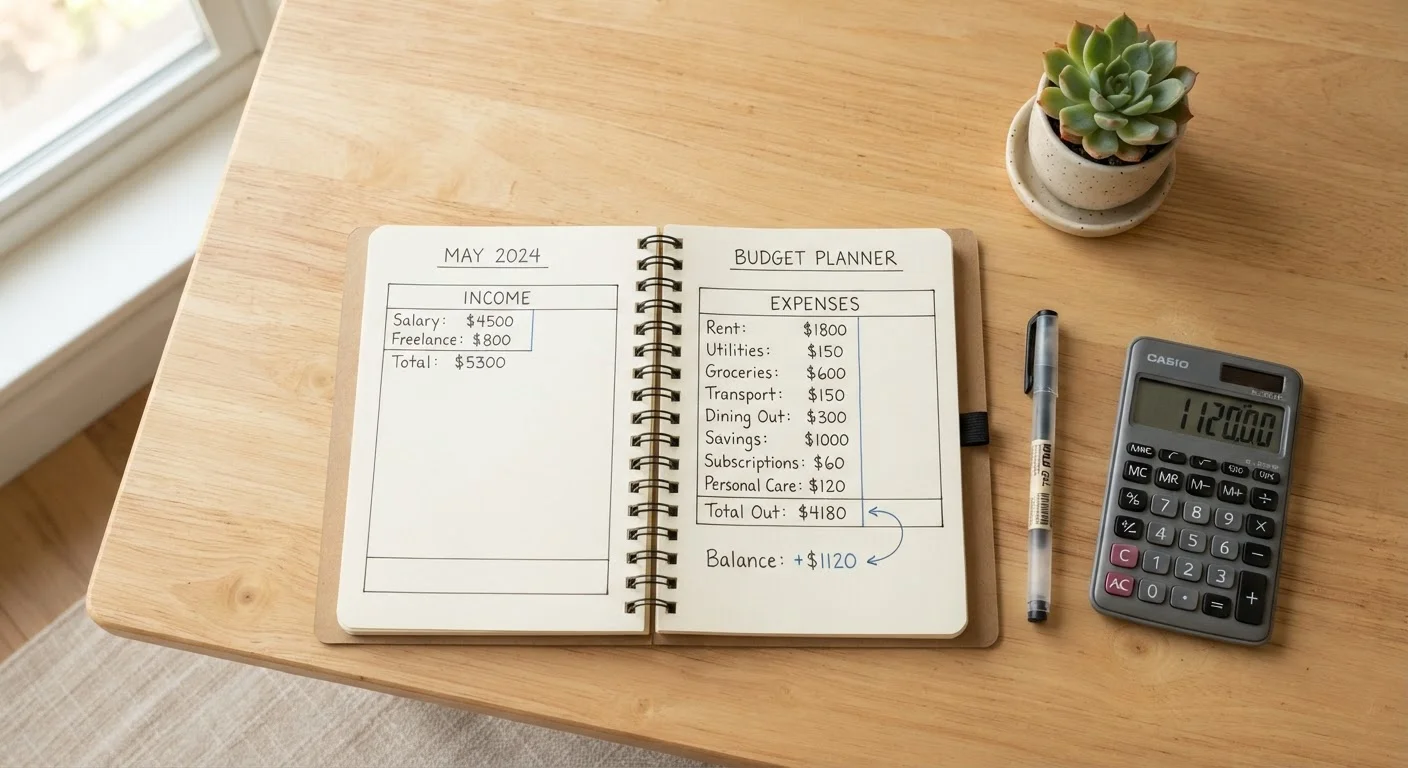
A budget is not a punishment. It's not a list of things you can't have, and it's not a rigid spreadsheet you follow perfectly every month. A budget is simply a written plan for how you intend to use your money before the month begins - informed by how you've actually been spending it.
That distinction matters. Most first budgets fail not from lack of willpower but from being built on wishful thinking rather than real numbers. Our guide on why budgets fail in the first month covers this in depth. The goal here is to help you build one grounded in your actual life.
Take-home pay
The amount of money you actually receive after taxes and deductions are removed from your paycheck - the real number to budget from.
Fixed expenses
Costs that stay the same every month, like rent or a car payment, making them easy to predict and plan for.
Variable expenses
Costs that change month to month, like groceries or gas, which require tracking to estimate accurately.
Buffer category
A small amount set aside each month for unpredictable or irregular costs so they don't derail your entire plan.
Zero-based budgeting
A method where you assign every dollar of income to a specific category so your income minus expenses equals zero - meaning every dollar has a job.
Pay-yourself-first
A savings strategy where you move money into savings or investments immediately when you're paid, before spending on anything else.
Step 1: Map Your Real Income
Start with your take-home pay - the amount that actually lands in your bank account after taxes and any automatic deductions. Do not use your gross salary. Using pre-tax income is one of the most common beginner mistakes and instantly distorts every category in your budget.
If your income varies - because you're freelance, hourly, or work with tips - average your last three months of actual deposits. Then use a slightly conservative figure as your planning baseline. When a stronger month arrives, treat the extra as a bonus to direct toward savings or debt, not as permission to spend more.
Write down every income source: your primary job, side work, child support, rental income, or any regular transfer. The number you arrive at is the only ceiling your budget has.
Step 2: Track and Categorize Your Spending
Before assigning any dollar amounts, spend a few minutes pulling up the last two to four weeks of bank and credit card statements. Your goal is to see where money has actually been going - not where you think it's been going. Most people are surprised by both categories.
Group your transactions into three broad buckets:
- Needs: Rent or mortgage, utilities, groceries, transportation, insurance, minimum debt payments
- Wants: Dining out, entertainment, subscriptions, clothing beyond basics, hobbies
- Savings and debt repayment: Emergency fund contributions, retirement savings, extra debt payments
Don't judge the numbers at this stage - just record them accurately. This baseline is the most honest input your budget will ever have. If you're weighing whether to track by hand or use an app, our comparison of manual vs. app-based tracking can help you choose.
Spot Your Irregular Spending Early
When reviewing past statements, flag any charges that don't appear every month - quarterly subscriptions, annual fees, seasonal spending. These irregular items are frequently left out of first budgets and cause real-month gaps. Add a line for them now, even if you estimate the amount.
Step 3: Choose a Simple Framework
Once you know your income and spending patterns, you need a structure to organize them. For first-time budgeters, a simple percentage-based framework reduces decision fatigue and makes the math easy.
The 50/30/20 rule is a widely used starting point: approximately 50% of take-home pay toward needs, 30% toward wants, and 20% toward savings and debt payoff. It won't fit every situation perfectly - housing costs in some cities alone may push needs above 50% - but it gives you a reference point to calibrate against. Our detailed guide to the 50/30/20 rule explains when this approach works and where it has limits.
If you want to explore other structures, a side-by-side comparison of budgeting methods covers envelope budgeting, zero-based budgeting, and pay-yourself-first approaches with honest trade-offs for each.
Step 4: Build in Flexibility
A budget that has no room for the unexpected will break the first time something unexpected happens - and something always does. Build a small buffer into your monthly plan, often called a miscellaneous or buffer category, set at roughly 3-5% of your income. This isn't for fun spending; it's for the irregular expenses that don't show up every month: a co-pay, a car repair, a birthday gift.
Separately, identify any annual or semi-annual expenses - car registration, insurance premiums, subscription renewals - and divide their total by 12. Set that monthly amount aside automatically so the bill doesn't blindside you. For more on managing debt and savings as part of this process, see the Saving & Debt hub for practical guidance.
Don't Cut Too Aggressively at First
It's tempting to slash spending categories when you first see your numbers. Cutting too much too fast is one of the leading reasons first budgets collapse within weeks. Make modest, realistic adjustments and give yourself one to two months to build the habit before tightening further.
Making Your Budget a Monthly Habit
Setting a budget once and filing it away is not budgeting - it's planning. The habit that actually changes your finances is the monthly review: comparing what you planned against what you spent, and adjusting next month's plan accordingly.
Schedule a regular time - even 20 minutes at month's end - to run through this review. Our monthly budget reset checklist provides a structured walkthrough. Over time, your categories will become more accurate, your estimates more reliable, and the whole process faster.
If your budget starts to feel impossible to maintain, that's usually a signal the structure needs adjusting - not that you've failed. Signs your budget isn't working can help you diagnose what to change. And as your financial picture grows, pairing a solid budget with a savings habit and an understanding of credit building creates a foundation that compounds over time.
This article provides general financial education and is not personalized financial advice. Consider speaking with a licensed financial professional about your specific circumstances.