

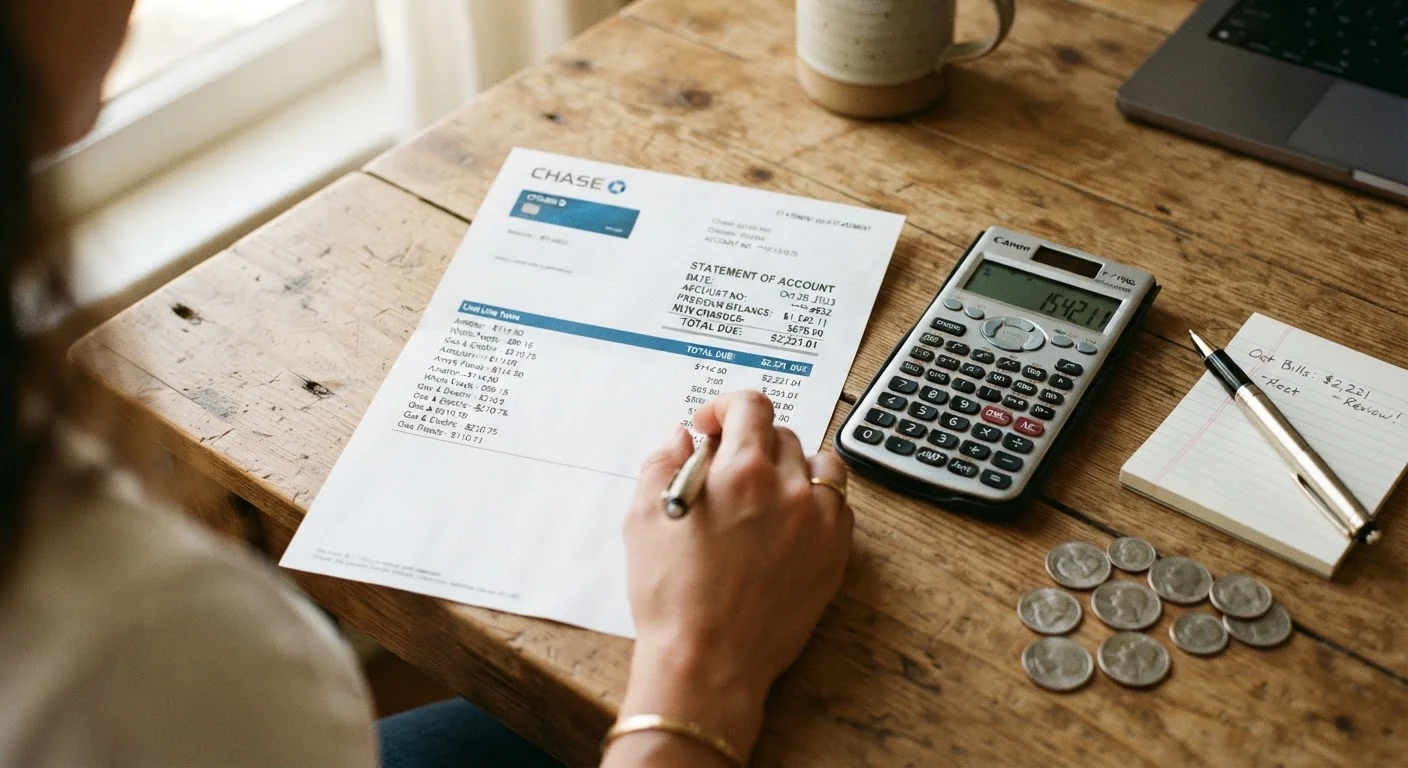
| Typical Credit Card APR Range | 18%-29%+ (Federal Reserve consumer credit data, 2024) |
| Interest Compounding Frequency | Daily (most issuers) (Consumer Financial Protection Bureau) |
| Average U.S. Credit Card Balance | Approximately $6,500 per cardholder (TransUnion Industry Insights Report, 2024) |
| Interest on $5,000 at 24% APR (1 year) | ~$1,200+ (Calculated using standard daily compounding formula) |
How Credit Card Interest Actually Works
When you carry a balance on a credit card, the issuer charges interest based on your Annual Percentage Rate (APR) - but interest isn't calculated just once a year. Most credit cards compound interest daily, meaning the issuer divides your APR by 365 to find a daily periodic rate, then applies that rate to your outstanding balance each day.
Here's a simplified example: if your APR is 22% and you carry a $3,000 balance for one year without making any new purchases, you'd accrue roughly $660 in interest - but because of daily compounding, the actual cost will be slightly higher. Each day, a small amount of interest is added to your balance, and the next day's interest is calculated on that slightly larger number. Over months, this effect compounds meaningfully.
| Typical Credit Card APR Range | 18%-29%+ (Federal Reserve consumer credit data, 2024) |
| Interest Compounding Frequency | Daily (most issuers) (Consumer Financial Protection Bureau) |
| Average U.S. Credit Card Balance | Approximately $6,500 per cardholder (TransUnion Industry Insights Report, 2024) |
| Interest on $5,000 at 24% APR (1 year) | ~$1,200+ (Calculated using standard daily compounding formula) |
Understanding this mechanism matters because it reveals why even a "moderate" balance grows faster than most people expect. The higher your APR and the longer the balance remains unpaid, the greater the gap between what you originally spent and what you ultimately pay.
What Carrying Debt Actually Costs You
The real cost of credit card debt goes beyond the interest line on your statement. There are three layers worth examining:
- Direct interest cost: The dollars added to your balance each billing cycle. On a $5,000 balance at a 24% APR, you may pay more than $100 per month in interest alone - money that reduces your balance by nothing.
- Opportunity cost: Every dollar used to service high-interest debt is a dollar that isn't growing in a savings account, retirement fund, or emergency reserve. If your card charges 22% APR and a savings account yields 4-5%, carrying that balance costs you the spread - roughly 17-18 percentage points of potential net gain annually.
- Behavioral cost: Ongoing debt payments reduce cash flow, which can push people toward relying on credit again during an unexpected expense - reinforcing the cycle.
$1,200+
Annual interest on a $5,000 balance at 24% APR
Calculated using standard daily compounding - money paid in interest that does not reduce principal.
10+ years
Time to pay off $4,000 balance with minimum payments
Based on a 20% APR and a minimum payment of 2% of the outstanding balance each month.
Paying only the minimum each month dramatically extends both the repayment timeline and total interest paid. A $4,000 balance at 20% APR, paid with a typical minimum of 2% of the balance, could take over a decade to clear and cost thousands in interest.
If you've noticed warning signs that debt is straining your finances, these patterns may signal that debt is outpacing your ability to manage it.
Balancing Debt Paydown Against Saving
One of the most common questions in personal finance is whether to prioritize paying off debt or building savings. The answer depends on your specific interest rates and financial cushion, but a general framework can help:
- Maintain a minimal emergency buffer first. Without any liquid savings, a single unexpected expense forces more borrowing. Most financial educators suggest keeping at least one month of essential expenses accessible before aggressively attacking debt.
- Compare rates honestly. If your credit card APR is 20% and your savings account earns 4.5%, putting extra money toward the card delivers a guaranteed 20% "return" in avoided interest - far exceeding most low-risk savings options. High-interest debt almost always deserves priority over discretionary saving.
- Don't skip employer-matched retirement contributions. If your employer matches retirement contributions up to a percentage of your salary, forgoing that match is effectively leaving part of your compensation unclaimed. This is generally worth capturing even while paying down debt.
For a structured approach to eliminating high-interest balances, see this framework for systematically paying down debt.
Annual Percentage Rate (APR)
The yearly interest rate charged on a borrowing product, expressed as a percentage. For credit cards, APR reflects the cost of carrying a balance over one year, though interest is typically calculated daily.
Daily Periodic Rate
Your APR divided by 365. Credit card issuers apply this rate to your outstanding balance each day to calculate how much interest accrues.
Compounding Interest
Interest calculated not just on the original principal but also on previously accumulated interest. Daily compounding means your balance grows slightly faster than a simple annual rate would suggest.
Opportunity Cost
The financial benefit you forgo by choosing one course of action over another. In debt management, opportunity cost represents the savings or investment gains you miss while funds are directed toward interest payments.
Minimum Payment
The smallest amount a cardholder must pay each billing cycle to keep the account in good standing. Paying only the minimum typically results in a much longer repayment period and significantly higher total interest paid.
This article is for general informational and educational purposes only and does not constitute personalized financial or legal advice. Consult a qualified financial professional regarding your specific situation.