

Key Takeaways
Lower total cost over full ownership period
When a pricier item lasts significantly longer or costs less to operate, the cumulative savings often outweigh the higher upfront outlay within a predictable timeframe.
Fewer replacement and disposal cycles
Buying less frequently reduces not just cost but the time and effort spent researching, purchasing, and disposing of items-an underappreciated efficiency gain.
Reduced maintenance burden over time
Higher-quality items often require less frequent repair, which matters both financially and in terms of the disruption that breakdowns cause.
Greater reliability in high-stakes situations
For items where failure has serious consequences-a vehicle, a home appliance, a medical device-durability carries value that pure cost comparisons don't fully capture.
Higher upfront cash requirement strains budgets
Paying more now to save later assumes the cash is available. For households managing tight cash flow, the better long-term option may simply be inaccessible in the short term.
Break-even projections involve real uncertainty
Lifespan estimates, energy savings, and maintenance costs are predictions, not guarantees. A product that should last ten years may fail in three, erasing the projected savings entirely.
Technology and needs may change before break-even
In fast-moving categories, a premium item bought for longevity may become obsolete before it pays off-making a cheaper, shorter-lifespan purchase the more rational choice in hindsight.
Opportunity cost of capital can be significant
Money committed to a premium purchase can't be deployed elsewhere. Depending on your financial situation and alternatives, that foregone flexibility may outweigh the projected savings.
Our Verdict
Thinking in trade-offs isn't about always choosing the premium option-it's about knowing what you're actually comparing. When you account for lifespan, maintenance, and opportunity cost alongside the sticker price, you're making an informed decision rather than a reflexive one. The goal is to spend deliberately, not just cheaply.
Anyone who regularly faces purchase decisions where a cheaper upfront option might carry hidden long-term costs-from household appliances and vehicles to financial products and subscriptions.
Why Sticker Price Is an Incomplete Signal
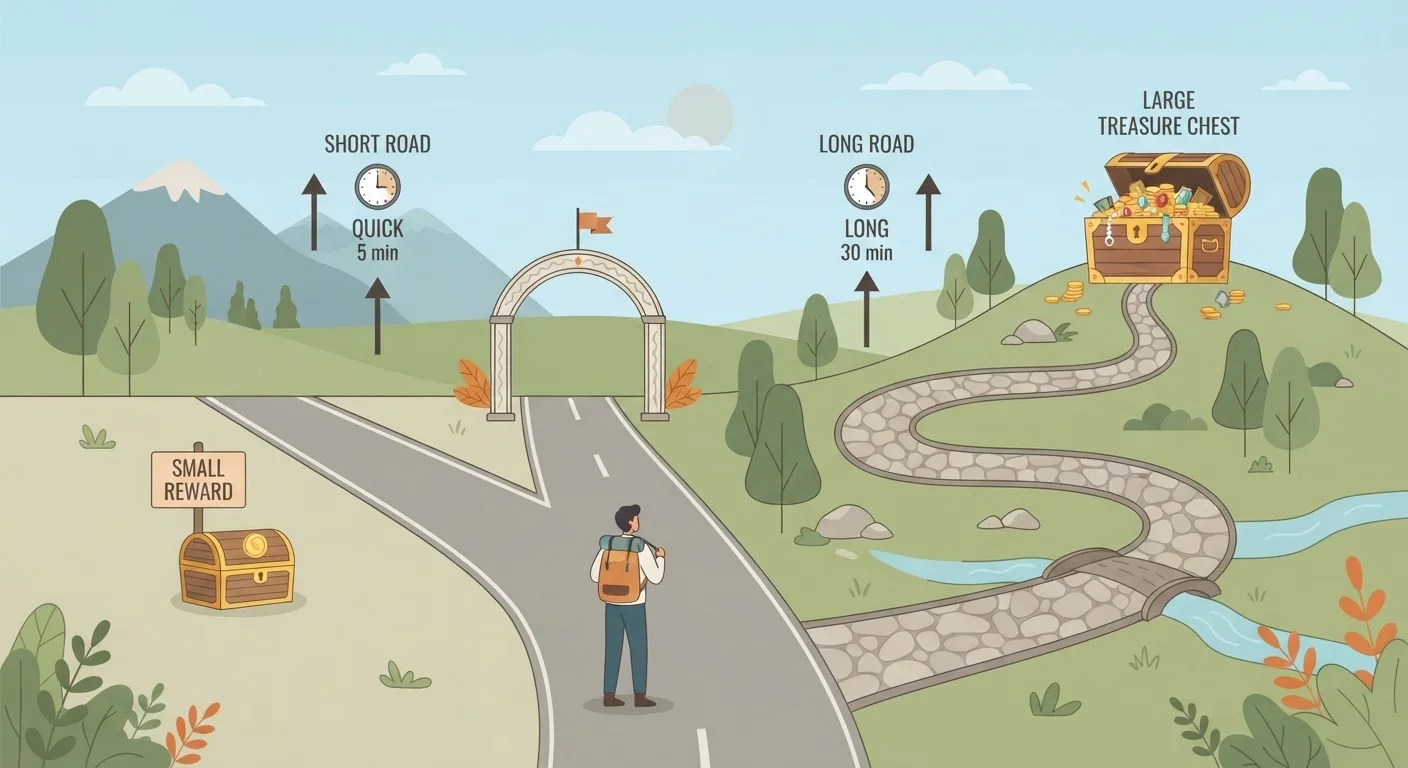
When two options sit side by side-one cheaper, one more expensive-the instinct to choose the lower number is understandable. But sticker price captures only one moment in a product's life: the point of sale. It says nothing about how long the item will last, what it costs to maintain, or how efficiently it performs over time.
Total cost of ownership (TCO) is the more complete number. It adds up the purchase price, expected maintenance, operating costs, and eventual replacement cost, then spreads that figure across the product's useful life. A refrigerator priced $300 less than a competing model but requiring $80 more per year in energy costs breaks even in under four years-and costs more beyond that. The metrics that reveal true cost over time make these comparisons concrete rather than speculative.
This logic applies far beyond appliances. Vehicle ownership costs-fuel economy, insurance rates, repair frequency-routinely dwarf the original purchase price difference between two cars. The fundamentals of vehicle ownership costs illustrate just how wide that gap can grow.
A Simple Framework for Reasoning Through Trade-Offs
You don't need a spreadsheet to think clearly about short-term versus long-term value. Three questions do most of the work:
- What is the break-even point? Divide the upfront price difference by the annual savings the pricier option offers. If Option A costs $200 more but saves $50 per year in operating costs, break-even is four years. If you expect to own it longer, the higher-priced option becomes the lower-cost one.
- What is the replacement cycle? A product you replace every two years has a very different cost profile than one you keep for a decade. Cheap items with short lifespans can be entirely rational-or surprisingly expensive, depending on how quickly they degrade.
- What are you giving up elsewhere? Opportunity cost-what you'd do with money not spent-is real. Tying up cash in a premium purchase has a cost even if the item performs well. This is especially relevant in financial decisions; how to evaluate mortgage structures demonstrates how this reasoning scales to large, long-horizon commitments.
When 'Good Enough' Is the Right Answer
Not every purchase warrants a full TCO analysis. For low-cost, low-stakes items-a phone case, a set of dish towels-the mental overhead of detailed trade-off reasoning exceeds the potential savings. Reserve this framework for purchases where the price difference is meaningful relative to your budget and where you expect to use the item for an extended period. Applying it selectively makes it more useful, not less.
Pros and Cons of Prioritising Long-Term Value
Choosing the higher-upfront, longer-lasting option has genuine advantages-but it also carries real trade-offs that deserve honest attention.
Lower total cost over full ownership period
When a pricier item lasts significantly longer or costs less to operate, the cumulative savings often outweigh the higher upfront outlay within a predictable timeframe.
Fewer replacement and disposal cycles
Buying less frequently reduces not just cost but the time and effort spent researching, purchasing, and disposing of items-an underappreciated efficiency gain.
Reduced maintenance burden over time
Higher-quality items often require less frequent repair, which matters both financially and in terms of the disruption that breakdowns cause.
Greater reliability in high-stakes situations
For items where failure has serious consequences-a vehicle, a home appliance, a medical device-durability carries value that pure cost comparisons don't fully capture.
Higher upfront cash requirement strains budgets
Paying more now to save later assumes the cash is available. For households managing tight cash flow, the better long-term option may simply be inaccessible in the short term.
Break-even projections involve real uncertainty
Lifespan estimates, energy savings, and maintenance costs are predictions, not guarantees. A product that should last ten years may fail in three, erasing the projected savings entirely.
Technology and needs may change before break-even
In fast-moving categories, a premium item bought for longevity may become obsolete before it pays off-making a cheaper, shorter-lifespan purchase the more rational choice in hindsight.
Opportunity cost of capital can be significant
Money committed to a premium purchase can't be deployed elsewhere. Depending on your financial situation and alternatives, that foregone flexibility may outweigh the projected savings.
Notice that neither column is universally dominant. The right weighting depends on your time horizon, cash flow, and how central the item is to your daily life. Someone with limited liquidity may rationally choose the lower-cost item even knowing it will cost more over five years-because five years of savings don't help with a bill due next month.
Where This Thinking Applies (and Where It Has Limits)
Trade-off reasoning travels well across categories. Subscription models-where lower per-unit pricing is tied to commitment-are a classic case; the trade-offs behind subscribe-and-save offers show how the math can favor or work against you depending on actual usage. Deal-hunting more broadly can produce the same distortion: habits that undermine real savings describe how chasing low prices without a framework sometimes increases total spending.
The framework has limits, though. Predictions about product lifespan and future costs involve genuine uncertainty. Maintenance frequency varies by usage pattern and environment. And some value is legitimately non-quantifiable-reliability when you can't afford a failure, or simplicity when your time is constrained. Factoring those in honestly, rather than forcing everything into a number, is part of thinking clearly about trade-offs.
For larger decisions like housing, the same logic applies at scale. The rent-or-buy trade-offs involve not just monthly payments but liquidity, flexibility, and market conditions-proof that the framework generalises, even as the stakes rise.
4-7 years
Typical appliance break-even horizon
Consumer energy efficiency analyses commonly place the break-even point for energy-efficient appliances versus standard models between four and seven years, depending on usage and local utility rates.
2-3x
Lifetime cost multiple over purchase price
For major purchases like vehicles, lifetime operating costs-fuel, insurance, maintenance-frequently run two to three times the original purchase price, according to general automotive cost-of-ownership studies.