

Key Takeaways
The Matter Standard
Matter is an open-source connectivity standard that allows smart home devices from different manufacturers to work together without requiring the same app or ecosystem. It was developed by the Connectivity Standards Alliance (CSA), with contributions from major tech companies including Apple, Google, Amazon, and Samsung. Think of it as a shared language that smart devices can all speak, regardless of who made them.
Matter operates over IP-based networks - primarily Wi-Fi and Thread - and uses a device attestation system to verify that certified devices meet the standard's security and interoperability requirements.
Why Device Compatibility Has Been a Problem
Anyone who has assembled a smart home over the past decade has likely run into the same frustration: a light switch from one brand won't talk to a thermostat from another, two different apps are needed for devices sitting in the same room, and switching ecosystems means starting over from scratch. This fragmentation wasn't accidental - it was the natural result of competing companies building proprietary platforms designed to lock customers in.
Before Matter, most smart home devices were built around one of several incompatible standards: Zigbee, Z-Wave, proprietary Wi-Fi stacks, or closed Bluetooth protocols. To understand the full landscape of those underlying technologies, the Connected Home Glossary covers the key terms in plain English. The result for consumers was a market where buying a new device meant first confirming it was compatible with your specific hub, your specific app, and your specific ecosystem - a significant barrier to building a flexible, future-proof setup.
Matter was designed to address this at the protocol level, creating a common foundation rather than relying on individual manufacturers to build their own bridges between systems.
How Matter Actually Works
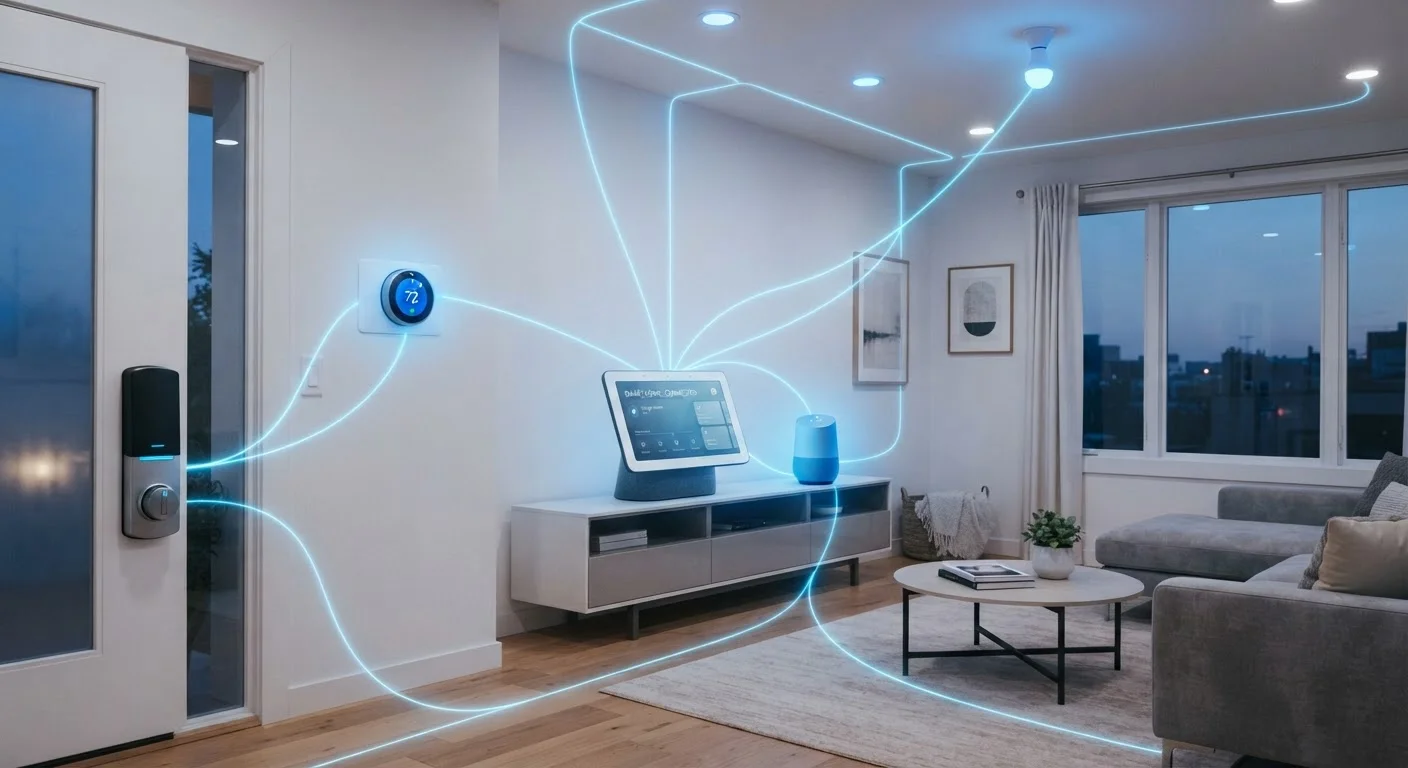
Matter defines a shared application layer - essentially a common set of rules for how devices announce themselves, describe their capabilities, and respond to commands. When a device is certified as Matter-compatible, it can be discovered and controlled by any Matter-compliant controller, whether that's an Apple HomePod, a Google Nest Hub, an Amazon Echo, or a Samsung SmartThings hub.
The standard runs on two network transports: Wi-Fi, which most home networks already support, and Thread, a low-power mesh protocol designed for battery-operated and low-bandwidth devices like sensors and locks. Thread-based devices require a Thread Border Router - a piece of hardware that bridges the Thread mesh network to your regular IP network. Several smart speakers and TV streaming devices already include Thread Border Routers built in.
1.0
Matter specification version at initial release
Matter 1.0 was released by the Connectivity Standards Alliance in October 2022, marking the standard's first commercially available specification.
280+
Companies contributing to the Matter standard
According to the Connectivity Standards Alliance, more than 280 member companies participated in developing the Matter specification.
4
Major ecosystems with native Matter controller support
Apple Home, Google Home, Amazon Alexa, and Samsung SmartThings all ship controller software that supports Matter-certified devices natively.
Security is built into the certification process. Every Matter device must pass a device attestation check - a cryptographic handshake that confirms the hardware is genuinely certified and hasn't been tampered with. This is meaningfully stronger than earlier standards, which often had minimal authentication requirements.
For a broader look at how Matter fits alongside existing ecosystems like HomeKit and Alexa, our ecosystem comparison breaks down the practical differences.
What Matter Doesn't Solve
Matter raises the floor for compatibility, but it doesn't flatten all the differences between ecosystems. Manufacturers can still build proprietary features that only work inside their own apps - Matter governs the baseline, not the ceiling. A smart lock might work in Apple Home for basic locking and unlocking, while its fingerprint enrollment and activity-log features remain exclusive to the manufacturer's app.
Check the Label Before You Buy
When purchasing a new smart home device, look for the Matter certification badge on the packaging or product listing. This confirms the device has passed the CSA's interoperability and security testing - not just that the manufacturer claims compatibility. Marketing language like 'works with Matter' can sometimes be vague; official certification is the reliable signal.
Matter also doesn't address older devices retroactively. Existing hardware can only gain Matter support if the manufacturer ships a firmware update - and many won't. If you're planning a setup that's meant to grow over time, it's worth factoring Matter certification into purchase decisions going forward, rather than assuming existing gear will be upgraded. The guide to planning a connected home offers a practical framework for thinking through those decisions.
Finally, Matter is still maturing. Not all device categories are supported yet, and implementation quality varies by manufacturer. Reading certification status carefully - rather than assuming compatibility from marketing language - remains important.
What This Means for Everyday Setup Decisions
For most people building or expanding a smart home, Matter represents a genuine improvement over the fragmented landscape that preceded it. The practical implication is that Matter-certified devices offer more flexibility: you're less likely to be stranded if you change your primary voice assistant or add a second ecosystem to your home.
That said, Matter doesn't make the underlying decisions disappear. You'll still need to understand whether a device uses Wi-Fi or Thread, whether you have the right border router hardware, and which features are Matter-standard versus ecosystem-exclusive. Understanding what a smart home actually is - beyond the marketing - remains the right starting point before any purchase decision.
For anyone who has run into the frustrations of incompatible ecosystems, Matter is a meaningful step toward a more open and interoperable future. It's a standard worth understanding, even if it doesn't yet deliver on every promise the industry has made about seamless connectivity. See also common misconceptions about smart home automation for a grounded look at what the technology realistically delivers today.