

| Coolant check method | Check reservoir level with engine cold; never open radiator cap when hot |
| Transmission fluid color (healthy) | Red or pink; dark brown with burnt smell signals service needed |
| Brake fluid replacement interval | Every 2-3 years for most vehicles (confirm with owner's manual) |
| Why brake fluid degrades | Absorbs moisture over time, lowering its boiling point |
| Transmission change interval range | 30,000-100,000+ miles depending on vehicle and driving conditions |
| Brake fluid level drop cause | Normal pad wear or a leak - both warrant inspection |
Why Vehicle Fluids Matter
Your car relies on several distinct fluids to protect its components, transfer force, and regulate temperature. Neglecting any one of them can cascade into expensive repairs - or worse, a safety failure on the road. The good news is that checking most fluids requires nothing more than a clean rag and five minutes. This guide covers the three fluids drivers most commonly overlook: coolant, transmission fluid, and brake fluid.
For a broader picture of what to inspect and when, see the Seasonal Car Maintenance Checklist - it puts fluid checks in context alongside tires, brakes, and other seasonal priorities.
| Coolant check method | Check reservoir level with engine cold; never open radiator cap when hot |
| Transmission fluid color (healthy) | Red or pink; dark brown with burnt smell signals service needed |
| Brake fluid replacement interval | Every 2-3 years for most vehicles (confirm with owner's manual) |
| Why brake fluid degrades | Absorbs moisture over time, lowering its boiling point |
| Transmission change interval range | 30,000-100,000+ miles depending on vehicle and driving conditions |
| Brake fluid level drop cause | Normal pad wear or a leak - both warrant inspection |
Coolant (Antifreeze): Keeping Your Engine in Its Happy Range
What it does: Coolant circulates through your engine and radiator to absorb and dissipate heat. It also contains additives that prevent corrosion inside the cooling system and keep the fluid from freezing in cold temperatures or boiling in extreme heat. Without adequate coolant, an engine can overheat within minutes.
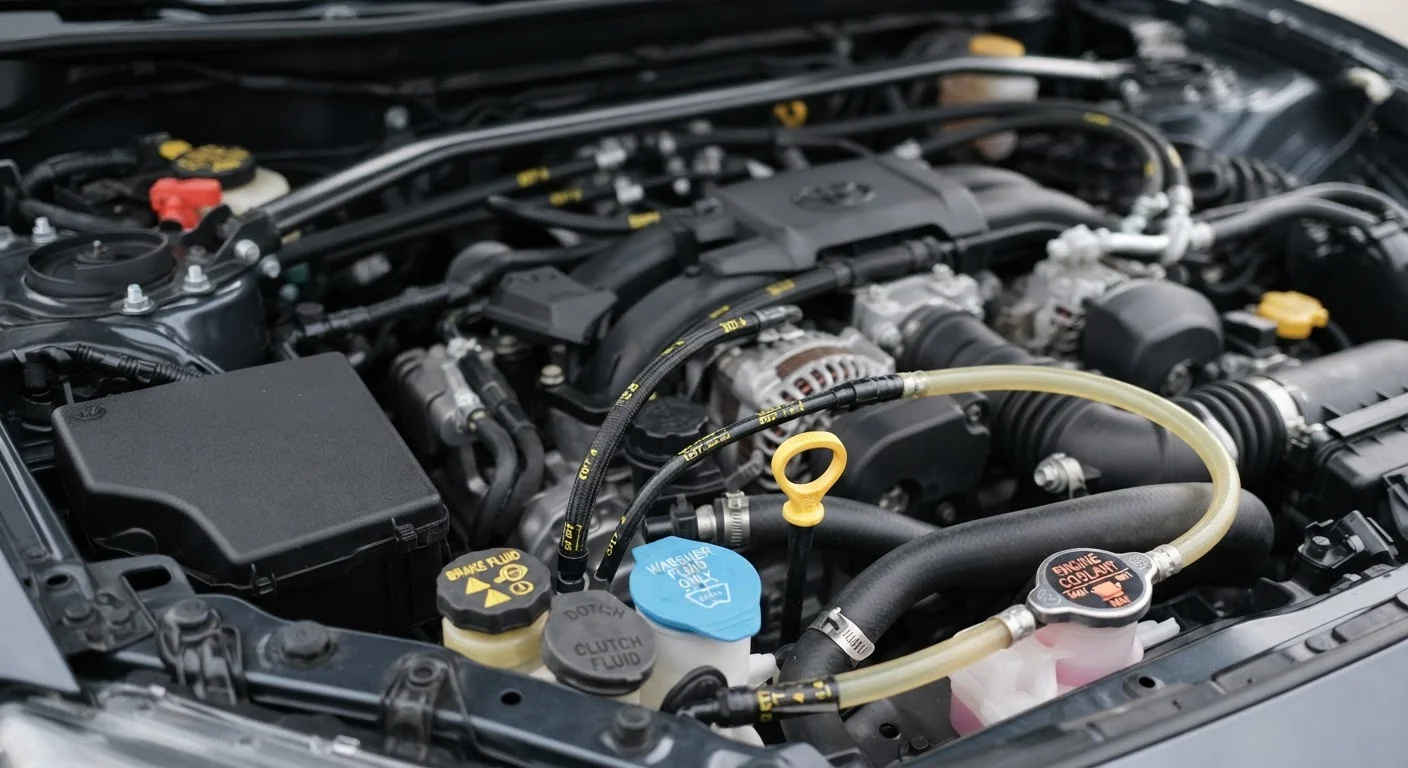
How to check it: Most vehicles have a translucent plastic coolant reservoir in the engine bay with MIN and MAX lines. Check the level when the engine is cold - never open the radiator cap on a hot engine, as pressurized coolant can cause serious burns. If the reservoir is consistently low, that points to a leak or internal consumption, both of which warrant a mechanic's inspection.
What to watch for: A sweet smell from the engine bay, a rising temperature gauge, or white smoke from the exhaust can all signal a cooling system problem. Coolant color varies by formulation (green, orange, pink, blue), so rely on your owner's manual - not color alone - to identify the correct type for your vehicle.
Coolant
A liquid mixture - typically water and ethylene glycol - that circulates through the engine to regulate temperature and prevent freezing or boiling. Also called antifreeze.
Hygroscopic
A property of certain fluids, including brake fluid, that causes them to absorb moisture from the surrounding air over time, which can degrade performance.
Hydraulic fluid
A fluid used to transmit mechanical force within a closed system. Brake fluid is a hydraulic fluid - pressing the pedal creates pressure that moves fluid through lines to activate the brakes.
Transmission fluid
A lubricant specifically formulated for use inside a vehicle's transmission to reduce friction, cool components, and enable smooth gear changes.
Sealed transmission
A transmission design with no user-accessible dipstick. Fluid checks and changes require specialized equipment, typically available only at a dealership or repair shop.
Transmission Fluid: The Lubricant Your Gears Depend On
What it does: Transmission fluid lubricates the moving parts inside your transmission, helps transfer power from the engine to the wheels, and keeps internal components cool. Automatic and manual transmissions use different fluid types, so always confirm the correct specification before adding any.
How to check it: Many automatic transmissions have a dipstick (similar to the engine oil dipstick), though some newer vehicles have sealed transmissions with no dipstick - those require dealer or shop-level service to check. For vehicles with a dipstick, check the fluid with the engine warm and running, with the car in Park. Healthy fluid is typically red or pink and has a slightly sweet smell. Dark brown fluid with a burnt odor is a sign that service is overdue.
Change intervals: Manufacturer recommendations vary widely - anywhere from 30,000 to over 100,000 miles depending on vehicle type and driving conditions. Your owner's manual is the definitive source for your specific vehicle's interval. Hard towing, stop-and-go driving, and mountain driving tend to accelerate fluid degradation.
Brake Fluid: Small Reservoir, High Stakes
What it does: Brake fluid is a hydraulic fluid that transmits the force of your foot on the pedal through brake lines to the calipers and wheel cylinders that slow the car. It must maintain consistent performance under high heat and resist compressibility. For more on how these components interact, see how your braking system works together.
How to check it: The brake fluid reservoir is typically a small, semi-transparent container near the back of the engine bay on the driver's side. It has MIN and MAX markings. Unlike engine oil, brake fluid level naturally drops slightly as brake pads wear - a very low level can indicate either worn pads or a leak. Either cause merits prompt attention.
Why moisture matters: Brake fluid is hygroscopic, meaning it absorbs moisture from the air over time. As water content increases, the fluid's boiling point drops - which can lead to a spongy pedal or reduced braking performance under heavy use. Most manufacturers recommend replacing brake fluid every two to three years regardless of mileage, but consult your owner's manual for your specific guidance.
If your brake pedal feels soft, spongy, or sinks toward the floor, treat that as an urgent safety issue and have the vehicle inspected by a qualified mechanic before driving further.