

Key Takeaways
Why the Owner's Manual Gets Ignored - and Why That's a Problem
Most glove compartments hold an owner's manual that has never been opened past the warranty section. It's understandable - the books are dense, the print is small, and the table of contents looks intimidating. But ignoring this document has a real cost.
Generic maintenance advice - the kind printed on oil change reminder stickers or quoted at service counters - is designed to apply broadly, not specifically to your vehicle. Your manual, by contrast, was written for your exact engine configuration, transmission type, and climate considerations. Following generic schedules instead of your manual's can mean servicing too early (wasting money) or too late (risking damage).
If you're new to car ownership, the owner's manual is the single best starting point - more reliable than any generalized checklist. Even experienced drivers who switch vehicles benefit from reviewing the new car's manual, because specifications differ meaningfully between makes and models.
Digital Manuals Are Easier to Search
If you have a PDF version of your manual, use the document search function (Ctrl+F or Cmd+F) to find specific terms like "oil viscosity" or "tire pressure" instantly. This makes the manual far more practical as a day-to-day reference than flipping through a physical book.
What You'll Actually Find Inside
Owner's manuals are organized by system, which makes them easy to navigate once you know the layout. Here's what the key sections contain:
- Maintenance schedule: Mileage- and time-based intervals for oil changes, filter replacements, tire rotations, spark plugs, belts, and more. This is the section that most directly affects long-term reliability. For more on how interval guidance has evolved, see oil change interval guidance.
- Fluid specifications: The exact oil viscosity grade, coolant type, transmission fluid type, and brake fluid specification your vehicle requires. Using the wrong fluid - even a close substitute - can void warranties or degrade performance. Our plain-language fluid guide covers what each fluid does.
- Tire information: Recommended tire size, load rating, and - critically - the correct inflation pressure for your specific vehicle. This is not the number on the tire's sidewall; it's a different figure. For context on why pressure matters, see tire pressure and tread depth.
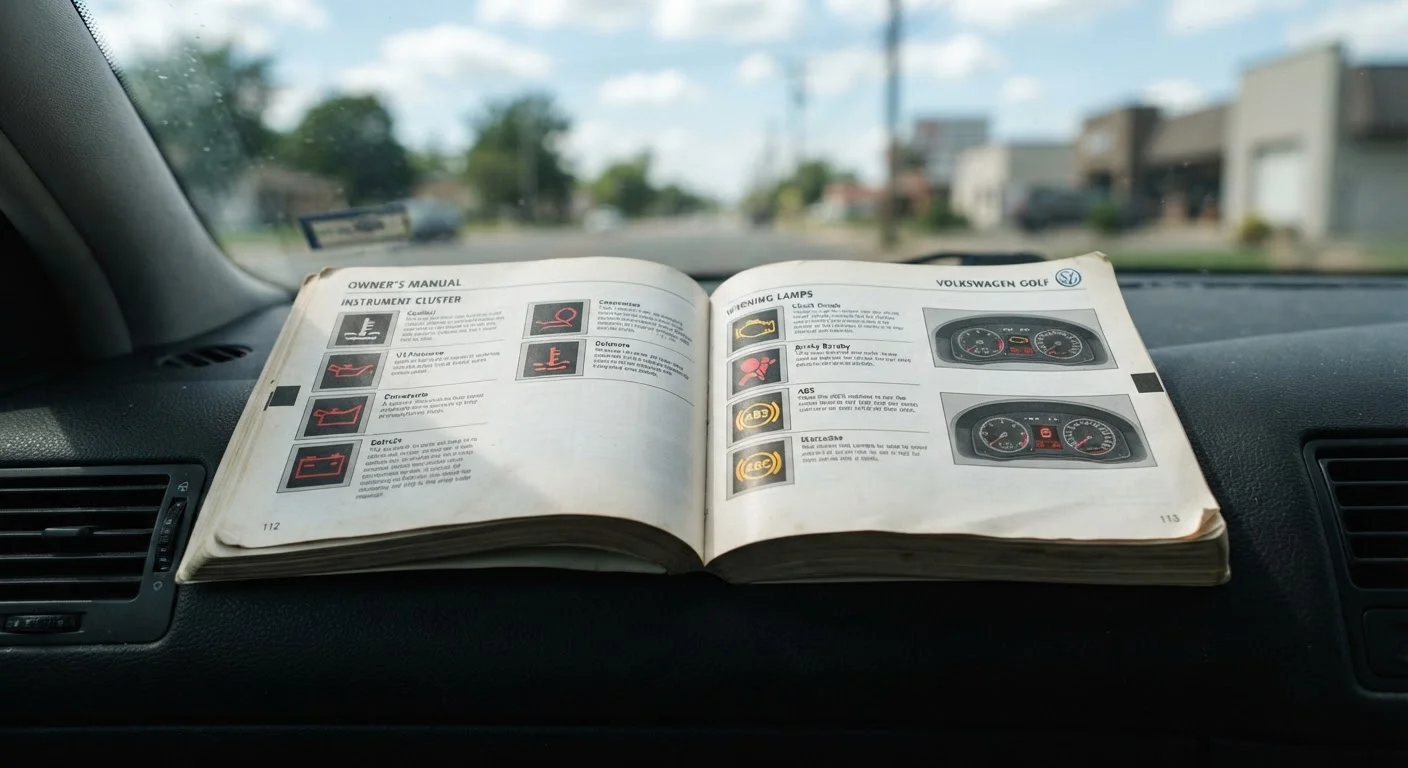
- Warning light explanations: Your dashboard lights don't all mean the same thing across vehicles. The manual decodes each symbol for your model. Understanding warning lights in general terms is useful, but your manual gives the model-specific detail.
- Capacities and towing limits: Maximum payload, towing capacity, roof load limits - information that affects safety when hauling or hitching a trailer.
Don't Rely on Dealership Defaults Alone
Service advisors may recommend intervals or fluid grades that differ from what your manual specifies - sometimes driven by shop preference rather than manufacturer requirement. Always cross-check recommendations against your own manual before approving work. You have every right to ask for the manual-specified service, and a reputable shop will accommodate that.
How to Use the Manual as a Working Reference
Reading the manual once and shelving it isn't enough. The goal is to use it as an ongoing reference tool integrated into your maintenance routine.
Locate or Download Your Manual
Check your glove compartment first. If the manual is missing - common with used vehicles - search the manufacturer's website using your vehicle's year, make, model, and trim level. Most automakers provide free PDF downloads. Once located, store a digital copy somewhere accessible, such as your phone's cloud storage or a folder you can reach without internet access.
Find and Bookmark the Maintenance Schedule
The maintenance schedule is usually near the back of the manual or in a dedicated section labeled "Scheduled Maintenance" or "Service Intervals." Locate it and, if using a physical copy, mark it with a tab. If your vehicle distinguishes between "normal" and "severe" driving conditions, read both columns - many drivers qualify as severe-condition drivers without realizing it (frequent short trips, stop-and-go traffic, and extreme temperatures all count).
Record the Key Fluid Specifications
Write down or photograph the exact specifications for engine oil (viscosity grade and any required certifications), coolant type, transmission fluid, and brake fluid. Keep this list in your wallet or saved on your phone. When a service shop asks what oil you want, you'll have the manufacturer's answer - not a guess. If the manual recommends synthetic oil for your engine, using conventional oil may be less protective regardless of price difference. See conventional vs. synthetic motor oil for background on what those distinctions mean.
Verify Your Correct Tire Pressure
Locate the recommended tire inflation pressure in the manual or on the driver's door jamb sticker - not on the tire's sidewall, which shows the tire's maximum pressure, not your vehicle's target pressure. Note the front and rear values, as they sometimes differ. Use this figure whenever you check or adjust tire pressure, which should be done monthly and before any long trip.
Create a Simple Maintenance Log
Use the manual's schedule to build a basic log of upcoming service milestones. A spreadsheet, a notes app, or even a small notebook kept in the glove box works fine. Record the current odometer reading, then note the mileage at which each upcoming service is due. Update the log each time a service is completed. This record also has practical value: documented maintenance history supports vehicle value and can simplify conversations with mechanics.
Consult the Manual Before Any DIY Task
Before checking fluid levels, replacing a cabin air filter, or topping off washer fluid, confirm the correct procedure and spec in the manual. Even straightforward tasks can involve model-specific details - reservoir locations, fill-level markings, or required fluid types - that differ from vehicle to vehicle. For a broader view of which tasks are appropriate for home mechanics versus when to call a professional, see DIY vs. shop maintenance.
Pair your manual habits with a broader approach to vehicle upkeep. The complete picture on car maintenance covers how routine tasks connect across systems, and maintenance habits that prevent expensive repairs offers a practical framework for building consistency.
Before any long drive, cross-reference the manual's fluid and tire specs against what's actually in your vehicle. See road trip safety prep for a full pre-departure checklist built around exactly this kind of verification.