

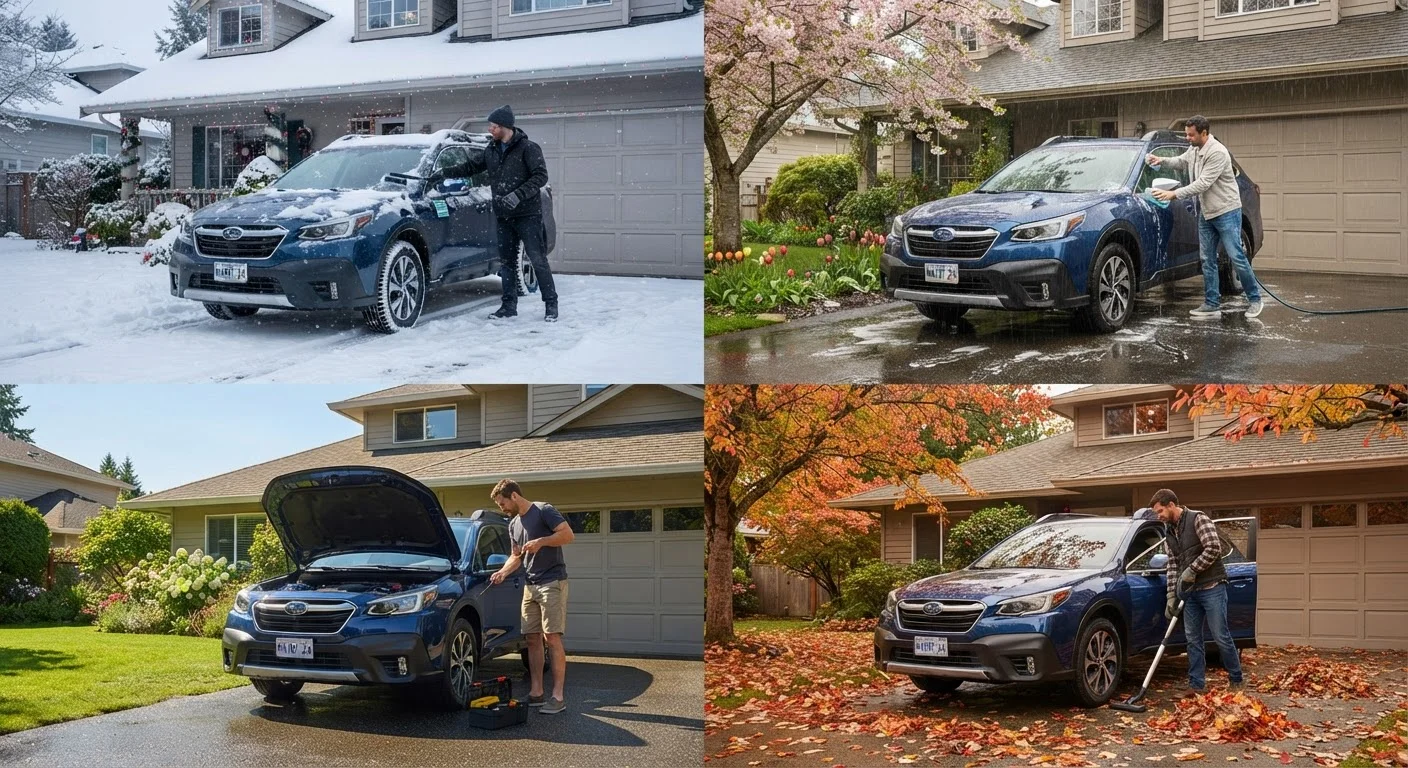
Key Takeaways
Summary
24 items · 30-60 minutes per seasonal review
Why Seasonal Checks Beat Reactive Repairs
Most car problems don't appear without warning - they build gradually while drivers wait for a dashboard light to intervene. A season-by-season inspection routine puts you ahead of that curve. Temperature extremes stress fluids, accelerate tire wear, and strain your battery in ways that mileage alone doesn't capture.
This checklist is organized by season so you can run through the relevant group whenever the weather shifts. Not every item requires a mechanic - but some do, and we've flagged those clearly. For vehicle-specific intervals (oil type, coolant spec, transmission fluid), always defer to your owner's manual. If you haven't used yours recently, our guide on reading your owner's manual explains exactly how to get the most out of it.
Run these checks at each seasonal transition and log what you find. A simple record - date, mileage, and any action taken - pays dividends when you're evaluating a repair estimate or selling the vehicle. See why keeping a maintenance log matters for a straightforward approach.
When to Stop and See a Mechanic Immediately
Some findings during a seasonal check require professional attention before the vehicle is driven further - not after the season changes. These include brake pads worn to or below minimum thickness, a battery that fails a load test, coolant that shows signs of contamination (milky color or oil sheen), and any tire with visible cords or sidewall damage. Do not delay these repairs. A qualified mechanic should assess the vehicle before you return it to regular use.
How to Use This Checklist
Work through the group that matches the approaching season - ideally two to four weeks before the weather actually changes. Items marked must are non-negotiable safety or reliability concerns. Items marked should are strongly recommended. Nice-to-have items add margin but won't strand you if skipped.
If you find a concern during a self-inspection and aren't confident diagnosing it, take the vehicle to a qualified mechanic before the season arrives. Understanding what a professional checks during a routine visit can help you interpret the results - our breakdown of what mechanics look for during a multi-point inspection is a useful companion read.
For a broader annual view that pairs well with this seasonal checklist, see the annual car ownership checklist.
Spring Checks (Post-Winter Recovery)
Summer Checks (Heat and Long-Distance Prep)
Fall Checks (Pre-Winter Preparation)
Winter Checks (Ongoing Cold-Weather Monitoring)
Tire Pressure Gauge
Accurately measures tire inflation when tires are cold - essential for every seasonal pressure check.
Antifreeze/Coolant Tester
Tests the freeze-protection level of your coolant so you can confirm it's rated for your region's winter lows.
Battery Load Tester
Assesses whether a battery can hold a charge under real-world demand - a job typically done by a mechanic or auto parts store.
Tread Depth Gauge
Measures remaining tire tread to determine whether tires are safe for wet or winter conditions.
Flashlight or Inspection Light
Illuminates hard-to-see areas under the hood and undercarriage during a visual inspection.
Maintenance Log (Paper or App)
Records what was checked, the mileage, and any action taken - building a history that supports future repairs and resale.
Tires and Alignment: The Season-by-Season Priority
Tires are the single system most visibly affected by seasonal transitions. Cold weather reduces tire pressure (roughly 1 PSI for every 10°F drop), while heat causes overinflation. Either condition degrades handling and accelerates uneven wear. Check pressure with a quality gauge when tires are cold - not after driving.
If your vehicle uses separate winter and all-season tires, the swap window matters: switch to winter tires before sustained temperatures drop below 45°F, and back to all-season when overnight lows consistently stay above that threshold. Tire rotation and wheel alignment are distinct services that often get conflated - rotating tires extends even tread wear, while alignment corrects the angle the tires make with the road. Both are worth scheduling at each seasonal change if your vehicle is due.
For road trip preparation - where tire condition is especially critical - our road trip safety prep checklist covers what to verify before a long-distance drive.
Don't Rely on Dashboard Lights Alone
Warning lights are a last resort, not an early alert system. Tire pressure sensors, for example, typically trigger only after pressure has dropped well below the safe range. By the time a light illuminates, wear or damage may already have occurred. Visual and manual checks - done on a schedule - catch problems that sensors miss or report too late.