

Key Takeaways
Tire Pressure & Tread Depth
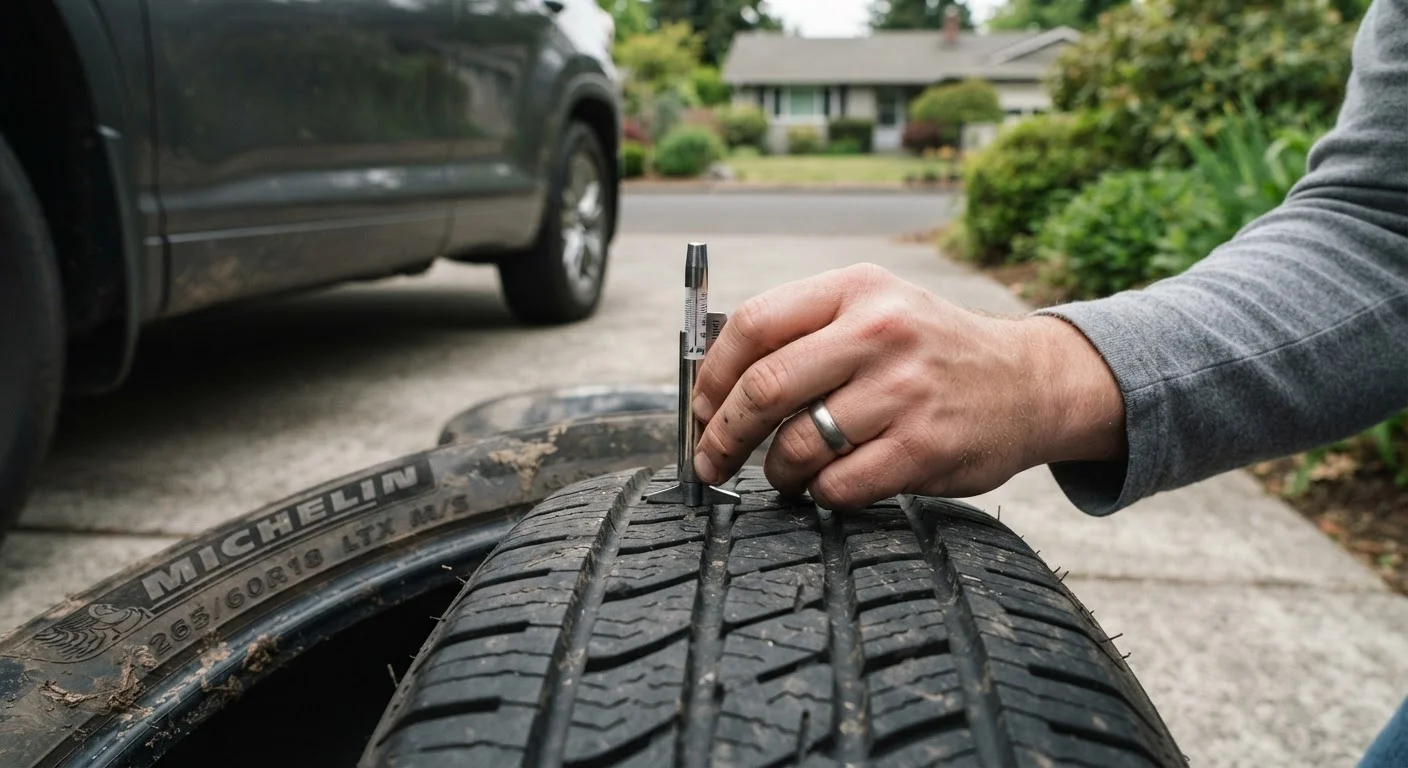
Tire pressure is the amount of air inside your tires, measured in pounds per square inch (PSI). Tread depth refers to how much rubber remains on the surface of your tire that grips the road. Both directly affect how safely your vehicle handles, brakes, and performs in wet or slippery conditions.
Tire pressure is measured in PSI (pounds per square inch); tread depth is typically measured in 32nds of an inch. The federal legal minimum tread depth in the U.S. is 2/32 of an inch, though safety experts often recommend replacing tires before reaching that threshold.
Why These Two Checks Are Easy to Overlook
Tires look fine until they don't. Unlike a warning light or a strange noise, gradual pressure loss and tread wear happen slowly enough that most drivers never notice until something goes wrong. A tire that looks full to the eye can be 10 or 15 PSI below the recommended level. Tread that seems acceptable might already be compromised in wet conditions.
The result is that two of the simplest maintenance checks - pressure and tread - are also among the most commonly skipped. Yet both directly affect braking distance, fuel economy, and how your vehicle responds in an emergency. Understanding what each one does is the first step toward making them routine.
As part of a broader approach to vehicle care, these checks pair naturally with the maintenance habits covered in consistent maintenance habits that keep small problems from becoming expensive ones.
Tire Pressure: What It Does and What Goes Wrong
Air pressure is what actually supports the weight of your vehicle - not the rubber itself. When pressure is too low, the tire's contact patch (the area touching the road) deforms, causing the outer edges to carry more load. This produces faster wear on the shoulders of the tire and increases rolling resistance, which means your engine works harder and burns more fuel.
Overinflation creates its own problems. A tire with too much air becomes rigid and rides on a narrower strip of tread in the center, reducing grip and making the ride harsher. It's also more vulnerable to damage from road hazards like potholes.
~1 PSI
Pressure lost per 10°F temperature drop
This is a widely cited rule of thumb from the Tire Industry Association and reflected in NHTSA tire safety guidance.
25%
Of vehicles have at least one significantly underinflated tire
The National Highway Traffic Safety Administration (NHTSA) has reported that a significant share of passenger vehicles on U.S. roads are driven with at least one underinflated tire.
2/32"
Federal legal minimum tread depth (U.S.)
This threshold is set by federal motor vehicle safety standards; many safety experts recommend replacing tires before reaching this level.
Temperature is the variable most drivers underestimate. For every 10°F drop in ambient temperature, tires lose approximately 1 PSI. A tire that was properly inflated in September can be noticeably low by November - without a single slow leak. This is why checking pressure when seasons change is worth building into your routine, alongside other guidance found in your owner's manual.
Tread Depth: When Grip Begins to Disappear
Tread grooves do a specific job: they channel water away from the contact patch so the rubber can maintain grip on wet pavement. As tread wears down, that channeling capacity shrinks. On a wet road, a tire with shallow tread takes longer to stop - sometimes significantly longer - and is more prone to hydroplaning, where the tire essentially skims on a film of water rather than gripping the road surface.
The legal minimum in the U.S. is 2/32 of an inch, but most safety guidance suggests treating 4/32 inches as a practical replacement threshold, especially if you drive in rain frequently. The quarter test - inserting a quarter with Washington's head down into a tread groove - warns you when you're at roughly 4/32. If you can see the top of Washington's head, it's time to plan for replacement.
Use the Quarter Test as Your Early Warning
Insert a quarter into the tread groove with Washington's head pointing down toward the tire. If the top of his head is visible, you're at approximately 4/32 inches of remaining tread - a practical point to start planning for replacement, before you hit the legal minimum. Check several grooves across the tire, including the center and both edges, to catch uneven wear.
Uneven tread wear also tells a story. Wear concentrated in the center suggests the tire has been chronically overinflated. Wear on both edges points to underinflation. Wear on just one edge often indicates a wheel alignment problem. These patterns are worth noting because they signal a root cause - not just a tire replacement need. Pairing a tread inspection with an alignment check makes sense; see our overview of tire rotation and wheel alignment for context on how these services relate.
How Both Connect to Real-World Safety
Stopping distance is where pressure and tread intersect with actual risk. An underinflated tire with shallow tread on a wet road is a compounding problem - reduced contact area, reduced water dispersal, and reduced structural stability all at once. This matters on highways, in rain, and in any situation requiring a quick stop.
It's also worth noting the relationship between tire condition and tailgating. The dangers of following too closely are well-documented, but worn tires extend stopping distances even when you're following at a safe gap. Good tire condition doesn't compensate for poor following distance - but poor tire condition makes a bad situation worse.
A driver notices their fuel economy has gradually dropped over the fall and winter months, even though nothing else seems wrong with the car.
During a sudden rainstorm on the highway, a driver's car begins to feel loose and floaty at highway speeds despite normal-looking tires.
A mechanic points out that the inside edge of one front tire is worn far faster than the rest of the tread during a routine inspection.
Making both checks a monthly habit - along with keeping up with scheduled maintenance - keeps these risks manageable and your tires performing as they were designed to.