

Key Takeaways
The Distraction Problem Is Bigger Than Your Phone
Smartphone bans and hands-free laws have rightly put phone use in the spotlight, but fixating on one device gives drivers a false sense of security. The NHTSA defines distracted driving as any activity that diverts attention from operating a vehicle safely - and that definition casts a wide net.
Researchers categorize distraction into three types: visual (eyes off the road), manual (hands off the wheel), and cognitive (mind off the task of driving). The most dangerous distractions hit all three at once - and plenty of everyday habits qualify. Understanding the full picture is the first step toward actually reducing your risk. For a broader framework on staying ahead of hazards, see defensive driving principles that help drivers anticipate problems before they develop.
Eating and Drinking While Driving
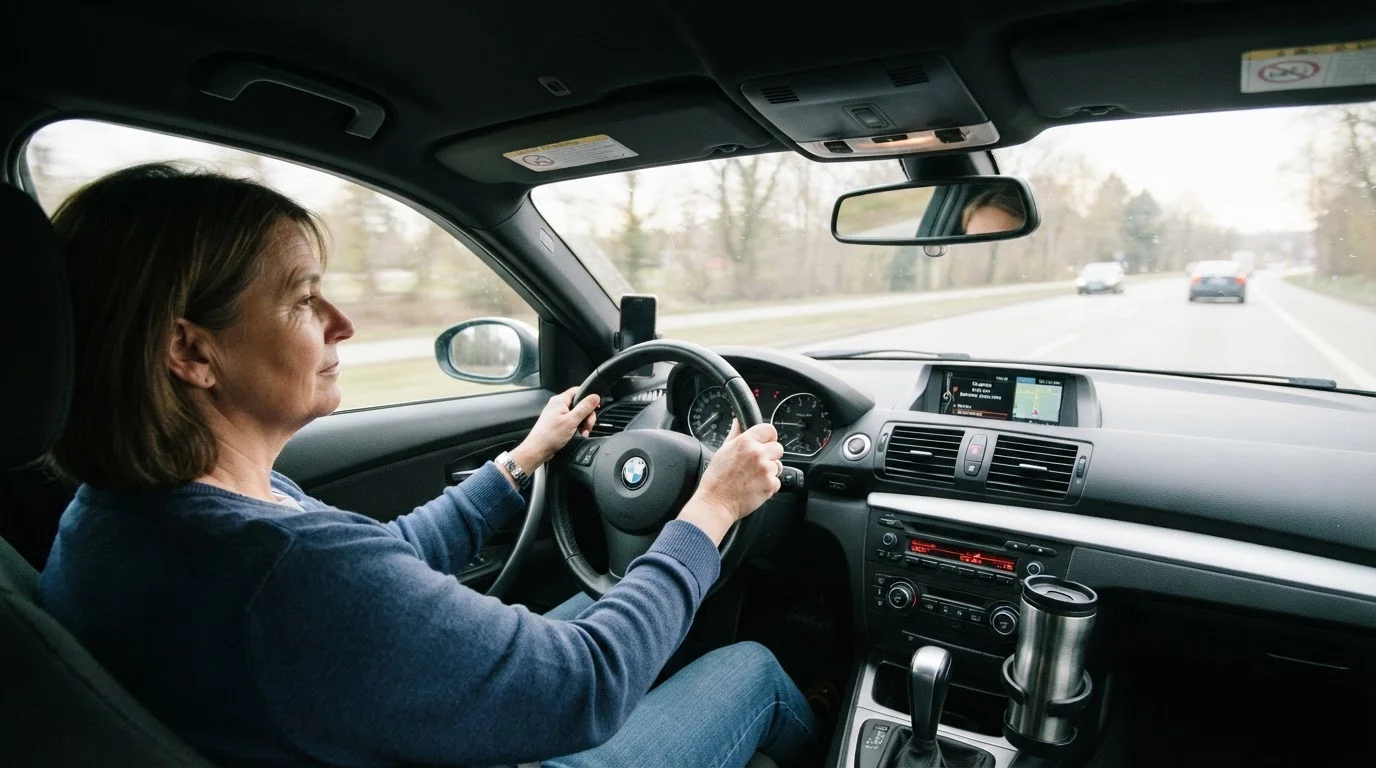
Grabbing a coffee or finishing a sandwich during a commute feels routine, but it consistently occupies at least one hand and pulls your eyes away from the road when something spills or needs unwrapping. Studies cited by the NHTSA have identified eating and drinking as a notable contributor to crash risk, with messy or hot foods being particularly problematic. The fix is straightforward: finish meals before departing or park briefly to eat. If you must drink a beverage, use a spill-proof container and place it in the cupholder before driving, not while moving through traffic.
Spills and unwrapping demand both eyes and hands at the worst possible moment.
Adjusting In-Car Controls and Infotainment
Modern infotainment systems are designed for convenience, but interacting with them while moving - scrolling through menus, changing radio stations, or entering an address mid-route - creates significant visual and manual distraction. Even voice-activated systems require cognitive effort that takes mental bandwidth away from the road. The practical rule: configure your audio, climate, and navigation settings before you pull out of the driveway. If you need to make a significant adjustment mid-trip, find a safe place to pull over.
Voice controls reduce manual distraction but still impose measurable cognitive load on the driver.
Grooming Behind the Wheel
Applying makeup, shaving, fixing hair, or checking appearance in the rearview mirror are manual and visual distractions that remove both attention and control from driving. These tasks are more common than many drivers admit, particularly during rushed morning commutes. The rearview mirror exists to monitor traffic behind you - using it for grooming means you're blind to following vehicles. Budget an extra five minutes at home or use a parking lot to complete any grooming before entering traffic.
Using the rearview mirror to groom means losing awareness of vehicles directly behind you.
Passenger Interactions
Conversations with passengers are a frequently underestimated distraction. Unlike phone calls, face-to-face interactions encourage drivers to make eye contact, gesture, or look toward the passenger - all of which take eyes off the road. Young children in the back seat can escalate this significantly: research has found that attending to children while driving is one of the most common distraction-related crash triggers. Set expectations with passengers before driving, particularly on high-demand roads or in heavy traffic. Attend to children's needs at stops, not while moving.
Turning to look at a passenger removes your eyes from the road entirely, not just partially.
Daydreaming and Mind-Wandering
Cognitive distraction - where your eyes are technically on the road but your mind is elsewhere - is the most invisible form of distraction and also one of the most prevalent. Studies have found that mind-wandering accounts for a significant share of distraction-related crashes, often more than device use. Long, familiar routes are particularly conducive to autopilot thinking. Staying cognitively present is harder to legislate or engineer away, but techniques like narrating road conditions mentally, maintaining deliberate scanning habits, and keeping drives to manageable lengths without breaks can help. This is closely related to the overconfidence traps that make familiar roads more dangerous.
A familiar route can lull even experienced drivers into autopilot, masking genuine cognitive absence.
Hands-Free Calls and Cognitive Aftereffects
Hands-free calling is widely perceived as safe because it keeps both hands on the wheel. Research from institutions including the AAA Foundation for Traffic Safety indicates that the cognitive demand of a phone conversation - even without holding the device - measurably reduces situational awareness and increases the chance of missing hazards like red lights or pedestrians. Importantly, cognitive distraction doesn't end the moment you hang up: studies suggest mental engagement can persist for up to 27 seconds after a call concludes. On a highway at 65 mph, that's more than a quarter-mile traveled in a reduced-attention state.
Cognitive distraction from a phone call can persist for up to 27 seconds after the conversation ends.
Building Habits That Reduce Distraction Before You Drive
The most effective interventions happen before you put the car in gear. Set your GPS destination, adjust your mirrors, connect your playlist, and stow loose items as part of a consistent pre-drive routine. If you're traveling long distances, a structured pre-departure checklist can help you systematically address readiness factors that often get skipped.
It's also worth acknowledging the connection between distraction and other impairments. A fatigued driver is far more susceptible to mind-wandering and reduced hazard awareness - drowsy driving carries risks comparable to alcohol impairment, and the two conditions can compound one another. Similarly, drivers who are distracted often unconsciously reduce following distance without realizing it - a dangerous combination explored in depth in our look at why tailgating is more dangerous than most drivers assume.
No single habit eliminates all distraction, but consistent, conscious choices stack in your favor every time you get behind the wheel.
Make Pre-Drive Prep a Non-Negotiable Habit
Treat the two minutes before you drive as setup time, not wasted time. Adjust your seat, mirrors, and climate control; queue up your music or podcast; set your navigation destination; and secure anything that might roll around the cabin. These small steps remove the temptation to multitask once the car is moving, which is where real risk accumulates.