

Key Takeaways
Start here
What Is Graduated Driver Licensing?
Next
The Three Stages of a GDL Program
Then
Common Restrictions and Why They Exist
For parents
How Parents Can Support the Process
Final step
Moving Toward Full Licensure
What Is Graduated Driver Licensing?
Graduated Driver Licensing - commonly abbreviated as GDL - is a structured system that introduces new, typically young, drivers to road privileges in stages. Rather than granting a full license the moment a teen passes a driving test, GDL programs require them to first demonstrate safe behavior under supervised and then restricted conditions before earning unrestricted driving rights.
All 50 states and the District of Columbia have enacted some version of a GDL program, though the minimum ages, holding periods, and specific restrictions differ considerably from one state to the next. The underlying logic is consistent everywhere: teen drivers lack the experience and hazard-recognition skills of experienced adults, and staged exposure to driving conditions helps close that gap more safely.
Graduated Driver Licensing (GDL)
A multi-stage system that slowly grants driving privileges to new drivers as they gain experience, rather than giving full access from the start.
Learner's Permit
The first GDL stage, allowing a teen to drive only while a licensed adult supervisor is in the vehicle.
Intermediate License
The second GDL stage, permitting unsupervised driving but with specific restrictions such as nighttime curfews and passenger limits.
Holding Period
The minimum amount of time a driver must remain in a GDL stage before being eligible to advance to the next one.
Passenger Restriction
A GDL rule that limits how many teenage passengers a new driver may carry to reduce in-car distraction and social pressure.
The Three Stages of a GDL Program
While every state structures its program differently, most GDL systems follow three recognizable stages:
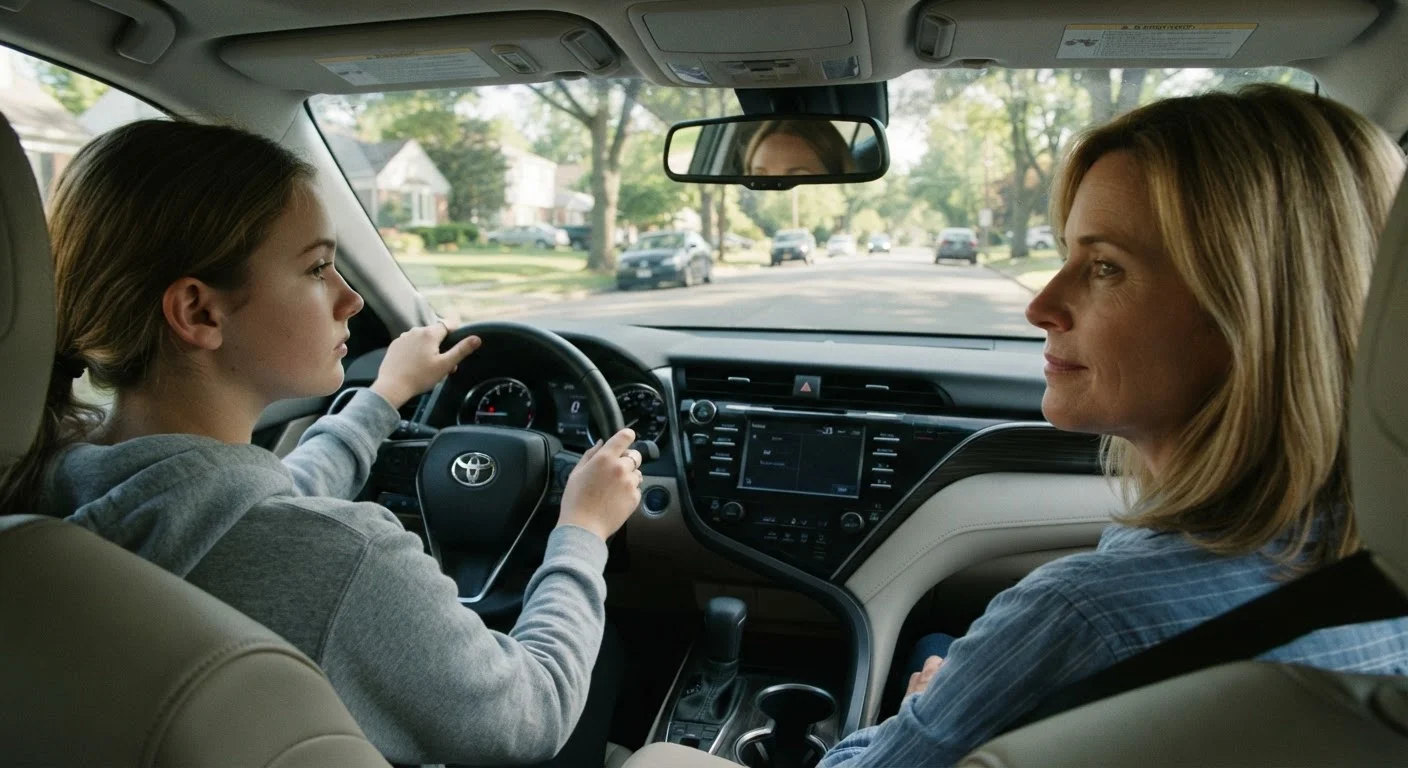
- Learner's Permit Stage: The teen can drive only with a licensed adult supervisor - usually age 21 or older - in the vehicle. This stage focuses on building basic skills in a controlled environment. Most states require the teen to hold the permit for a set minimum period (often six months) and log a specified number of supervised driving hours before advancing.
- Intermediate (Restricted) License Stage: The teen may drive unsupervised during certain hours but faces specific restrictions, typically around nighttime driving and the number of passengers allowed. This stage tests whether the new driver can apply safe habits independently.
- Full Unrestricted License: Once the teen meets all the age requirements, holding period minimums, and has a clean record during the restricted stage, they become eligible for a standard license with no GDL-specific conditions.
The transition between stages usually requires more than just the passage of time. A clean driving record - no at-fault crashes or moving violations - is commonly required to advance on schedule.
Common Restrictions and Why They Exist
The restrictions built into GDL intermediate licenses are not arbitrary. They target the specific conditions associated with the highest teen crash risk:
- Nighttime driving limits: Many states prohibit unsupervised driving after a certain hour, often between 11 p.m. and 5 a.m. Teen crash rates increase significantly at night due to reduced visibility and fatigue. Our guide on night driving hazards explains the additional challenges after dark in detail.
- Passenger restrictions: Carrying multiple teenage passengers substantially increases crash risk for teen drivers. Social pressure, distraction, and divided attention are major contributing factors. Most states limit the number of non-family teen passengers during the intermediate stage.
- Cell phone and device bans: All 50 states ban cell phone use for teen drivers under GDL restrictions, even where handheld bans don't apply to adult drivers. Distracted driving is one of the most preventable causes of crashes among new drivers.
- Seat belt requirements: Many states make mandatory seat belt use an explicit GDL condition - separate from general law - to reinforce the habit early.
Understanding the reasoning behind each restriction helps teens and parents see them as protective measures rather than arbitrary penalties. Defensive driving principles - anticipating hazards before they become emergencies - align closely with what GDL restrictions are designed to reinforce.
Log More Hours Than Required
State minimums for supervised driving are a floor, not a target. Teens who log significantly more practice hours - especially in challenging conditions like rain, highway driving, and night routes - tend to develop hazard recognition skills faster. Treat the required hours as a starting point and build from there.
How Parents Can Support the Process
Research on teen driving consistently shows that parental involvement matters - not just in logging required hours, but in the quality of coaching during those sessions. A few practical approaches make a meaningful difference:
- Practice in varied conditions: Don't limit supervised sessions to familiar neighborhood streets. Expose your teen to highway merging, adverse weather, heavy traffic, and night driving (with you present) before those conditions arise unsupervised.
- Set a family driving agreement: A written agreement covering curfews, passenger limits, phone rules, and consequences for violations helps establish clear expectations. Make sure both you and your teen understand how violations affect GDL stage progression.
- Model the behavior you expect: Teens observe parental driving habits closely. Consistent seat belt use, calm merging, and phone-free driving send a clearer message than any conversation.
- Discuss specific hazards: Talk through scenarios like following distance and sharing the road with large trucks. These are exactly the situations where inexperience is most costly.
The supervised period is also a natural time to introduce basic vehicle ownership responsibilities. See our guide on car maintenance for new drivers for what every new driver should know about keeping a vehicle road-ready.
Moving Toward Full Licensure
Full licensure isn't just a reward for waiting - it's recognition that the driver has built enough demonstrated experience to handle the road independently. To move through GDL stages without setbacks, both teens and parents should stay informed about their state's specific requirements.
Key checkpoints to track include the minimum holding periods for each stage, required supervised hours and how they're documented, any mandatory driver education courses (some states require classroom or behind-the-wheel instruction beyond parental supervision), and the clean-record requirements for advancing.
Violations Can Set Back Your Timeline
A single moving violation or at-fault crash during the restricted stage can extend your holding period in many states, delaying full licensure. Some states reset the clock entirely. Make sure your teen understands that GDL restrictions carry real consequences - not just fines, but time.
Once full licensure is achieved, the restrictions lift - but the habits formed during GDL matter long after. Drivers who build a foundation of safe, attentive driving during their restricted years are better positioned to handle the full range of road conditions adults face.
For a broader foundation on what comes with car ownership beyond the license itself, the Car Ownership Basics hub covers insurance, registration, and ongoing vehicle costs.