

Key Takeaways
Why the First Minutes Matter Most
A collision is disorienting. Adrenaline spikes, traffic keeps moving, and multiple things demand your attention at once. Drivers who have a clear mental plan before an accident ever happens are significantly better positioned to protect their safety, preserve evidence, and avoid costly mistakes.
The steps in this guide are arranged in priority order - safety first, then legal and insurance obligations. Understanding the sequence in advance means you won't have to think it through from scratch when it counts most.
If you're newer to driving or car ownership, it also helps to pair this knowledge with solid foundational habits. See our guide to common first-year ownership mistakes for a broader look at what catches drivers off guard. And if you're preparing for a long drive, pre-trip safety preparation can reduce the risk of breakdowns and collisions before you leave home.
What you will need
Step-by-Step: What to Do After a Collision
Follow these steps in order. Each one builds on the last - rushing to document the scene before ensuring everyone's safety, for example, is a mistake that can put you in harm's way.
Smartphone with camera
Photograph the scene, vehicle damage, license plates, and any visible injuries.
Pen and paper or notes app
Record driver information, witness contact details, and officer badge numbers.
Vehicle registration and insurance card
Required for information exchange with other drivers and law enforcement.
Emergency kit (first aid, reflective triangles, flashlight)
Helps manage scene safety while waiting for emergency services.
Check for Injuries and Ensure Immediate Safety
Before anything else, assess yourself and your passengers for injuries. If anyone is hurt, do not attempt to move them unless there is an immediate danger such as fire or rising floodwater - moving an injured person can worsen spinal or neck injuries. Call 911 immediately if anyone is injured.
If the vehicles are drivable and it is safe to do so, move them out of active traffic lanes to a shoulder, parking lot, or side street. Turn on your hazard lights. If you cannot move the car, stay inside with your seatbelt on until help arrives, especially on high-speed roads.
Call 911 and Report the Accident
Call 911 to report the collision, even for seemingly minor incidents. A police report creates an official record that is often required by insurers and can be critical if fault is disputed later. Describe the location clearly, note any injuries, and follow the dispatcher's instructions.
In some low-speed, minor-damage situations where no injuries occurred, local police may advise you to exchange information without an officer responding. In that case, ask the dispatcher for a report number or instructions on filing a self-report with your local DMV or police department.
Exchange Information with Other Drivers
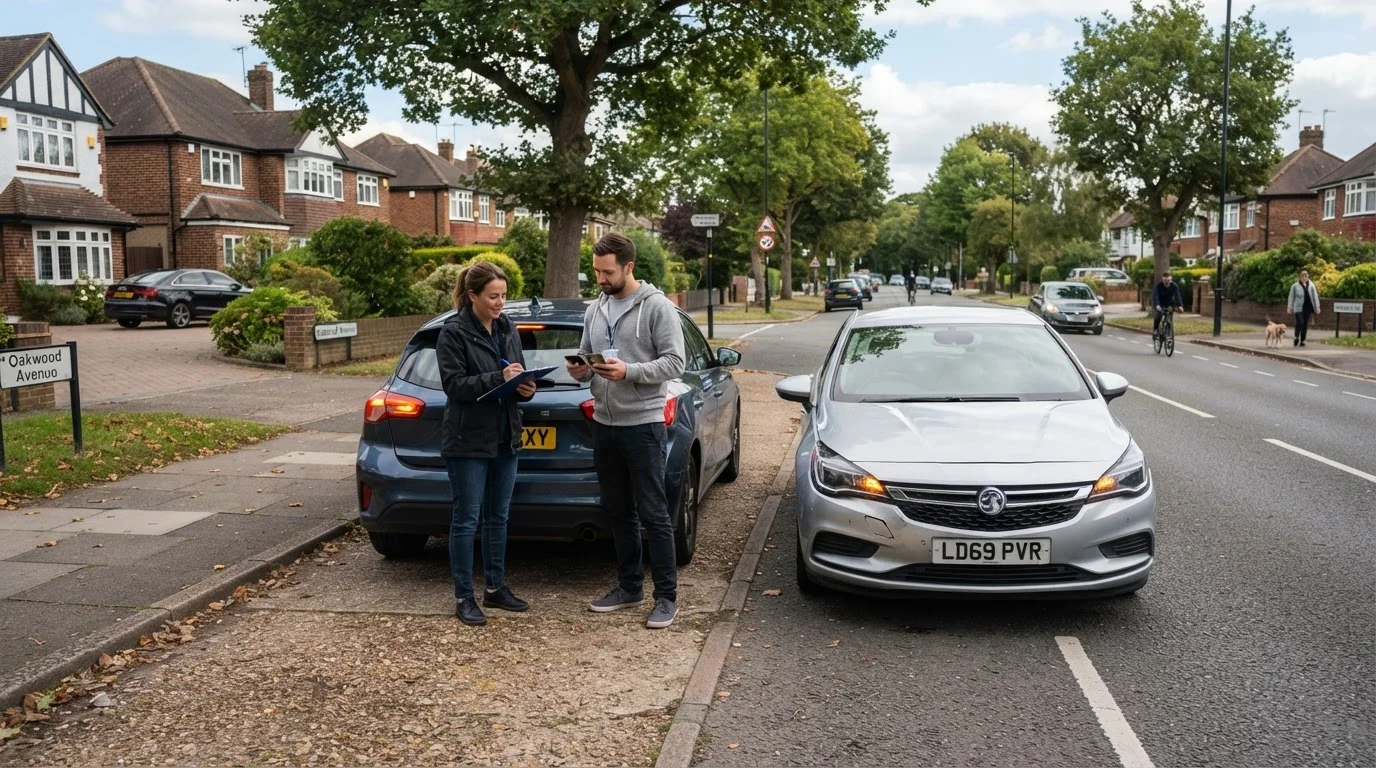
Once it is safe to do so, collect the following from every driver involved:
- Full legal name and contact number
- Driver's license number and issuing state
- Vehicle make, model, year, and color
- License plate number
- Insurance company name and policy number
Provide the same information about yourself. Do not share more than necessary - you are not required to discuss fault or vehicle value at this stage.
Document the Scene Thoroughly
Use your phone to photograph all vehicles from multiple angles, capturing damage, license plates, and their final positions relative to each other and to road markings. Also photograph:
- Skid marks and debris on the road
- Traffic signs, signals, or obstructions near the scene
- Weather and road conditions
- Any visible injuries (with consent where appropriate)
Note the time, date, and exact location. If there are witnesses, ask for their names and contact information - their accounts can be valuable if liability is disputed.
Speak with the Responding Officer
When law enforcement arrives, give a factual account of what happened. Stick to what you directly observed - avoid speculating about speed, fault, or the other driver's intentions. Ask the officer for the incident report number so you can obtain the full report later, which typically becomes available within a few days.
If you disagree with anything recorded at the scene, note it calmly; you can submit a written statement or correction through the appropriate channel later.
Notify Your Insurance Company
Contact your insurer as soon as possible after the accident - many policies require prompt notification and cooperation. Provide the facts: date, location, what happened, the other driver's information, and the police report number. Your insurer will guide you through the claims process, which may include a vehicle inspection or independent appraisal.
Even if you believe the other driver is at fault, notifying your own insurer protects your coverage rights and ensures you have support if the other party's insurer disputes the claim.
Never Admit Fault at the Scene
Even a casual apology can be interpreted as an admission of liability and used against you in insurance claims or legal proceedings. Stick to factual statements when speaking with other drivers and police. Let your insurer and, if needed, an attorney handle questions of fault.
Keep an Accident Checklist in Your Glove Box
Print a simple accident information card listing what to photograph, what details to collect, and your insurer's claims number. In a stressful moment, a physical checklist helps ensure you don't miss anything important. Many insurance companies provide these cards or a digital equivalent in their mobile app.
After the Immediate Scene: What Comes Next
Once you've left the scene, monitor yourself and any passengers for delayed symptoms - pain from whiplash or soft tissue injuries sometimes doesn't appear until hours or days after a collision. Seek medical evaluation promptly if anything feels off, and retain any medical records related to the accident.
Keep a written log of all communications with insurers, repair shops, and medical providers. Hold onto your scene photos and the police report number in a dedicated folder, digital or physical.
Preventing future incidents matters just as much as handling them well. Understanding how following distance affects stopping time is one of the most underrated safety habits - our article on why tailgating is more dangerous than most drivers realize covers the physics and risks in plain terms. For drivers still building their vehicle knowledge base, car maintenance fundamentals for new drivers is a practical next read.
Do Not Leave the Scene Prematurely
Leaving the scene of an accident before exchanging information or speaking with police - even in a minor collision - can constitute a hit-and-run under most state laws, resulting in serious legal consequences. Stay until law enforcement releases you or it is clearly safe and legal to leave.