

Key Takeaways
Builds concrete awareness of portion sizes
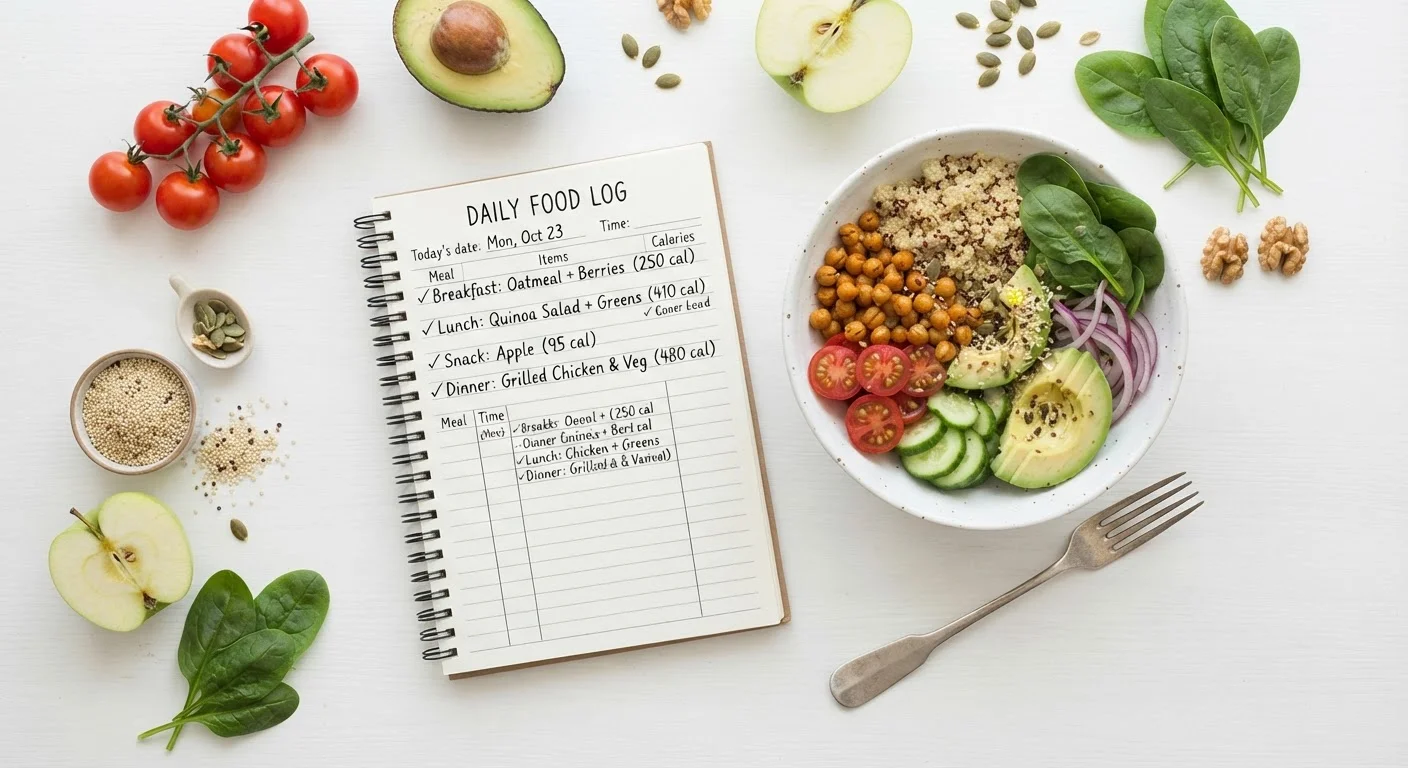
Many people underestimate how much they eat until they measure and log it. Short-term tracking often reveals surprising gaps between perceived and actual intake.
Provides a common language for nutrition conversations
Calorie figures appear on labels, menus, and clinical guidance, making them a practical reference when working with dietitians or reading public health recommendations.
Can support structured goal-setting
For individuals working with a healthcare provider on weight management or sports nutrition, calorie targets offer a measurable framework to monitor progress alongside other health indicators.
Reveals hidden energy sources in the diet
Beverages, condiments, and cooking oils are easy to overlook; tracking brings these often-invisible calorie sources into view for the first time.
Label and app data carry significant error margins
U.S. regulations allow up to 20% variance in labelled calorie values, and database entries for restaurant or home-cooked meals are estimates at best, making precise daily totals unreliable.
Ignores nutritional quality entirely
Calorie figures do not distinguish between processed and whole foods, nor do they capture fiber, micronutrients, or satiety - all of which matter for long-term health.
Does not account for metabolic individuality
Gut microbiome diversity, hormonal factors, and genetics mean two people eating identical calories can experience measurably different energy absorption and metabolic responses.
May increase anxiety around food for some people
For individuals with a history of disordered eating or high food-related stress, close numerical tracking can reinforce unhelpful patterns rather than support healthy behaviour.
Difficult to sustain accurately long-term
Consistent, precise logging requires significant time and attention; tracking fatigue commonly leads to underreporting or abandonment, reducing reliability over time.
Our Verdict
Calorie counting is a legitimate tool for building dietary awareness and understanding portion sizes, but it is not a complete picture of nutrition or metabolic health. Its accuracy limitations and the risk of an overly rigid focus on numbers mean it works best as one strategy among several, not as a standalone solution.
Best suited for adults who want to build structured awareness of their eating habits and are working alongside a registered dietitian or healthcare provider to set appropriate goals.
What Calorie Counting Actually Measures
A calorie is a unit of energy - specifically, the amount of heat needed to raise one kilogram of water by one degree Celsius. In nutrition, calories represent the energy your body can extract from food through digestion. Calorie counting tracks the total energy you consume across a day or meal.
When used consistently, tracking can reveal patterns that are otherwise invisible: how much energy comes from beverages, how portion sizes compare to serving sizes on labels, or how certain meals stack up against others. For people who have never paid close attention to their diet, this awareness alone can be genuinely useful. Our guide to reading a Nutrition Facts label explains how to locate calorie figures and interpret them accurately.
Calorie data also underpins broader conversations about energy balance - the general relationship between energy consumed and energy expended. Public health guidance on weight management often references this framework, making calorie literacy a foundational skill for understanding nutrition communication.
Builds concrete awareness of portion sizes
Many people underestimate how much they eat until they measure and log it. Short-term tracking often reveals surprising gaps between perceived and actual intake.
Provides a common language for nutrition conversations
Calorie figures appear on labels, menus, and clinical guidance, making them a practical reference when working with dietitians or reading public health recommendations.
Can support structured goal-setting
For individuals working with a healthcare provider on weight management or sports nutrition, calorie targets offer a measurable framework to monitor progress alongside other health indicators.
Reveals hidden energy sources in the diet
Beverages, condiments, and cooking oils are easy to overlook; tracking brings these often-invisible calorie sources into view for the first time.
Where the Method Falls Short
Despite its widespread use, calorie counting has real limitations that are easy to overlook.
Measurement error is built in. Research has found that calorie counts on food labels are permitted to be off by up to 20% under U.S. FDA regulations. Home measuring tools and app databases introduce additional inaccuracies. A meal you log as 500 calories could realistically be anywhere from 400 to 600.
Calories say nothing about nutritional quality. Two foods can share an identical calorie count while differing dramatically in fiber, protein, vitamins, and minerals. A handful of nuts and a handful of crackers may clock in similarly, but their effects on satiety, blood sugar, and micronutrient intake differ substantially. For a broader look at how marketing language can obscure this reality, see our article on foods often labeled healthy that deserve a closer look.
Individual metabolism is highly variable. Factors including gut microbiome composition, hormonal status, sleep quality, and genetics influence how much usable energy a person actually extracts from a given food. A fixed calorie target that works well for one person may be entirely misaligned for another.
Label and app data carry significant error margins
U.S. regulations allow up to 20% variance in labelled calorie values, and database entries for restaurant or home-cooked meals are estimates at best, making precise daily totals unreliable.
Ignores nutritional quality entirely
Calorie figures do not distinguish between processed and whole foods, nor do they capture fiber, micronutrients, or satiety - all of which matter for long-term health.
Does not account for metabolic individuality
Gut microbiome diversity, hormonal factors, and genetics mean two people eating identical calories can experience measurably different energy absorption and metabolic responses.
May increase anxiety around food for some people
For individuals with a history of disordered eating or high food-related stress, close numerical tracking can reinforce unhelpful patterns rather than support healthy behaviour.
Difficult to sustain accurately long-term
Consistent, precise logging requires significant time and attention; tracking fatigue commonly leads to underreporting or abandonment, reducing reliability over time.
Using Calorie Data Wisely
The most constructive use of calorie information is as a reference point rather than a rigid rule. A few evidence-informed principles can help:
- Treat estimates as ranges, not precise figures. Given label tolerances and logging variability, a margin of error of 10-20% is realistic on any given day.
- Pair calorie data with food quality signals. Note fiber content, protein, and ingredient lists alongside calorie totals. Our beginner's guide to balanced nutrition explains how macronutrients work together to support sustained energy.
- Use tracking as a short-term awareness tool. Many nutrition professionals suggest a defined tracking period - weeks to months - to build pattern awareness, rather than indefinite daily logging.
- Notice how tracking affects you emotionally. For some people, close attention to numbers supports positive habits. For others, it increases food-related anxiety. Both responses are valid and worth discussing with a professional.
Tracking Is a Tool, Not a Treatment
Calorie counting is an informational practice, not a medical intervention. It cannot diagnose a health condition, and a calorie target derived from an app or general formula may not be appropriate for your individual circumstances. If you have a health condition, are pregnant, or have concerns about your relationship with food, consult a registered dietitian or physician before beginning any structured tracking program.
Calorie counting is one element within the broader landscape of everyday nutrition. For a comprehensive view of how calories, macros, and meal structure fit together, see our resource on building a balanced plate.
This article is for general informational and educational purposes only and does not constitute medical or dietary advice. Always consult a qualified healthcare provider or registered dietitian before making significant changes to your diet.