

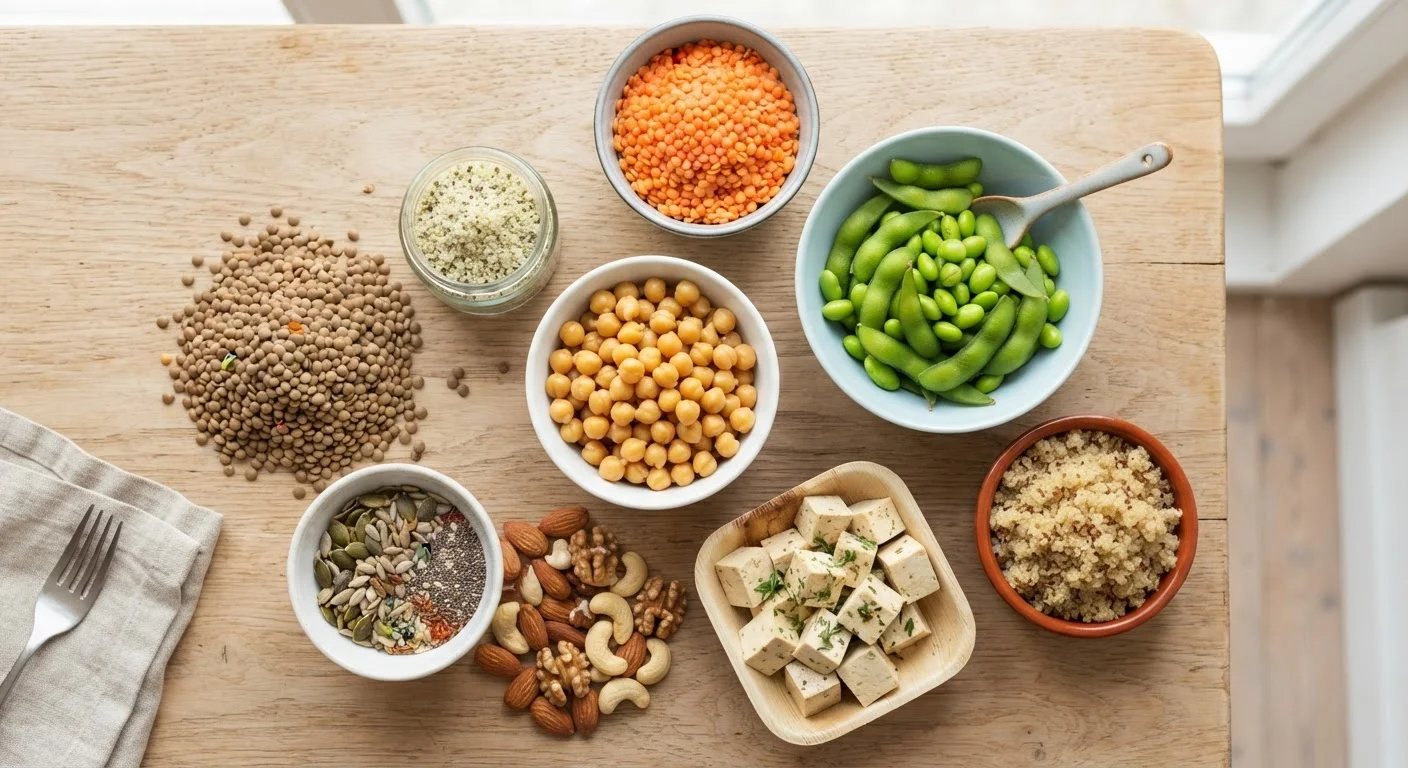
Why Plant Protein Deserves Attention
Protein is essential for muscle repair, immune function, enzyme production, and dozens of other physiological processes. While animal products have historically dominated protein conversations, research consistently shows that well-chosen plant foods can meet protein needs for most healthy adults. The key is understanding which plants deliver the most protein, how much per serving, and how different foods complement each other.
For a broader look at how protein fits into daily eating, see Building a Balanced Plate - a comprehensive guide covering macros, meal structure, and more.
High-Protein Plant Foods at a Glance
The following plant foods are among the richest protein sources available. Protein content figures below are approximate and reflect cooked or prepared weight unless otherwise noted; values can vary by brand, preparation method, and variety.
- Edamame (soybeans): ~17 g per 1-cup serving - one of the few plant sources considered a complete protein.
- Tempeh: ~19-21 g per 3.5 oz - fermented soy with a dense, meaty texture and excellent protein density.
- Tofu (firm): ~10-12 g per 3.5 oz - highly versatile; protein content rises with firmness.
- Lentils: ~18 g per 1-cup cooked - also high in iron and fiber.
- Black beans / kidney beans: ~15 g per 1-cup cooked - affordable pantry staples.
- Chickpeas (garbanzo beans): ~14-15 g per 1-cup cooked.
- Quinoa: ~8 g per 1-cup cooked - a complete protein grain, meaning it contains all nine essential amino acids.
- Hemp seeds: ~10 g per 3 tablespoons - also rich in omega-3 fatty acids.
- Pumpkin seeds (pepitas): ~9 g per 1 oz - convenient high-protein snack.
- Peanuts / peanut butter: ~8 g per 2 tablespoons - technically a legume, not a nut.
- Nutritional yeast: ~8 g per 2 tablespoons - also a source of B vitamins, including B12 in fortified versions.
Complete protein
A food that contains all nine essential amino acids in sufficient quantities. Examples from plants include soy products and quinoa.
Essential amino acids
Nine amino acids the body cannot produce on its own and must obtain through food: histidine, isoleucine, leucine, lysine, methionine, phenylalanine, threonine, tryptophan, and valine.
Complementary proteins
Two or more incomplete protein foods eaten together (or throughout the day) that collectively provide all essential amino acids - for example, rice and beans.
Legume
A plant family that includes beans, lentils, chickpeas, peanuts, and soybeans. Legumes are generally high in protein and fiber and low in fat.
Tempeh
A fermented soy product with a firm, dense texture. Fermentation increases digestibility and provides a higher protein density than many other soy foods.
Nutritional yeast
A deactivated yeast sold as flakes or powder, often used as a savory, cheese-like flavoring. Many commercial versions are fortified with vitamin B12.
Complete vs. Incomplete Proteins - and Why It Matters Less Than You Think
Proteins are built from amino acids. Nine of these are essential - the body cannot synthesize them, so they must come from food. A complete protein contains all nine essential amino acids in adequate proportions. Most plant proteins are considered incomplete because they are low in one or more essential amino acids.
However, the practical implication is simpler than it sounds. You do not need to combine specific foods at every meal. Eating a varied diet across the day naturally covers all essential amino acids. Classic complementary pairings - rice and beans, hummus and whole-grain pita, or lentil soup with bread - have been dietary staples across cultures for centuries precisely because they work.
To understand how to read protein values on food packaging, Reading a Nutrition Facts Label Without the Confusion offers a clear walkthrough of every section on a standard label.
Protein Absorption Can Vary
Plant proteins are sometimes absorbed less efficiently than animal proteins due to the presence of fiber and certain compounds called antinutrients (such as phytates). Cooking, soaking, fermenting, or sprouting legumes and grains can improve digestibility and nutrient absorption. This doesn't mean plant proteins are inadequate - it simply means variety and preparation matter.
Practical Tips for Hitting Your Protein Goals
Individual protein needs vary based on age, body weight, activity level, and health status. General public health guidance commonly cites 0.8 grams of protein per kilogram of body weight per day as a baseline for sedentary adults, though active individuals, older adults, and those recovering from illness may need more. Always consult a qualified healthcare professional or registered dietitian to determine what's appropriate for your personal situation.
- Anchor meals around a protein source - build a bowl or plate starting with lentils, tofu, or beans before adding grains and vegetables.
- Add seeds to everyday foods - hemp, pumpkin, or sunflower seeds stir easily into oatmeal, salads, or yogurt alternatives.
- Stock shelf-stable options - canned beans, dried lentils, and nutritional yeast require minimal prep and last for months.
- Vary your sources - rotating proteins also rotates micronutrients. See Micronutrients: The Vitamins and Minerals Your Body Can't Make Itself for a reference on what each food group contributes.
Building these habits gradually tends to stick. For a broader framework on sustainable eating, Nutritional Habits Worth Building for the Long Term offers evidence-informed strategies.
This article is for general informational and educational purposes only and is not a substitute for personalized medical or nutritional advice. Consult a registered dietitian or qualified healthcare provider for guidance specific to your health needs.