

Key Takeaways
Soil pH
Soil pH is a measure of how acidic or alkaline your soil is, expressed on a scale from 0 to 14. A reading of 7.0 is neutral - numbers below that are acidic, and numbers above are alkaline (also called basic). Most garden plants and lawn grasses thrive somewhere in the slightly acidic to neutral range, typically between 6.0 and 7.0.
pH stands for 'potential of hydrogen' and reflects the concentration of hydrogen ions in the soil solution. Even small shifts on the scale represent large chemical changes, since pH is logarithmic - a soil at pH 5.0 is ten times more acidic than one at pH 6.0.
The Nutrient Lock-Out Problem
You can have a soil rich in nitrogen, phosphorus, and potassium - and still watch your plants struggle. The reason is often pH. When soil is too acidic or too alkaline, essential nutrients chemically bind to soil particles and become unavailable to plant roots, a phenomenon gardeners and agronomists call nutrient lock-out.
Phosphorus, one of the three primary plant nutrients, becomes largely inaccessible below pH 6.0 and above pH 7.5. Iron and manganese, which plants need in trace amounts, become overly soluble in very acidic soils - leading to toxicity rather than deficiency. Calcium and magnesium, critical for cell structure and enzyme function, are easily leached in low-pH conditions. In short, pH acts like a master dial controlling which nutrients your plants can actually use.
This is why recognizing fertilizing problems often starts not with the fertilizer itself, but with a soil pH test. Feeding a plant in badly mismatched soil is like pouring water into a bucket with a plugged drain - the resources are there, but they can't be used.
pH 6.0-7.0
Optimal range for most lawn grasses and vegetables
University extension programs broadly recommend this range as the target for the widest nutrient availability in home gardens and lawns.
10×
Acidity difference between each pH unit
Because pH is a logarithmic scale, a soil at pH 5.0 is ten times more acidic than one at pH 6.0 - small numerical changes represent large chemical shifts.
2-3 months
Typical time for lime to measurably raise soil pH
Ground agricultural limestone works gradually; cooperative extension guidelines generally recommend applying amendments well ahead of the intended planting season.
What pH Range Do Most Plants Need?
The sweet spot for the broadest range of garden plants - including most vegetables, annual flowers, and common lawn grasses - is pH 6.0 to 7.0. Within this range, the widest array of nutrients remains soluble and accessible.
That said, plants are not all the same. Here's a practical breakdown:
- Lawns (most grass species): pH 6.0-7.0. Whether you're growing cool-season fescues or warm-season bermudagrass, slightly acidic to neutral soil supports vigorous root development and efficient nitrogen uptake. See our guide on choosing the right grass for your climate for more on how grass type affects care decisions.
- Vegetables and herbs: pH 6.0-7.0 suits most crops. Potatoes prefer slightly more acidic conditions (pH 5.0-6.0) and are less prone to scab disease at lower pH.
- Acid-loving ornamentals: Blueberries, azaleas, rhododendrons, and gardenias prefer pH 4.5-5.5. Gardeners in alkaline regions often need to actively amend beds for these plants.
- Roses and most perennials: pH 6.0-6.5 is generally ideal.
Knowing your plants' preferences before you test - and before you amend - saves time and avoids overcorrection.
How to Test and Amend Your Soil
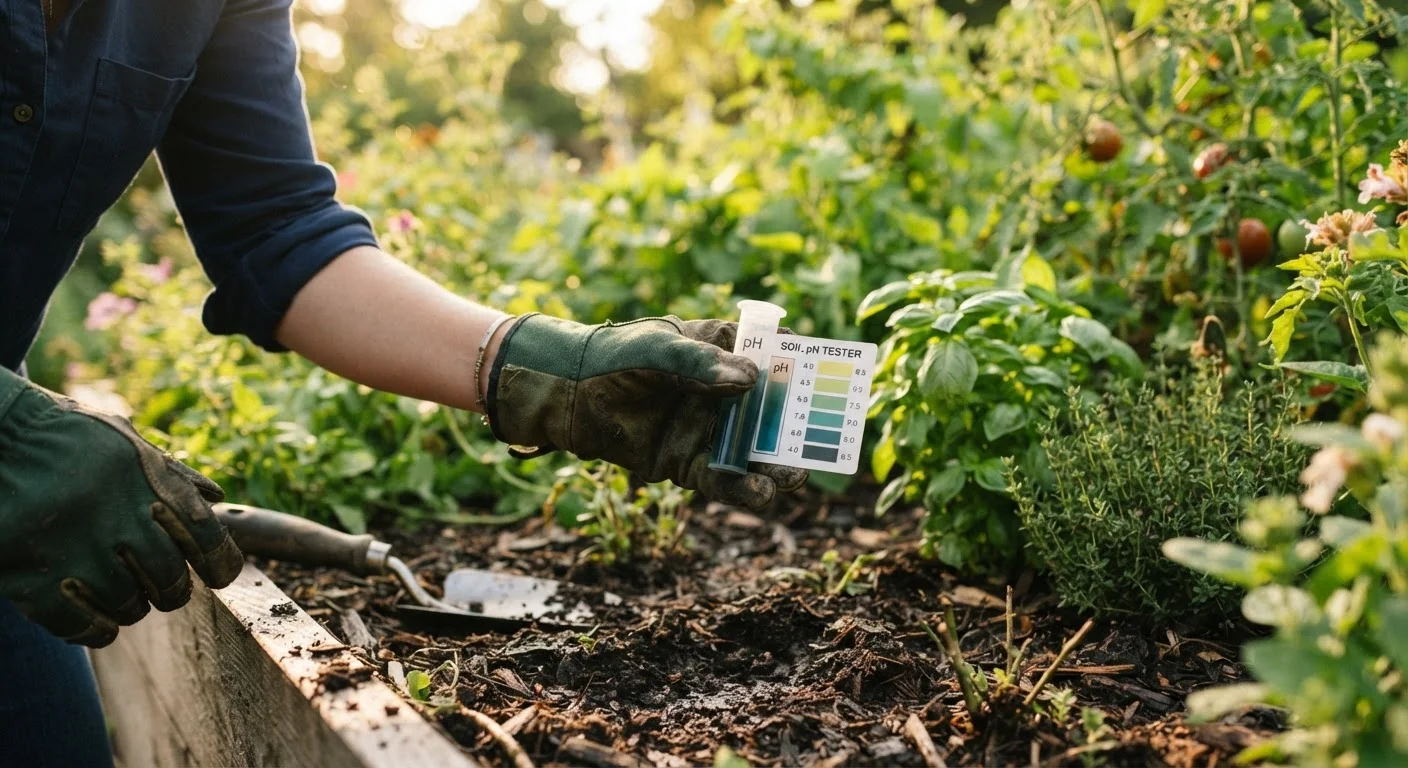
A soil test is the only way to know where your pH actually stands. Home test kits are widely available and give a reasonable general reading. For greater precision and actionable amendment rates, a lab test through your state's cooperative extension service is a worthwhile investment - many cost under $20 and include detailed recommendations.
When collecting samples, take small scoops from several spots across the area you want to test, mix them together, and submit that composite sample. This averages out natural variation and gives a more representative result.
Raising pH (too acidic): Ground agricultural limestone is the standard amendment. It works slowly - typically two to three months to show measurable change - so plan ahead. Rates vary by soil type; a clay soil needs significantly more lime than a sandy one to shift the same number of pH points.
Lowering pH (too alkaline): Elemental sulfur is the most effective option. Soil bacteria convert it into a mild acid over time. Like lime, it works gradually and the correct rate depends on your test results and soil texture.
Test Before You Amend - Every Time
Resist the urge to add lime or sulfur based on a guess or a neighbor's advice. Over-raising pH is just as problematic as leaving it too low, and correcting an overcorrection can take a full growing season. A $15-$20 soil test through your cooperative extension service gives you a precise starting point and tells you exactly how much amendment to apply.
Repeat testing after amendments have had time to work before applying another round. Over-correcting in either direction creates a new set of nutrient problems. Incorporating organic matter - compost in particular - moderately buffers soil pH over time, making dramatic swings less likely and improving soil structure in the process.
Building pH management into your routine is part of the broader seasonal lawn and garden care calendar - testing in fall, for example, gives amendments time to work before spring planting.
pH and Fertilizer: Why They Work Together
Understanding soil pH fundamentally changes how you think about fertilizing. Applying fertilizer to soil with a badly mismatched pH is an exercise in waste - nutrients sit in the soil but can't be absorbed. Correcting pH first means every bag of fertilizer you apply actually does its job.
The relationship also runs the other way. Some synthetic nitrogen fertilizers, particularly ammonium-based products, gradually acidify soil over time with repeated use. This is a slow process, but it's one reason why periodic pH testing remains valuable even in established lawns and beds - pH can drift without obvious symptoms until nutrient deficiency becomes visible. See how organic and synthetic fertilizers compare in their long-term effects on soil chemistry.
Similarly, watering practices affect how nutrients move through soil - and how quickly amendments distribute. Our overview of common watering myths touches on how water behavior in the soil profile connects to overall plant health.
A homeowner repeatedly fertilizes their vegetable garden with a balanced product but notices pale, yellowing leaves on tomato plants every summer.
A lawn care enthusiast installs a new bermudagrass lawn but struggles with thin, slow-growing turf despite regular watering and feeding.
A gardener plants blueberry bushes in ordinary garden soil and finds the plants barely grow and produce no fruit after two seasons.
The takeaway for any homeowner: pH is not a one-time fix. It's an ongoing variable to monitor as part of a complete, informed approach to lawn and garden care.