

Key Takeaways
Why Watering Myths Are So Persistent
Gardening advice gets passed down through neighbors, TV shows, and half-remembered tips from years ago. The result: a surprising number of homeowners are watering their plants in ways that quietly stress or even kill them-while believing they're doing the right thing. Understanding the actual science behind how plants use water can save your garden and cut your water bill at the same time.
For context on how soil composition affects water retention, see our article on soil pH and plant health. And if you want to reduce watering demands in the first place, mulch is one of the most effective tools available.
Myth
Plants need to be watered every day to stay healthy.
Fact
Most established garden plants thrive with deep watering two to three times per week rather than daily shallow watering.
Daily light watering keeps moisture near the surface, which is exactly where you don't want roots to stay. Roots follow water, so frequent shallow watering produces shallow root systems that are fragile, heat-sensitive, and dependent on you showing up every single day. Deep, infrequent watering-enough to soak the soil 6 to 8 inches down-encourages roots to grow downward toward more stable moisture reserves. The right frequency depends on your soil type, climate, and plant species, but daily watering is almost never the answer for established plants.
Myth
Watering leaves in sunlight will burn or scorch your plants.
Fact
Water droplets on foliage do not act as magnifying lenses and do not cause sunscorch under normal conditions.
This is one of the most widespread gardening myths, and research has consistently failed to support it. While some studies have explored the physics, the consensus among horticulturalists is that leaf scorch attributed to overhead watering is almost always caused by other factors-salt damage, fertilizer burn, or disease-not sunlit water droplets. That said, watering in the morning is still the preferred practice because it gives foliage time to dry before nightfall, which does reduce the risk of certain fungal diseases that thrive in prolonged moisture.
Myth
If your plants are wilting, they definitely need more water.
Fact
Wilting is a symptom of both underwatering and overwatering, and misreading it can accelerate plant decline.
Overwatered soil becomes waterlogged, depriving roots of the oxygen they need to function. When roots can't take up water and nutrients effectively, the plant wilts-even though the soil is wet. Before reaching for the hose, check the soil a few inches below the surface. If it's already moist or soggy, hold off on watering and allow the soil to partially dry out. Reserve additional water for when the top 2 to 3 inches of soil feel dry to the touch.
Myth
More water always means healthier, faster-growing plants.
Fact
Overwatering is one of the leading causes of plant death in home gardens, contributing to root rot and nutrient deficiency.
Plant roots require both water and oxygen. Consistently saturated soil pushes out the air pockets roots depend on, creating anaerobic conditions where root rot pathogens thrive. Overwatered plants often show yellowing leaves, stunted growth, and a general decline that gardeners frequently misinterpret as a need for even more water or fertilizer-compounding the problem. If you're also adjusting your feeding routine, recognizing fertilizing mistakes alongside watering corrections will give you the clearest picture of what your plants actually need.
Myth
You should water on a fixed schedule regardless of recent rainfall.
Fact
A rigid irrigation schedule wastes water and can stress plants; watering should respond to actual soil moisture and weather conditions.
Automated systems and fixed schedules are convenient, but they can't account for a rainy week or an unexpected heat wave. Soil moisture meters are an inexpensive and reliable way to remove the guesswork-they measure actual moisture at root depth rather than relying on surface feel or calendar dates. Many experienced gardeners also learn to read environmental cues: cooler temperatures, overcast skies, and recent rain all reduce how quickly soil dries out. Pairing a smart schedule with well-draining raised beds can also give you far more control over soil moisture than in-ground planting alone.
Putting Better Watering Habits Into Practice
Correcting these myths isn't just about avoiding harm-it actively builds a stronger, more resilient garden. Deep, infrequent watering trains roots to reach deeper into the soil profile where moisture is more stable. This makes plants more tolerant during dry spells without any extra effort on your part.
50%
Outdoor water use lost to inefficiency
The U.S. Environmental Protection Agency estimates that roughly half of outdoor residential water use is wasted due to inefficient methods like overwatering and evaporation.
6-8 inches
Target soil soak depth per watering session
University cooperative extension programs generally recommend watering deeply enough to moisten the soil 6 to 8 inches down to promote robust root development.
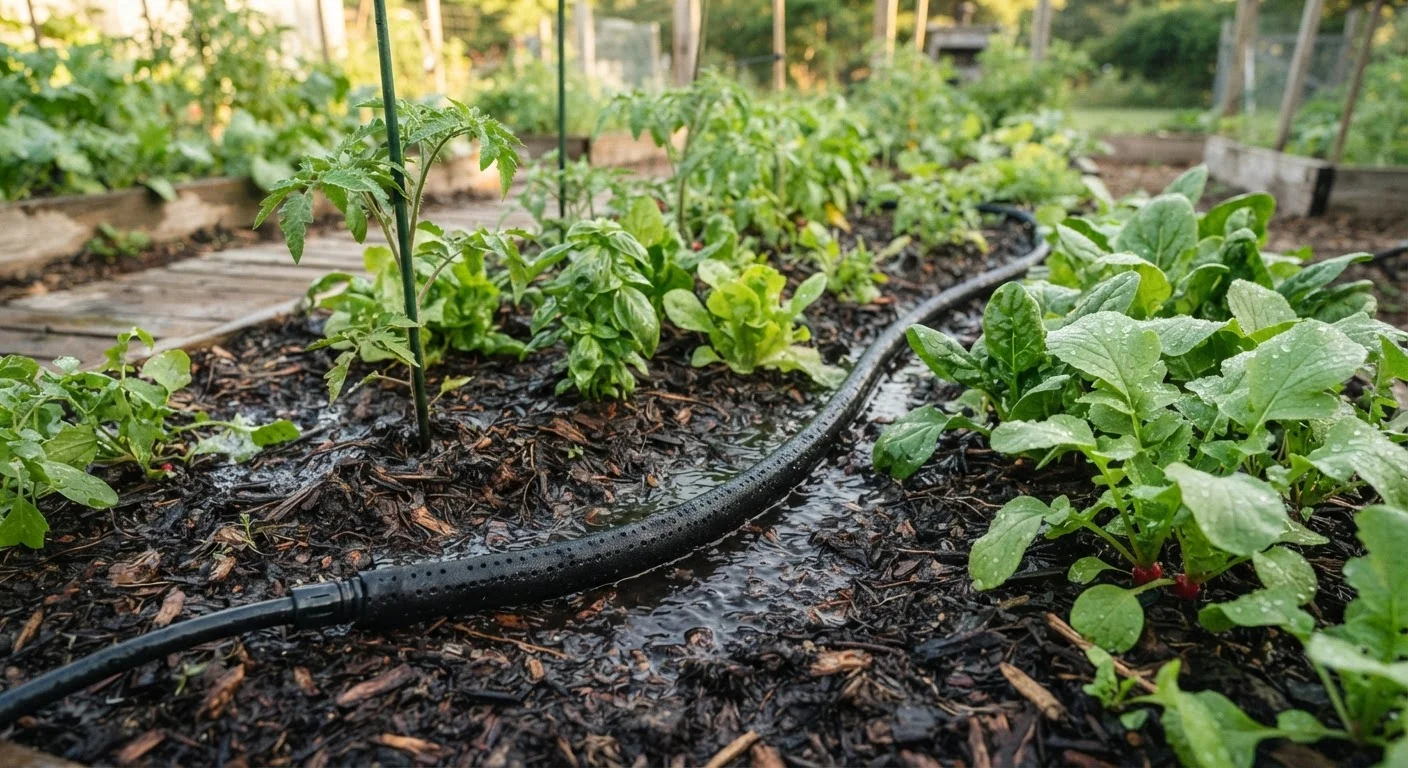
Timing and delivery method make a significant difference too. Watering at the base of plants-rather than overhead-keeps moisture where roots can actually use it. If you're weighing irrigation upgrades, our comparison of drip irrigation vs. sprinkler systems breaks down the efficiency trade-offs clearly.
Overwatering Is Harder to Reverse Than Underwatering
When plants are underwatered, a good deep soak can often bring them back quickly. Overwatering that leads to root rot is far more difficult to recover from-affected roots may not regenerate, and the plant can decline even after conditions improve. If you suspect overwatering, reduce irrigation immediately, improve drainage if possible, and allow the soil to dry out between waterings before resuming a corrected schedule.
Finally, pay attention to your specific plants, not a generic schedule. Native plants, in particular, often need far less supplemental water than many gardeners assume. Learn more in our guide to building a low-maintenance yard with native plants.