

Key Takeaways
Our Verdict
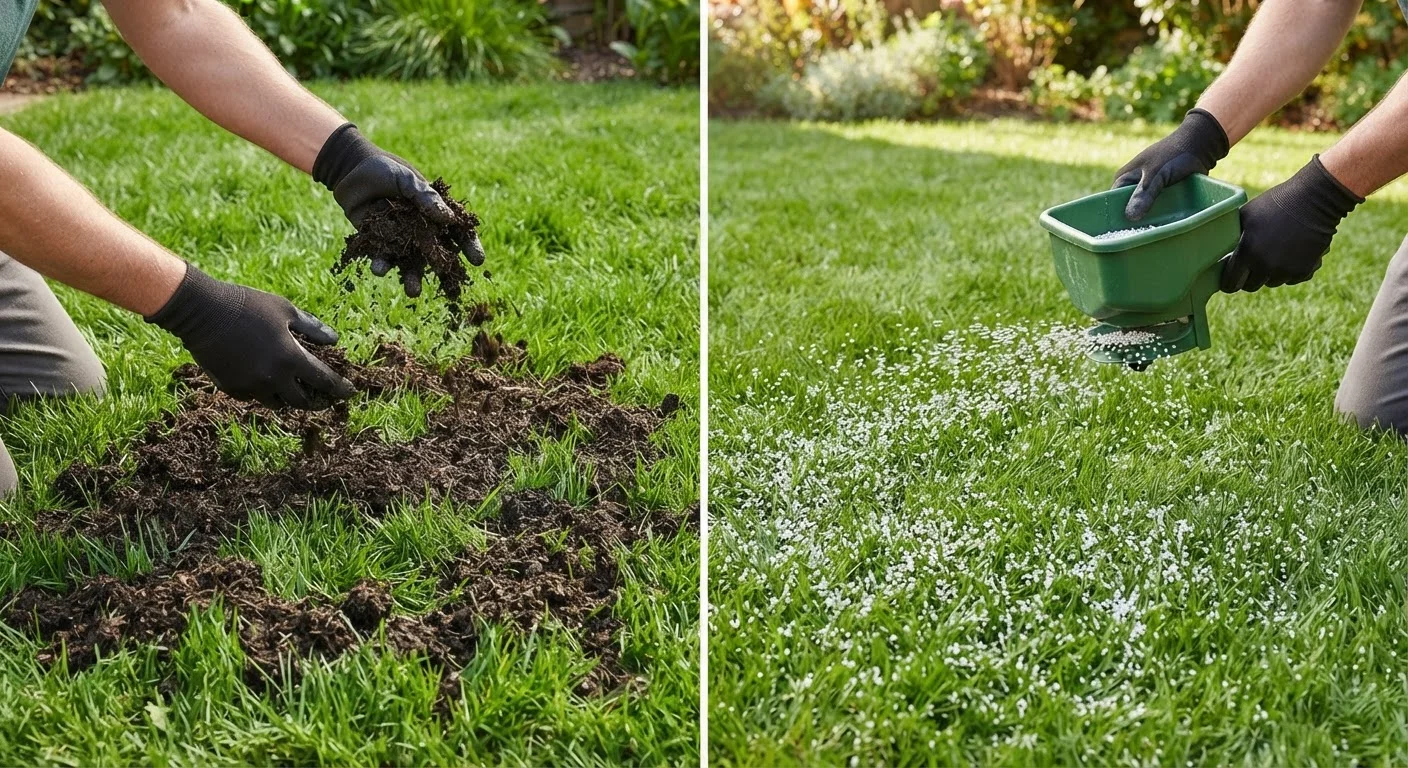
Neither organic nor synthetic fertilizer is universally superior - each suits different lawn care goals and timelines. Synthetic fertilizers deliver fast, measurable results but require careful application to avoid damaging grass or waterways. Organic fertilizers build lasting soil health with lower environmental risk, though they demand patience. Many homeowners find a hybrid approach - using synthetics for urgent corrections and organics for routine feeding - offers a practical middle ground.
| Best for | Recommended |
|---|---|
| Homeowners wanting fast green-up or quick nutrient correction | Synthetic Fertilizer |
| Those focused on long-term soil biology and reduced chemical inputs | Organic Fertilizer |
| Lawns near waterways or with sandy, fast-draining soil | Organic Fertilizer |
| Homeowners who want predictable nutrient ratios and precise application | Synthetic Fertilizer |
How Each Type Works
Understanding what happens underground after you spread fertilizer is the key to choosing wisely. Synthetic fertilizers are manufactured from inorganic compounds and deliver nitrogen, phosphorus, and potassium (NPK) in forms that grass roots can absorb almost immediately. Labels specify exact nutrient percentages, making it straightforward to calculate how much you're applying. Organic fertilizers - derived from materials like composted manure, bone meal, blood meal, or feather meal - release nutrients gradually as soil microbes break down organic matter. This process is slower but continuously feeds the biological ecosystem beneath your turf.
The result is two different feeding philosophies: synthetics act more like a rapid IV drip of nutrients, while organics function like a sustained-release capsule tied to soil temperature and microbial activity. For a deeper look at how soil biology affects nutrient uptake, see our guide on soil pH and nutrient availability.
Nutrient Release Speed and Timing
Speed matters when your lawn has an urgent need - yellowing turf heading into summer, or thin growth before overseeding season. Synthetic fertilizers typically show visible results within one to two weeks. However, that speed comes with a trade-off: if rainfall or irrigation follows application too quickly, excess nutrients can wash off the lawn before roots absorb them, contributing to waterway pollution. Apply too much at once and you risk fertilizer burn - brown, scorched patches caused by nitrogen overload.
Organic fertilizers rarely burn grass even if you apply slightly more than recommended, because nutrient release depends on microbial activity rather than direct soil concentration. The downside is timing: organics work best when soil temperatures are consistently above 50°F, since microbial activity slows in cold conditions. This makes them less effective for very early spring or late fall feeding windows. For fall fertilizing decisions specifically, our fall yard prep guide outlines when and how to time a late-season application.
| Organic Fertilizer | Synthetic Fertilizer | |
|---|---|---|
| Nutrient release speed | Slow (weeks to months) | Fast (days to 2 weeks) |
| Risk of lawn burn | Very low | Moderate to high if over-applied |
| Soil health impact | Builds microbial life and structure | Neutral to slightly depleting over time |
| Runoff and environmental risk | Lower risk | Higher risk without careful timing |
| Cost per application | Generally higher | Generally lower |
| Nutrient precision | Variable, harder to pinpoint | Clearly labeled, predictable |
| Cold-weather effectiveness | Limited below 50°F soil temp | Works regardless of soil temp |
Soil Health and Long-Term Impact
One of the most significant - and often overlooked - differences between these two fertilizer types is their effect on soil structure over time. Repeated reliance on synthetic fertilizers without adding organic matter can gradually deplete microbial populations and reduce soil's ability to retain moisture and resist compaction. This doesn't mean synthetics are harmful when used appropriately, but they don't actively contribute to the living soil ecosystem the way organics do.
Organic fertilizers introduce humus (decomposed organic material) that improves soil texture, aeration, and water-holding capacity. They also feed the microbial communities responsible for cycling nutrients naturally. Over several seasons, lawns maintained with organic inputs typically develop a richer, more self-sustaining soil profile. Pairing fertilization with complementary practices - like proper mowing height and aeration - amplifies these benefits. If you're also overseeding thin patches, a soil-healthy approach pays off; see our overseeding guide for timing recommendations.
Consider a Blended Approach
Many experienced lawn care practitioners use synthetic fertilizer for targeted, fast corrections - such as addressing a nitrogen deficiency heading into peak growing season - while relying on organic sources for routine maintenance feeding. This hybrid strategy lets you take advantage of quick results when needed without abandoning the long-term soil benefits that organic matter provides. Always follow label application rates and water in granular products as directed to reduce runoff risk.
Cost, Convenience, and Practical Application
Synthetic fertilizers are generally less expensive per pound of actual nutrient delivered and are widely available in granular or liquid forms that are straightforward to spread with a standard broadcast spreader. Nutrient ratios are clearly labeled, which simplifies calculation. Organic options tend to cost more per application and often require larger volumes to deliver equivalent nutrient loads, since their NPK concentrations are typically lower.
That said, cost comparisons should factor in the full picture: frequent synthetic applications that run off or burn grass create additional lawn care expenses down the line. A soil test - available through many cooperative extension services - is a worthwhile first step regardless of which fertilizer you choose. It tells you exactly which nutrients your soil is lacking, so you're not applying what you don't need. To avoid common application pitfalls with either type, review our guide on recognizing fertilizing mistakes and building a healthy schedule. For a full year-round fertilizing framework, the seasonal lawn care calendar is a useful reference.