

Key Takeaways
Why Bank Statements Deserve More Than a Glance
Most people open their bank statement, confirm the balance looks roughly right, and move on. That quick scan misses a surprising amount of useful information - and occasionally misses outright errors or unauthorized charges.
A bank statement is a complete, official record of every transaction in your account during a set period, typically one month. Unlike a quick app balance check, it shows you exactly where money entered and left your account, what fees were charged, and how your balance changed from start to finish. If you've ever wondered how banks handle your deposited funds, the statement is where you see the practical results of that relationship reflected in real numbers.
Understanding the statement's structure makes it far less overwhelming. Once you know what each section is supposed to tell you, reviewing it takes only a few minutes and yields genuinely useful insight.
What you will need
The Anatomy of a Standard Bank Statement
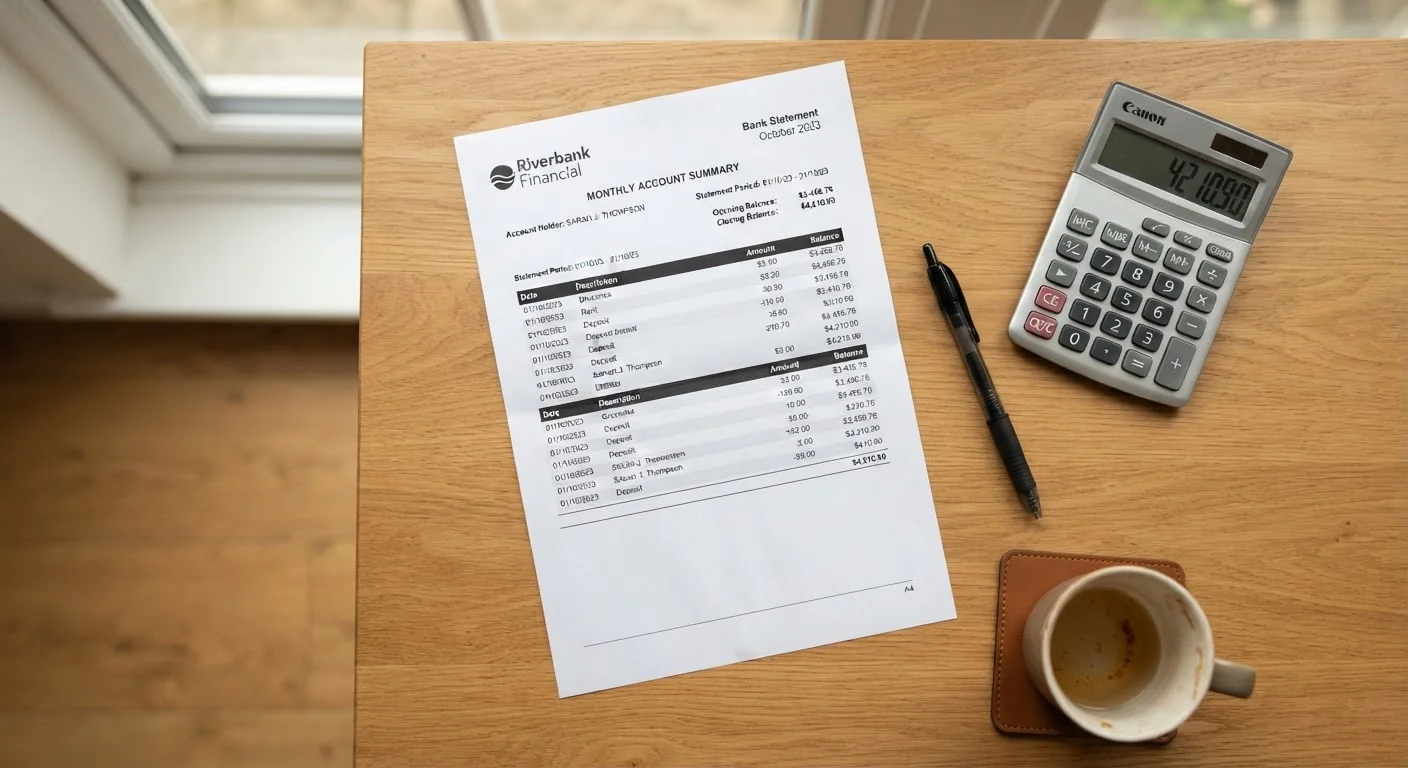
While formatting varies slightly between financial institutions, nearly every bank statement contains the same core sections.
Account Summary
This appears at the top and gives you the big picture: your opening balance (what you started the period with), your closing balance (what remained at the end), and often the total of all deposits and withdrawals. If these numbers don't match your own rough mental accounting, that's the first signal to dig deeper.
Deposits and Credits
This section lists every amount that came into your account - paychecks, direct deposits, transfers from other accounts, refunds, and any interest earned. Credits increase your balance. Review these to confirm expected income actually arrived and no unexpected credits (which could indicate an error you'll later have to return) slipped in.
Withdrawals and Debits
This is typically the longest section. Every purchase, ATM withdrawal, automatic bill payment, and electronic transfer appears here. Amounts are listed with a date, a description, and the dollar amount. This section is where unauthorized charges most often hide - an unfamiliar merchant name or an amount slightly different from what you expected warrants a closer look.
Fees and Interest
Banks may charge monthly maintenance fees, overdraft fees, out-of-network ATM fees, or minimum balance fees. These appear as separate line items. If you hold a savings account that earns interest, any interest credited also appears here. Tracking fees month-over-month is one of the fastest ways to identify avoidable costs. For a broader look at how checking and savings accounts differ in their fee structures, see how checking and savings accounts compare.
Transaction Detail
Below the summary sections, most statements list every individual transaction in chronological order. Each entry typically shows the date, a description (often a merchant name or transfer reference), and the running balance after that transaction. This is your line-by-line audit trail.
How to Review Your Statement Step by Step
Confirm the Statement Period and Account Information
At the top of every statement you'll find the statement period (e.g., March 1-March 31), account number (usually partially masked), and account type. Verify this is the correct account and period before reviewing anything else. Mixing up months or accounts is a common source of confusion.
Check the Opening and Closing Balances
Your opening balance should match the closing balance from the previous month's statement. If it doesn't, contact your bank to ask for an explanation before reviewing anything else. Then note your closing balance - this is the verified figure, not the one you see in a mobile app, which may not reflect pending transactions.
Scan Deposits for Completeness
Review every credit listed and confirm expected deposits arrived - payroll, freelance payments, transfers. Check the dates. A paycheck that deposited a day late every month could indicate a payroll issue worth addressing. Also verify the amounts match what you expected.
Review Every Debit and Withdrawal
Go line by line through the debits section. For each transaction, ask: do I recognize this merchant? Is the amount correct? Is the date plausible? Flag anything unfamiliar. Fraudulent transactions are often small amounts first - thieves frequently test a stolen card number with a minor charge before making larger purchases.
Itemize All Fees and Compare to Last Month
List every fee charged during the period. Common ones include monthly maintenance fees, overdraft fees, and ATM surcharges. If a fee appeared that you don't recognize or weren't expecting, call your bank and ask for an explanation. Some fees are reversible if you ask - especially if you've been a long-standing customer with no history of overdrafts.
Reconcile the Math Yourself
Take your opening balance, add all deposits, subtract all withdrawals and fees, and confirm the result equals your closing balance. Most of the time it will match exactly. When it doesn't, recheck the figures - occasionally a transaction is posted to the wrong period, which resolves itself the following month, but it's worth knowing.
Using Your Statement to Understand Your Spending
Once you've confirmed accuracy, your statement doubles as a budgeting tool. Grouping transactions by category - groceries, utilities, dining, subscriptions - gives you a data-backed picture of where money actually went. This is more reliable than memory alone. Our guide on understanding spending categories explains how to define and apply those groupings consistently.
Bank statements also pair well with a structured monthly review habit. Rather than waiting until something goes wrong, a short check before each statement closes can catch discrepancies while they're still easy to resolve - see our guide on what to verify before the statement closes for a practical checklist.
Finally, if you also carry a credit card, note that those statements have their own structure and critical fields - particularly the interest calculation and minimum payment warning. Compare what you learn here against the anatomy of a credit card statement to build a complete picture of your monthly finances.
This article is for general informational and educational purposes only and does not constitute personalized financial advice. For guidance specific to your financial situation, consult a qualified financial professional.