

Key Takeaways
Our Verdict
Neither shopping model is universally safer - each carries distinct trade-offs. Marketplaces offer breadth and convenience but introduce variability in seller accountability. Dedicated retailers provide more consistent security policies but require their own due diligence. Understanding the structural differences between the two is the most practical defense a shopper has.
| Best for | Recommended |
|---|---|
| Shoppers who want predictable return policies and consistent data-handling standards | Dedicated Retailer |
| Buyers comfortable verifying seller credentials and reading third-party reviews carefully | Online Marketplace (vetted sellers) |
| Anyone purchasing high-value items where authenticity and warranty matter most | Dedicated Retailer |
Two Very Different Structures Behind the Same Checkout Button
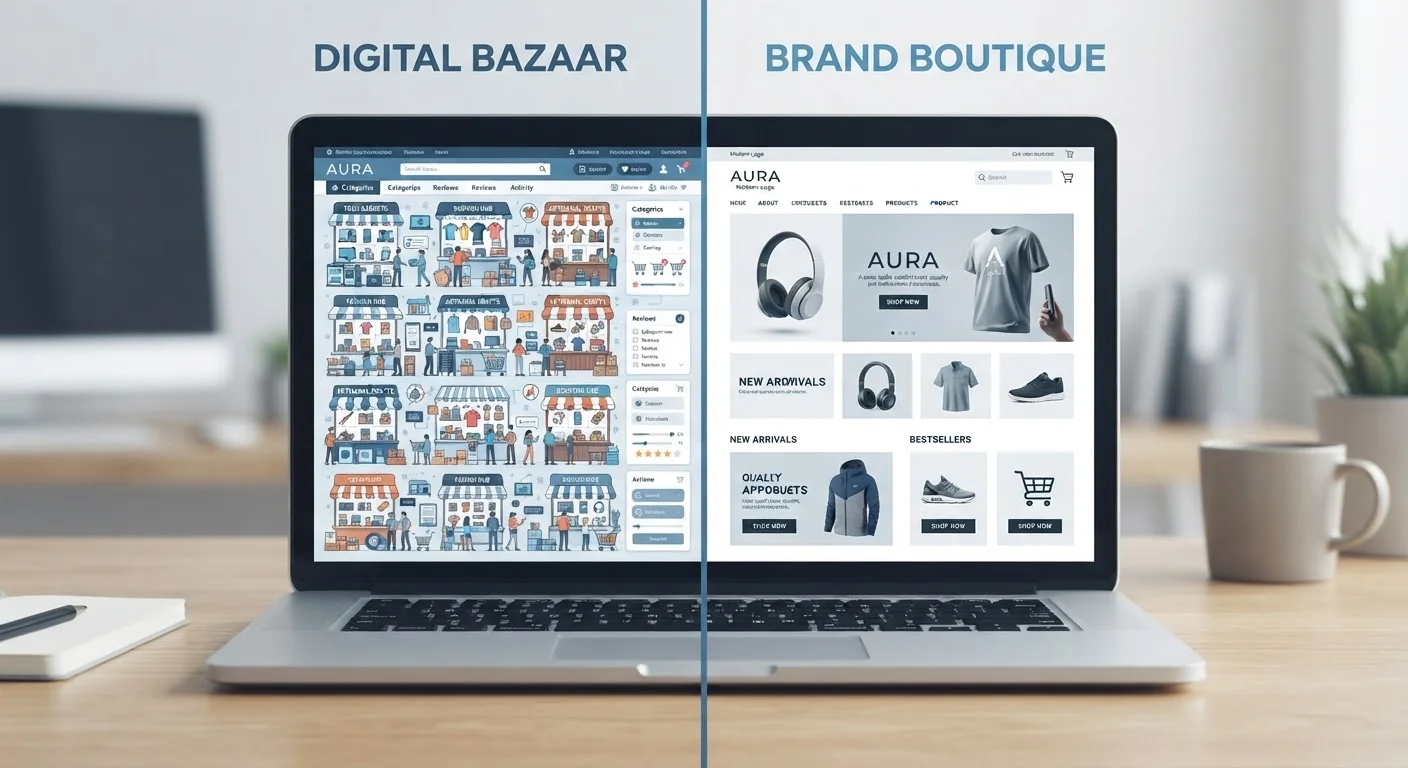
When you buy from an online marketplace - a platform that hosts thousands of independent third-party sellers - you are not necessarily buying from that platform. You may be buying from a small business, an overseas wholesaler, or an individual reseller who simply uses the platform's infrastructure. The marketplace acts more like a landlord than a store.
A dedicated retailer, by contrast, owns its entire supply chain relationship with the customer: the inventory, the fulfillment, the customer service, and the data collected at checkout all sit under one roof with one accountable entity. That structural difference shapes nearly every security-relevant aspect of the transaction. For a deeper look at what legitimate standalone stores look like, see The Anatomy of a Trustworthy Online Retailer.
Seller Accountability and Vetting Standards
Marketplaces vary widely in how rigorously they vet third-party sellers before allowing them to list products. Some platforms require identity verification and business documentation; others have historically had low barriers to entry. Even on tighter platforms, bad actors periodically slip through - a well-documented problem with counterfeit goods that the U.S. Government Accountability Office and consumer advocacy groups have reported on repeatedly.
Dedicated retailers are legally and reputationally responsible for every product they sell. If they stock a defective or misrepresented item, the liability path is direct. There is no intermediate seller to point to. This doesn't mean every dedicated retailer is trustworthy - fraudulent storefronts exist - but the accountability structure is more straightforward.
| Online Marketplace (3rd-Party Seller) | Dedicated Retailer | |
|---|---|---|
| Seller accountability | Platform enforces rules; seller varies | Retailer directly accountable |
| Counterfeit risk | Higher - variable seller vetting | Lower - single sourcing chain |
| Dispute resolution | Multi-party, platform-mediated | Single contact point, internal policy |
| Buyer protection programs | Usually available; exclusions apply | Store policy; chargeback always applies |
| Data sharing | May share data with third-party seller | Single privacy policy, no seller sharing |
| Return policy consistency | Varies by individual seller | Uniform across all purchases |
When shopping on any platform, check whether the item ships from and is sold by the platform itself or by a named third party. That single detail changes your consumer rights position considerably.
Payment Protection and Dispute Resolution
Most major marketplaces offer buyer protection programs that can refund purchases when items don't arrive or don't match their description. However, these programs have time limits, category exclusions, and documentation requirements that vary by platform. Resolution can involve multiple parties - you, the marketplace, and the third-party seller - which can slow things down.
Dedicated retailers handle disputes internally, meaning one contact point, one policy document, and typically clearer escalation steps. Your credit card chargeback right - a federal protection under the Fair Credit Billing Act - applies in both scenarios, but it's often easier to exercise when the transaction has fewer parties involved.
Always Check Who Is Actually Selling
On any marketplace, look for the phrase 'Sold by' near the Add to Cart button. If the seller name differs from the platform name, you are dealing with a third-party merchant. This affects your return options, data exposure, and who handles any dispute. Taking five seconds to confirm this can save significant frustration later.
For a full breakdown of security terminology like chargebacks and SSL, A Glossary of Online Shopping Security Terms is a useful reference before you shop.
Data Handling and Privacy Exposure
When you check out on a marketplace, your data may be shared with or visible to the third-party seller fulfilling your order - including your shipping address and, in some cases, contact information. Marketplace privacy policies typically disclose this, but most shoppers don't read them. Dedicated retailers collect your data under a single privacy policy with no seller-side data sharing by default.
Creating an account on either type of platform carries its own trade-offs. Guest Checkout vs. Creating an Account covers those considerations in detail. As a baseline: using a credit card rather than a debit card, and enabling two-factor authentication on any account you do create, reduces exposure on both platform types.
Counterfeit and fraudulent listings are a measurable risk on open marketplaces. The safest approach for high-value or safety-critical purchases - medications, electronics, children's products - is to use a dedicated retailer whose sourcing you can verify, or to confirm that the marketplace listing is fulfilled directly by the platform rather than a third party.
For a comprehensive guide to safe online transactions from account setup through to handling problems, see Online Shopping Safety From Start to Checkout.