

Key Takeaways
Trustworthy Online Retailer
A trustworthy online retailer is a web-based store that operates transparently, protects customer data, fulfills orders as described, and provides clear recourse when something goes wrong. Trust is not just about a professional appearance - it's built from verifiable signals like secure connections, reachable contact information, honest policies, and a documented track record.
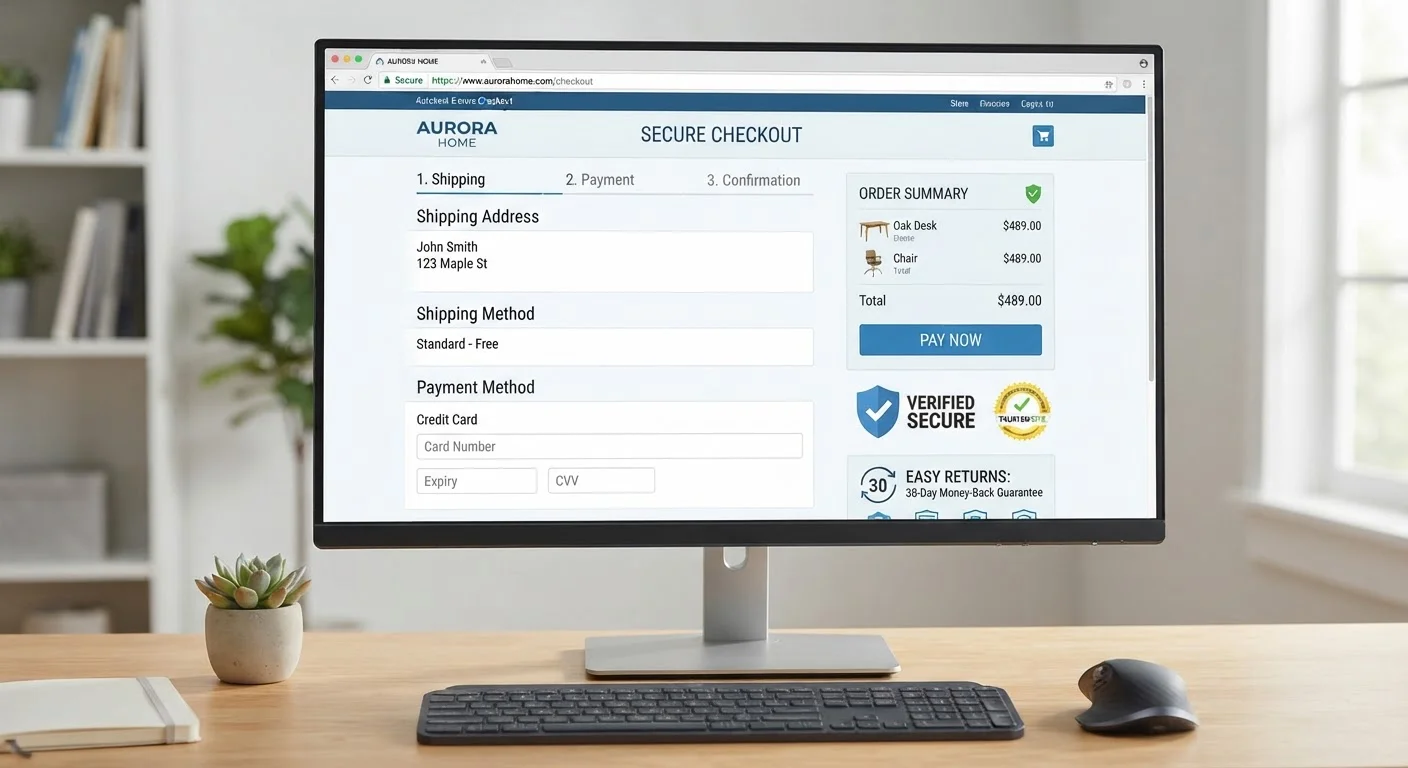
Security certificates (HTTPS/TLS) encrypt data in transit but do not validate a business's legitimacy or ethics - a fraudulent site can still display a padlock icon.
Why Appearance Alone Isn't Enough
Modern website builders make it straightforward for anyone to launch a professional-looking online store in hours. That means a polished design, high-quality product photos, and a recognizable layout no longer reliably signal a legitimate business. Scammers exploit this gap deliberately. Understanding what actually indicates trustworthiness - beyond aesthetics - is the core skill for safer online shopping.
Counterfeit storefronts can mimic real retailers with alarming accuracy, copying logos, color schemes, and product descriptions. The signals that matter are the ones harder to fake: verifiable policies, reachable humans, and independently documented history.
HTTPS Is Not a Trust Guarantee
The padlock icon in your browser's address bar confirms that your connection to the site is encrypted - it does not confirm that the business behind the site is legitimate or honest. Fraudulent sites routinely obtain security certificates because they are free and easy to acquire. Treat HTTPS as a minimum requirement, not a seal of approval.
The Core Trust Signals to Examine
Genuine retailers share several structural characteristics that fraudulent operations tend to lack or only partially replicate:
- Secure, consistent URL: The address bar should show HTTPS and a domain that matches the brand name exactly. Lookalike domains - using hyphens, extra words, or character substitutions - are a common tactic. Reading the URL bar carefully can catch many fraud attempts before they start.
- Reachable contact information: A working phone number, direct email, or live chat - ideally with a physical address - indicates the business expects to be contacted. A contact form with no other details is a weaker marker.
- Clear, specific policies: Return, refund, shipping, and privacy policies should be easy to find (typically linked in the footer) and written in specific terms - not vague boilerplate. A policy that states the return window, condition requirements, and refund timeline is written by someone who intends to honor it.
- Independent reviews: Look for feedback on platforms the retailer does not control. Not all reviews are equally reliable, but patterns across independent sources carry real weight.
- Domain age: Publicly available WHOIS tools show when a domain was registered. A site launched recently, selling heavily discounted goods, deserves additional scrutiny.
$10B+
Annual online shopping fraud losses reported in the U.S.
The Federal Trade Commission has reported that consumers lose billions annually to fraud, with online shopping consistently among the top reported categories.
~50%
Share of fraud complaints involving online purchases
The FTC's Consumer Sentinel Network data has consistently shown online shopping and negative reviews among the most frequently reported fraud types by U.S. consumers.
Payment Methods as a Safety Layer
Even when a retailer passes basic trust checks, the payment method you choose acts as a secondary layer of protection. Credit cards issued in the U.S. generally provide chargeback rights - the ability to dispute a charge when goods are not delivered or significantly misrepresented. Some digital payment services offer their own buyer dispute processes.
By contrast, wire transfers, cryptocurrency payments, and gift card transactions typically offer no recourse once completed. Fraudulent retailers often push these methods specifically because they are irreversible. If a checkout page steers you away from standard payment options, treat that as a meaningful red flag. For a broader view of the checkout process, this complete guide to online shopping safety covers payment choices alongside account and data security.
Putting It Together Before You Buy
Checking each trust signal takes only a few minutes but significantly narrows the risk of shopping with a fraudulent store. A practical approach: before entering any payment or personal information, verify the URL carefully, locate (and read) the return policy, confirm at least one direct contact method works, and search for independent reviews using the store's name alongside terms like "reviews" or "complaints."
A structured pre-purchase checklist can make this process consistent and fast. And if pricing feels unrealistically low, that warrants its own investigation - deeply discounted prices are among the most reliable lures fraudulent stores use.
Trust is ultimately built from multiple signals aligning - not from any single feature. A site can have HTTPS and still be a scam; a site can have modest design and be entirely legitimate. The goal is to read the full picture rather than rely on any one indicator.