

Key Takeaways
Internet Availability by Location
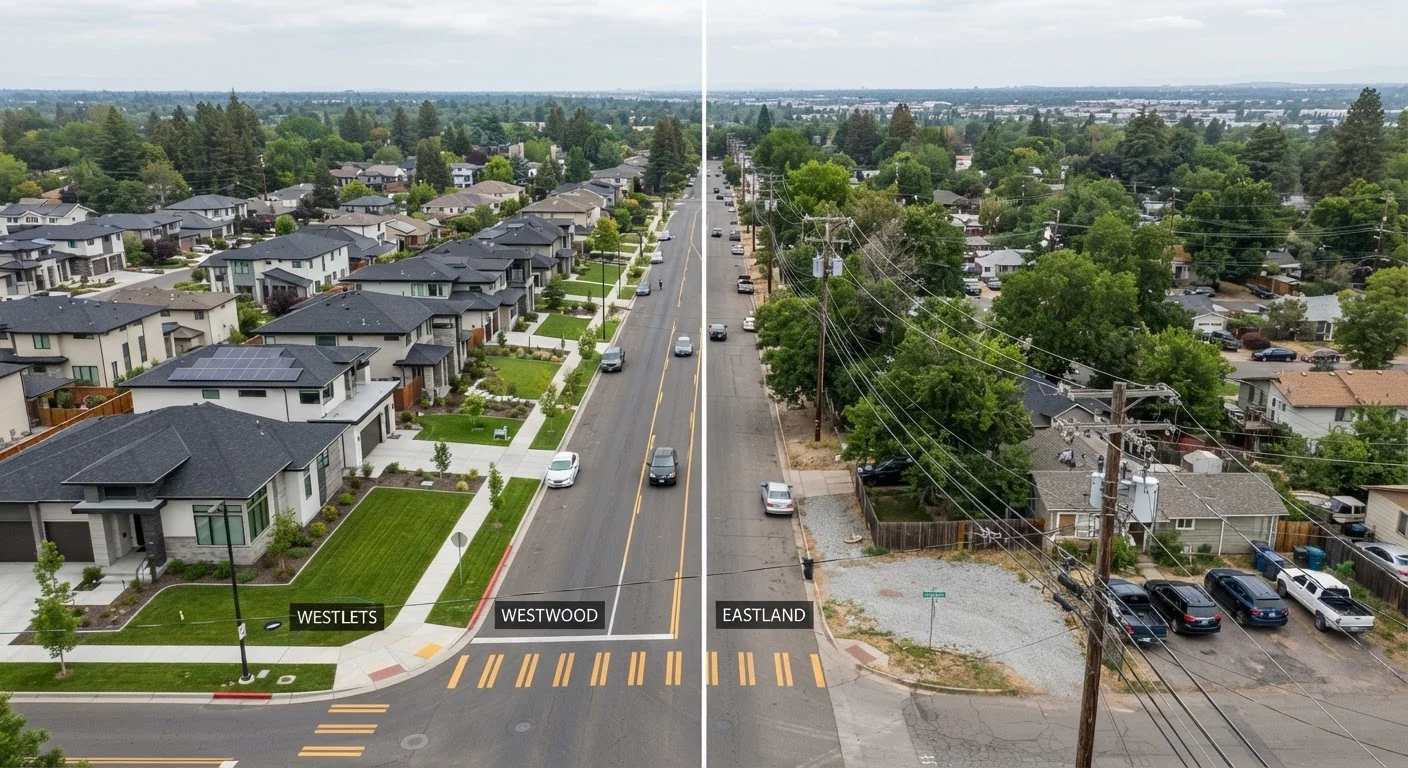
Internet availability refers to which types of internet service - such as fiber, cable, DSL, or fixed wireless - are physically accessible at a specific address. Because each technology depends on distinct physical infrastructure, coverage does not follow neighborhood or ZIP code boundaries neatly. Two houses on the same block can have entirely different options based on which cables, lines, or transmitters reach each property.
Availability is determined at the serviceable address level, not the census tract or ZIP code level. The FCC's Broadband Data Collection program maps availability down to individual locations using data submitted by providers.
Why Availability Isn't Uniform Across a Neighborhood
When people move to a new address, they often assume internet options will mirror what their neighbors have - or what the neighborhood's reputation suggests. In reality, availability is almost entirely a function of physical infrastructure that was built piecemeal over decades, by different companies, using different technologies, under different regulatory and business conditions.
Cable systems, for example, follow the path of coaxial cable runs laid by cable television operators starting in the 1970s and 1980s. DSL relies on copper telephone lines, which vary in quality and length depending on how far a given address sits from the provider's central office or node. Fiber optic networks require entirely new conduit and installation - expensive work that providers undertake block by block, driven by projected subscriber density and return on investment.
The result is that coverage boundaries don't correspond to ZIP codes, school districts, or city limits. They correspond to where wires stop, where transmitters reach, and where a provider decided it was economically viable to build. To understand the full picture of what each technology delivers, see what fiber, cable, DSL, and fixed wireless actually deliver.
~8.3M
U.S. locations lacking 25/3 Mbps service
According to the FCC's 2024 Broadband Data Collection, approximately 8.3 million locations in the U.S. are unserved by fixed broadband at the federal benchmark speed.
42%
Rural locations with only one fixed provider
FCC data indicates that a significant share of rural addresses have access to only one fixed broadband provider, limiting competitive choice substantially.
$42B
Federal BEAD program broadband funding
The NTIA's Broadband Equity, Access, and Deployment (BEAD) program allocated approximately $42 billion to states to expand broadband infrastructure in underserved areas.
The Infrastructure Layers Behind Your Options
Each internet technology operates on a separate physical network. When a provider expands their service area, they aren't simply flipping a switch - they're extending a distinct physical plant, which requires permits, construction, and capital expenditure.
Fiber requires installing underground or aerial glass fiber strands directly to a building. Providers must negotiate right-of-way agreements with municipalities and utilities before a single foot of cable goes in the ground. This is why fiber often appears in newer developments or dense urban corridors first - those locations reduce per-customer construction costs.
Cable networks use the existing coaxial infrastructure originally built for TV distribution. Upgrading these systems to support higher internet speeds (via DOCSIS 3.1 or DOCSIS 4.0 standards) requires node-splitting and hardware upgrades but doesn't require completely new routes. Still, older coaxial plant in some neighborhoods may not support modern upgrade paths without significant work. For a deeper look at how cable and fiber architectures compare on everyday use, see how shared vs. dedicated connections affect real-world speeds.
DSL depends on copper telephone lines and degrades significantly with distance. Addresses more than a mile or two from the provider's equipment often receive speeds well below advertised maximums, making DSL a declining option in many markets.
Fixed wireless requires line-of-sight or near-line-of-sight access to a transmitter tower. Terrain, building density, and foliage can all block signal, creating availability gaps even within a provider's nominal coverage zone.
Why Your Address Unit Number Matters
Multi-unit buildings - apartments, condos, and mixed-use developments - sometimes have provider availability at the building level but not individual unit level. Some providers require the building owner to sign a bulk service agreement before any unit can subscribe. Always check serviceability with your full address, including unit number, rather than just the street address or building.
How Broadband Maps Reflect - and Misrepresent - Reality
The FCC's Broadband Data Collection (BDC) program requires providers to report availability at the individual address level, an improvement over earlier census-block reporting that frequently overstated coverage. Even so, the maps rely on data submitted by providers, who have a financial incentive to report broad coverage. Independent audits and state-level challenges to the FCC data have found meaningful discrepancies in both directions - locations marked as served that lack viable service, and locations marked unserved that do have options.
This matters for two practical reasons. First, households relying on maps alone may miss providers who serve their address but aren't prominently represented in aggregate tools. Second, federal subsidy programs that fund new buildouts use these maps to identify eligible areas - errors can delay investment in genuinely underserved communities.
The most reliable approach remains direct verification: enter your full address - including any unit number - on each provider's website, and if the result is ambiguous, call the provider's provisioning team directly. Key questions to ask before committing to any plan can help you evaluate what you find.
What Drives Future Availability at Your Address
Several forces shape whether and when additional options reach a given location. Federal broadband funding - including the NTIA's BEAD program, which allocated approximately $42 billion to states for broadband expansion - is accelerating buildout in historically underserved areas. States are required to submit deployment plans and prioritize locations with no wireline service above 25/3 Mbps (the federal standard for unserved locations).
Municipal and cooperative networks represent another pathway. Some local governments and electric cooperatives have built their own broadband infrastructure where private investment hasn't materialized, particularly in rural counties. These efforts vary widely in scale and progress.
For households in areas with limited options today, understanding why those gaps exist - and what investments are planned - can inform both short-term workarounds (such as fixed wireless or mobile broadband) and longer-term expectations. Common assumptions about what your plan actually delivers are worth re-examining too; see the misconceptions that lead to overpaying or underperforming.
Availability, in short, is a snapshot of decisions made years or decades ago. The infrastructure map is changing, but it changes slowly - and unevenly.