

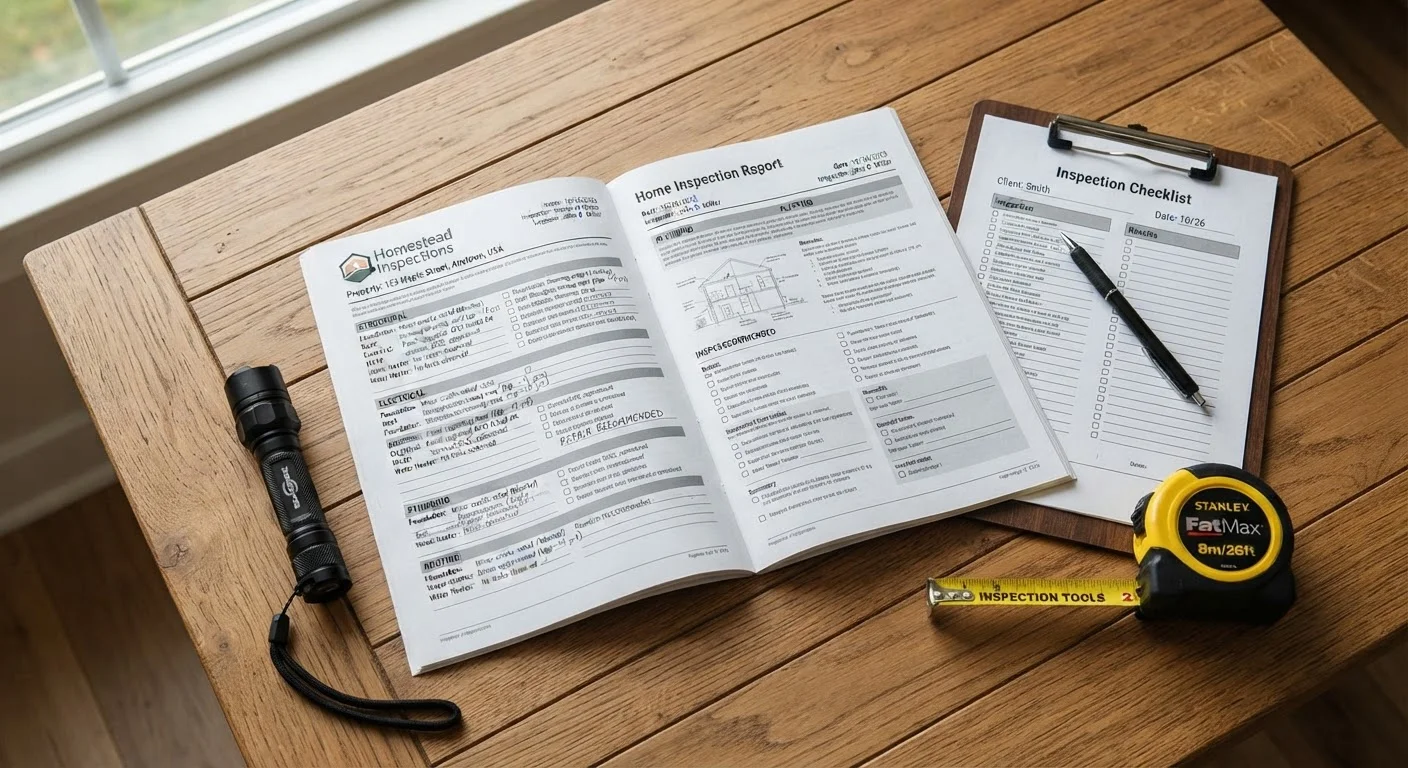
How Inspection Reports Are Structured
A standard home inspection report is organized by system - electrical, plumbing, HVAC, roofing, foundation, and more - rather than by urgency. That structure is practical for inspectors but can mislead readers who assume a long report means a severely troubled home. What matters is understanding the severity tier of each finding, not the raw count.
Most reports use three or four classification levels. The exact labels vary by inspector, but the meaning generally aligns as follows:
- Safety hazard / immediate concern: Requires professional attention before occupancy or use. Common examples include double-tapped breakers, missing GFCI protection near water sources, and improper gas appliance venting.
- Deficiency / repair recommended: A real problem that should be corrected, though not necessarily an emergency. Examples include a water heater lacking a pressure-relief valve discharge pipe or a bathroom exhaust fan venting into the attic instead of outdoors.
- Monitor / maintenance item: Conditions that are currently manageable but could worsen without attention. Cracked caulk, slow drains, or an aging but functional HVAC unit typically fall here.
- Informational / FYI: Notes that help the homeowner understand how a system works or what future servicing it may need, without flagging a current defect.
For a broader explanation of how each home system interconnects, see our plain-language guide to essential home systems.
Decoding Language for Electrical, Plumbing, and HVAC
Electrical findings in inspection reports are among the highest-priority items to evaluate. Phrases like double-tapped breaker (two wires sharing one breaker terminal), ungrounded outlets, or aluminum branch wiring indicate conditions that licensed electricians need to assess - do not treat these as cosmetic. For help understanding your panel before that appointment, our guide to reading your electrical panel explains the basics in plain terms.
Plumbing language often includes references to water pressure, drain flow, visible corrosion, or supply-line material. Galvanized steel supply lines and polybutylene piping are older materials that inspectors routinely flag because they are prone to failure or have known performance histories. An inspector who notes evidence of prior leaks is flagging staining or water damage that may point to an unresolved source - not necessarily an active leak.
HVAC terminology centers on service history, filter condition, heat exchanger integrity (for gas furnaces), and refrigerant lines. A note that a unit is functional but aging means it works today - but you should factor replacement costs into your planning horizon. An inspector who recommends further evaluation by an HVAC technician has spotted something beyond their scope, which warrants a service call, not dismissal.
Once you understand your report, knowing the right questions to ask contractors helps you evaluate scope and credentials before authorizing any work.
Prioritizing What the Report Flags
After reading your report, sort findings into three action buckets: act now, plan within the year, and monitor ongoing. Safety hazards belong in the first bucket unconditionally. Deficiencies that affect livability - a failing water heater, a furnace with a questionable heat exchanger, deteriorating main electrical service - belong in the second. Cosmetic issues, slow drains, and aging-but-serviceable equipment belong in the third.
Keep in mind that inspectors document what they observe at a single point in time. Systems can change between inspection day and move-in. For this reason, many homeowners schedule a annual home systems walkthrough to stay ahead of emerging issues the original inspection may not have caught - or that developed after it.
A few practical principles:
- Never use the inspection report as your only basis for estimating repair costs. Get itemized quotes from licensed professionals for any finding you plan to negotiate or address.
- Verify permit requirements with your local building department before any major repair. Electrical, plumbing, and HVAC work commonly requires permits and inspections in most U.S. jurisdictions.
- If a finding is described as a safety hazard and the seller disputes it, request an independent evaluation by a licensed specialist - not a second general inspection.
Home inspection reports are tools for informed decision-making, not verdicts. The goal is to enter homeownership - or the next phase of it - with a clear, prioritized picture of what your systems need.