

Key Takeaways
Summary
22 items · 2-4 hours spread across several fall weekends
Why Fall Is the Most Consequential Season for Lawn Health
Most homeowners treat spring as the main event for lawn care - the season of seeding, fertilizing, and fresh starts. But what your lawn does in spring is largely determined by what you do in fall. Grass roots remain active well after the blades stop growing visibly, storing carbohydrates and nutrients that fuel the first flush of growth when temperatures rise again.
Fall also offers cooler soil temperatures, more consistent moisture, and reduced weed competition - ideal conditions for seed germination and root development. Skipping fall prep doesn't just cost you a season; it compounds into thinning turf, compacted soil, and heavier weed pressure the following year.
For a broader look at how fall tasks fit into a year-round routine, see The Seasonal Lawn Care Calendar Every Homeowner Should Know. This checklist focuses specifically on the high-leverage tasks that make the biggest difference between a lawn that limps out of winter and one that surges back strong.
Soil Preparation
Overseeding and Repair
Fertilizing
Weed and Pest Control
Leaf Management and Final Mow
Tool and Equipment Winterization
Tools and Supplies You'll Need
Before you start working through the checklist, gather or rent the right equipment. Having everything on hand reduces the temptation to skip steps mid-project.
Core Aerator
Pulls plugs of soil to relieve compaction and open channels for seed, water, and nutrients to reach the root zone.
Broadcast or Drop Spreader
Distributes grass seed and granular fertilizer evenly across the lawn for consistent coverage.
Soil Test Kit or Extension Service Submission
Measures soil pH and nutrient levels so you can target amendments precisely rather than guessing.
Leaf Rake or Lawn Vacuum
Removes heavy leaf accumulations that would otherwise mat and smother turf over winter.
Lawn Mower with Mulching Blade
Handles the final mow of the season and can shred light leaf cover into beneficial organic mulch.
Garden Hose with Adjustable Nozzle or Sprinkler
Provides consistent moisture to newly overseeded areas through the germination period.
Straw Mulch
Covers overseeded patches to retain moisture, moderate soil temperature, and reduce surface erosion.
Fuel Stabilizer
Added to gas-powered equipment before storage to prevent fuel degradation and carburetor damage over winter.
Fertilizing and Soil Health: Setting the Root Foundation
Fall fertilization is arguably the single highest-return task on this list. A fertilizer higher in potassium and phosphorus - rather than the nitrogen-heavy formulas useful in spring - supports root hardening and cold tolerance without stimulating excessive top growth heading into winter.
Understanding whether an organic or synthetic product better suits your soil and lawn goals is worth the extra research. Organic vs. Synthetic Fertilizers: Understanding the Trade-Offs for Your Lawn walks through how each type releases nutrients and affects long-term soil structure - important context before you choose a product.
If you have a compost system at home, fall is also a great moment to top-dress bare or thin patches with finished compost before overseeding. Composting at Home: Turning Kitchen Scraps Into Garden Gold explains how to know when your compost is ready to use.
Don't Fertilize Too Late in the Season
Applying nitrogen-rich fertilizer after your grass has gone fully dormant wastes product and can push tender growth that is immediately damaged by hard frost. Time your fall fertilizer application when grass is still showing active growth but nighttime temperatures are consistently cooling - typically mid-September through mid-November depending on your region. If you're unsure of the right timing for your area, your local cooperative extension service can provide guidance tailored to your climate zone.
Final Mow, Leaf Management, and Tool Shutdown
The last mow of the season is often underestimated. Grass left too tall going into winter can mat under snow and create conditions favorable to snow mold - a fungal disease that reveals itself as gray or pink patches in early spring. Most lawn care experts suggest a final cut at roughly 2 to 2.5 inches for cool-season grasses, though your specific grass type may call for slight variation.
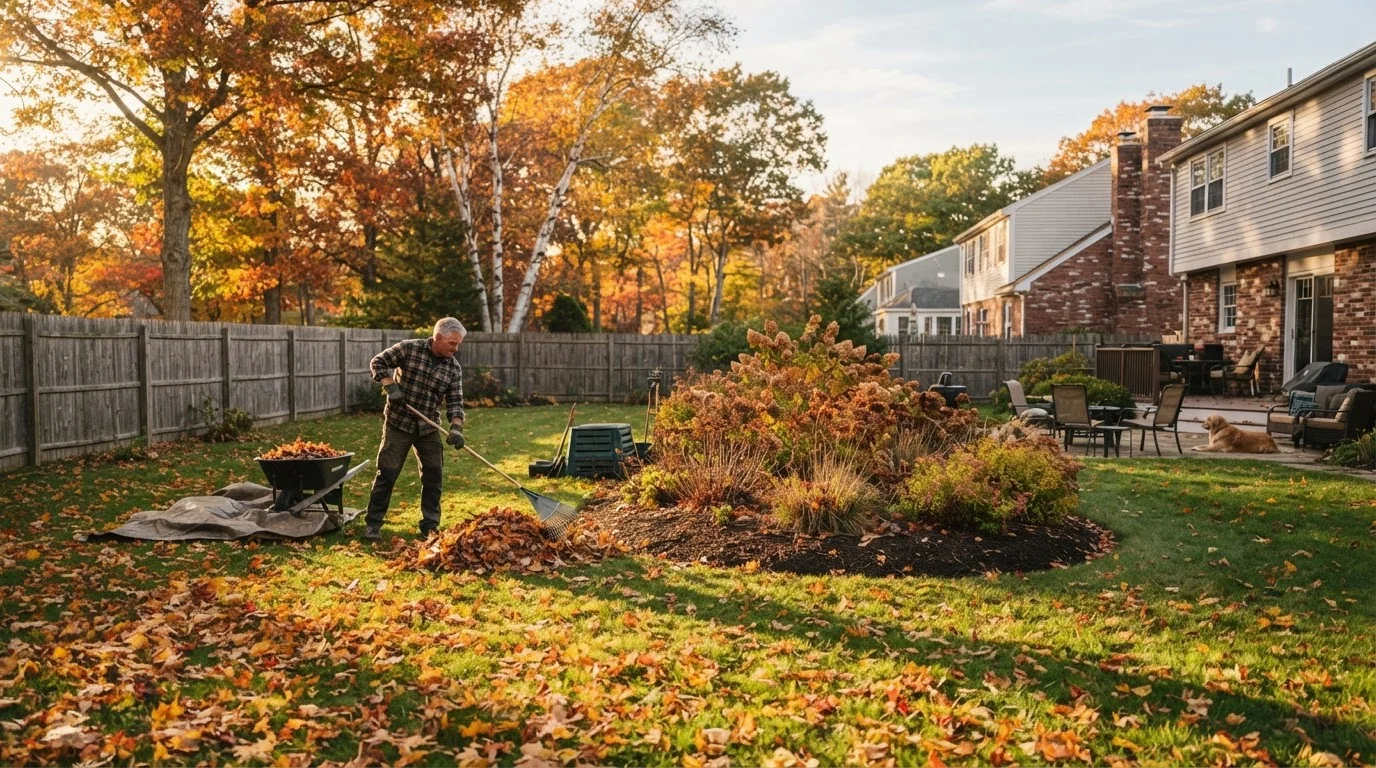
Leaf management is equally critical. A thin, scattered layer of leaves can be mulched in place with a mower - shredded finely enough, they decompose and return organic matter to the soil. A thick, matted layer is a different story: it blocks light, traps moisture, and can kill turf outright over winter. Clear dense accumulations before the ground freezes.
Once the lawn work is done, winterizing your equipment protects your investment. Drain fuel from gas-powered tools, clean mower decks thoroughly, sharpen blades before storage, and lubricate any moving parts prone to rust. Just as seasonal vehicle maintenance prevents costly repairs, seasonal tool care keeps your equipment ready for spring - for a parallel approach to seasonal upkeep, The Seasonal Car Maintenance Checklist Every Driver Should Keep offers a comparable framework applied to vehicles.
Match Every Task to Your Grass Type
Cool-season grasses (such as Kentucky bluegrass, tall fescue, and perennial ryegrass) and warm-season grasses (such as Bermuda and Zoysia) have fundamentally different fall care needs. Cool-season varieties are actively growing in fall and benefit most from aeration, overseeding, and fertilizing during this window. Warm-season grasses are entering dormancy and should not be fertilized late in the season. Applying fall treatments designed for cool-season turf to a warm-season lawn can cause more harm than benefit, so confirm your grass type before working through this checklist.