

Key Takeaways
Grounding, Bonding & GFCI
Grounding, bonding, and GFCI (Ground Fault Circuit Interrupter) protection are three distinct but complementary electrical safety systems built into modern homes. Grounding gives excess electrical energy a safe path into the earth. Bonding connects metal components so they share the same electrical potential, preventing dangerous voltage differences. GFCI protection detects tiny imbalances in current flow and shuts a circuit down in milliseconds to prevent shock.
All three systems are governed by the National Electrical Code (NEC), which is updated every three years and adopted-sometimes with local amendments-by most U.S. jurisdictions.
Why Three Systems Exist Instead of One
Many homeowners assume that having a grounded outlet means their home is fully protected. In reality, electrical safety in a residence depends on three separate systems-each designed for a different failure scenario. Understanding what each one does (and doesn't do) makes you a more informed owner, whether you're reviewing an inspection report, authorizing electrical work, or simply trying to understand what your panel is telling you.
See our plain-language guide to home systems for a broader look at how electrical fits alongside plumbing and HVAC.
AFCI Protection Is a Related-But Separate-System
Arc Fault Circuit Interrupters (AFCIs) protect against a different hazard: electrical arcing inside walls caused by damaged or deteriorating wiring. The NEC requires AFCI breakers in bedrooms, living rooms, and other areas where grounded faults are less likely but arc faults from old wiring are a fire risk. AFCI and GFCI protections can coexist on the same circuit and are now available in combination devices.
Grounding: Giving Fault Current Somewhere to Go
In a properly functioning circuit, electricity travels out through the hot wire and returns through the neutral wire. A ground fault occurs when current strays outside that intended path-through a frayed wire, a damaged appliance, or a person who touches the wrong thing at the wrong moment.
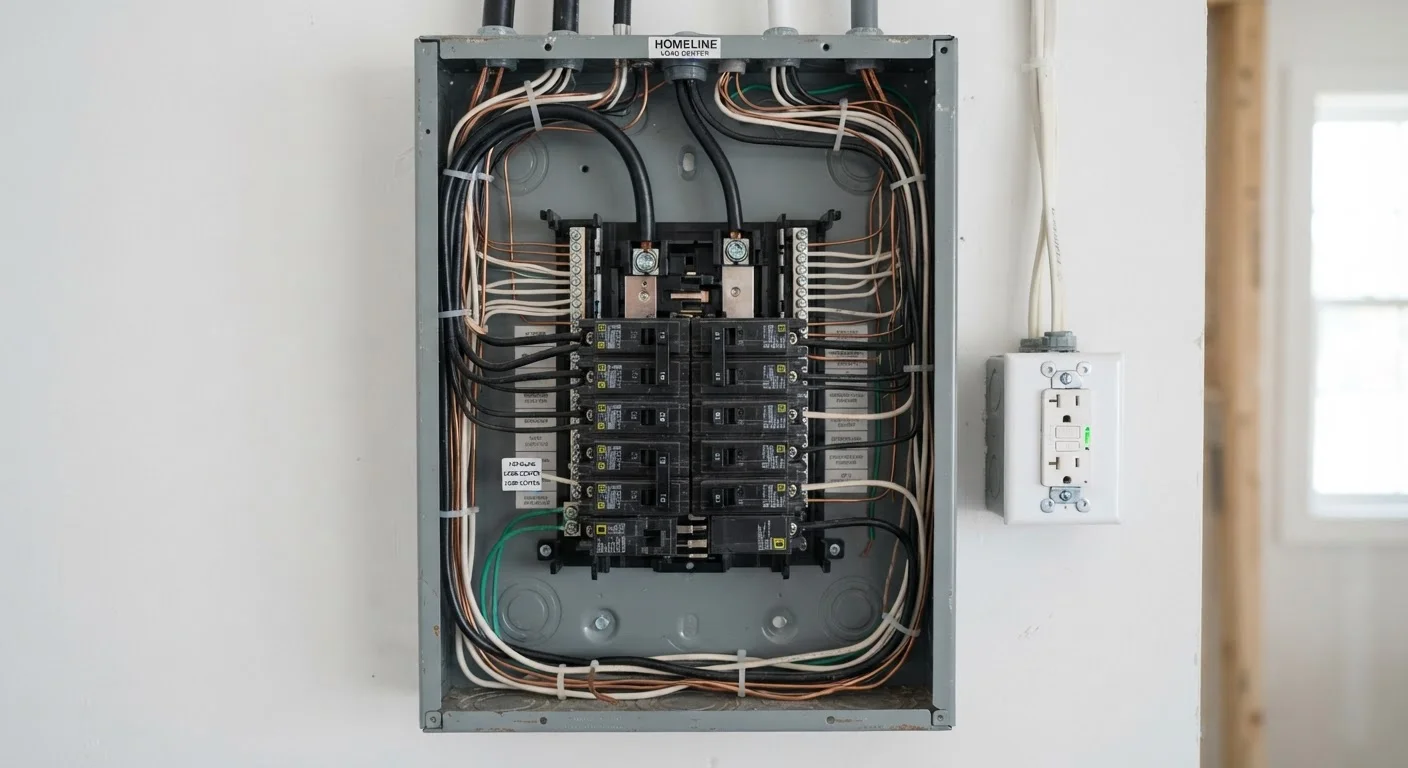
Grounding solves this by creating a deliberate, low-resistance path from the electrical system to the earth itself. Every modern panel has a grounding electrode system-usually a copper rod driven into the ground outside-connected to the panel's ground bus bar. When a fault occurs, current flows down that path rather than through a person or igniting nearby materials.
Grounding also helps stabilize voltage levels across the system, which protects sensitive electronics. The bare or green wires you see inside outlet boxes are ground conductors; the three-prong design of modern outlets exists specifically to carry this wire.
~1,000
U.S. electrocution deaths per year
The Electrical Safety Foundation International (ESFI) estimates approximately 1,000 people die from electrocution annually in the United States, with home wiring faults a significant contributing factor.
1/40th sec
GFCI response time
GFCI devices are designed to interrupt a circuit within about 25 milliseconds-fast enough to prevent fibrillation in most scenarios, according to GFCI standards published by Underwriters Laboratories.
5 mA
GFCI trip threshold
Standard GFCI devices trip when they sense a current imbalance of approximately 5 milliamps-far below the 15-20 milliamps that can cause sustained muscle contraction and the higher levels that trigger breakers.
Bonding: Eliminating Voltage Differences Between Metal Parts
Bonding is frequently confused with grounding, but it addresses a distinct problem. Imagine your metal water pipes, gas lines, HVAC ductwork, and electrical enclosures all sitting at slightly different electrical potentials. If someone touches two of those surfaces simultaneously, current can flow through their body between them-even if neither surface is actively faulted.
Equipotential bonding ties all those metal systems together with bonding conductors so they share exactly the same electrical potential. No voltage difference means no current can flow between them. This is why a licensed plumber doing work near the panel may install or disturb bonding jumpers-those connections matter.
In homes with metal water supply piping, the NEC requires the main bonding jumper to connect the neutral bar to the equipment ground bar at the service panel. Structural steel, metal gas piping, and other conductive systems also have specific bonding requirements. This is work that must be verified and performed by qualified professionals.
GFCI Protection: The Fast-Acting Shock Interrupter
Even with grounding and bonding in place, situations arise where current finds a path to ground through a person before the system can respond. A standard circuit breaker trips when it senses a large overcurrent-but the level of current that trips a breaker is far above what it takes to cause a fatal shock. That's where GFCI protection steps in.
A GFCI device continuously compares the current flowing out on the hot wire with the current returning on the neutral wire. Under normal conditions they're equal. If the device senses a difference of as little as 5 milliamps-indicating current is leaking somewhere it shouldn't be-it opens the circuit in roughly 1/40th of a second. That's fast enough to prevent serious injury in most circumstances.
GFCI protection is available in three forms: GFCI outlets (identifiable by their TEST and RESET buttons), GFCI circuit breakers installed at the panel, and GFCI receptacle covers. For help understanding what your panel contains, see our article on reading your electrical panel.
Test Your GFCI Outlets Monthly
Press the TEST button on any GFCI outlet-power to that outlet (and any downstream outlets it protects) should cut immediately. Press RESET to restore power. If the outlet doesn't respond as expected, or if the RESET button doesn't stay in, stop using that outlet and have a licensed electrician inspect it. This simple habit takes seconds and confirms the protection is functional.
Where the Code Requires GFCI Protection
The NEC has expanded GFCI requirements with each revision cycle. In current editions, GFCI protection is required in locations where water and electricity are most likely to interact:
- Kitchens - all receptacles serving countertops
- Bathrooms - all receptacles within the bathroom
- Garages and accessory buildings - all receptacles at grade level
- Outdoors - all receptacles with direct exposure to weather
- Crawl spaces and unfinished basements
- Boathouses and near pools or hot tubs
Older homes built before these requirements may lack GFCI protection in some or all of these areas. While existing wiring isn't always retroactively required to be upgraded, any renovation or outlet replacement in a covered location typically does trigger the current requirement. Your local building department can clarify what applies in your jurisdiction.
Including GFCI checks in your regular home walkthrough is a practical habit-our annual home systems walkthrough covers this alongside other essential inspections.
What to Do If Your Home May Be Missing These Protections
Homes built before the 1970s may have two-prong (ungrounded) outlets, no bonding on metal pipes, and no GFCI protection anywhere. Each of these gaps represents a real-though not necessarily imminent-risk that deserves evaluation.
The right first step is a licensed electrician's assessment, not a DIY inspection. Grounding and bonding work involves the service panel and connections to building systems where errors can be dangerous and may violate local codes. Permits and inspections are typically required for this type of work.
If you're already planning renovations or have noticed tripping breakers, flickering lights, or outlets that feel warm, those are additional reasons to schedule an evaluation. Deferred maintenance on electrical systems tends to compound-our article on what happens when home system issues go ignored explains the patterns inspectors commonly see.
Before authorizing any work, knowing the right questions to ask will help you evaluate scope and credentials. See our guide on talking to contractors about home systems for practical advice.
This article is for general educational purposes only and does not constitute electrical advice. Electrical work involving panels, grounding systems, or wiring should be performed by a licensed electrician in accordance with local codes and permit requirements.