

Key Takeaways
Native Plants
Native plants are species that evolved naturally in a specific region over thousands of years without human introduction. Because they developed alongside local soils, rainfall patterns, insects, and wildlife, they're biologically adapted to thrive in those exact conditions. This deep regional fit is what makes them so much easier to maintain than non-native ornamentals.
The term 'native' is geographically specific - a plant native to the Pacific Northwest may not be native to the Mid-Atlantic, even though both are in the United States. Always source plants native to your specific ecoregion.
Why Native Plants Are Fundamentally Different From Conventional Landscaping
Most American yards are planted with species selected for looks rather than regional fit - ornamental shrubs from Europe, turf grasses from cooler climates, and flowering perennials from halfway around the world. These plants can look beautiful, but they come with a cost: they need constant support to survive in environments they weren't built for.
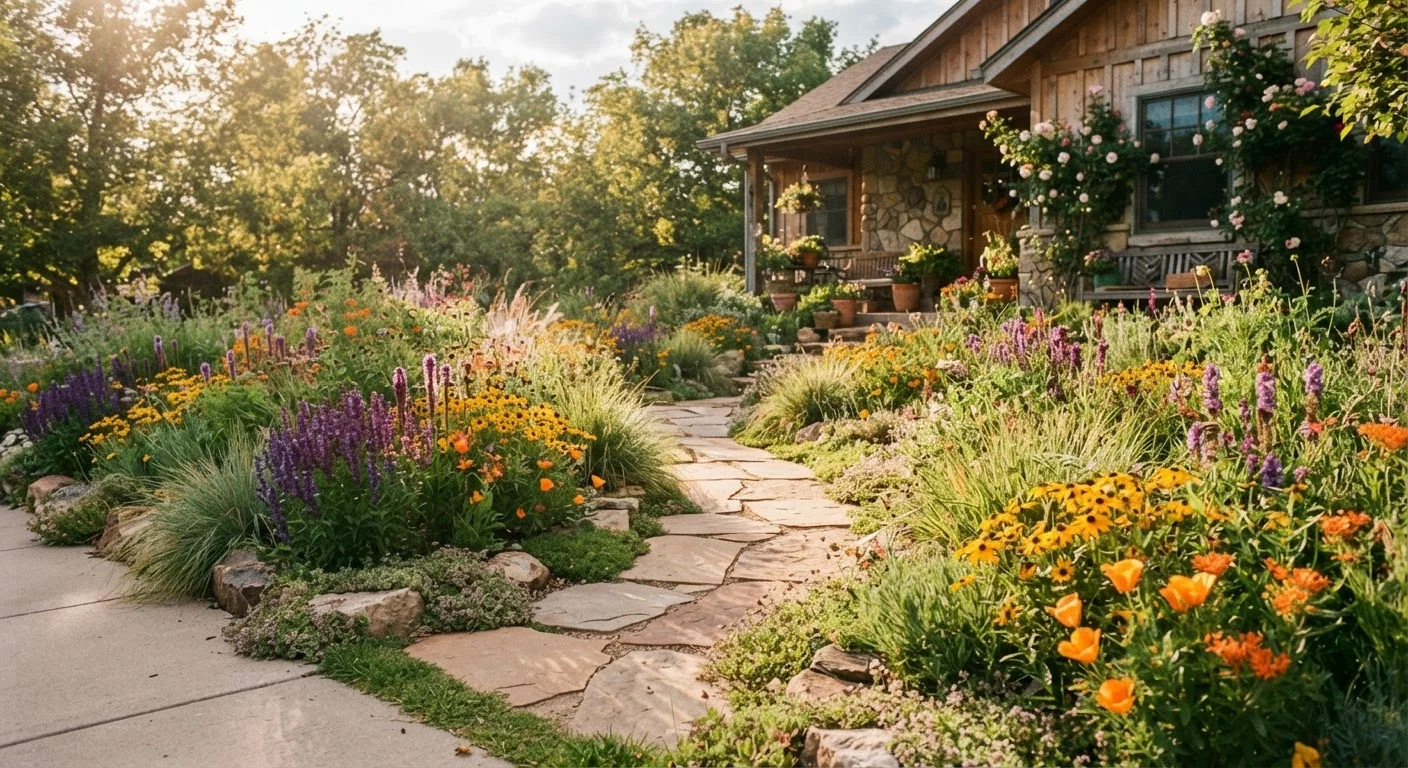
Native plants flip that equation. A coneflower (Echinacea) native to the Great Plains, or a wild columbine native to Eastern woodlands, evolved over millennia to handle local freezes, dry spells, soil chemistry, and insect pressures. The gardener's job shifts from sustaining a plant that's fighting its environment to simply giving a well-adapted plant room to do what it does naturally.
This is why the promise of low maintenance isn't marketing language - it reflects genuine biology. Compare this to the weekly and monthly demands described in a seasonal lawn care calendar, and the difference in time investment becomes clear.
30%
Of household water used outdoors for landscaping
According to the U.S. Environmental Protection Agency, roughly 30% of household water use is dedicated to landscape irrigation, much of which is lost to evaporation or runoff.
~4,000
Native bee species found in the United States
The USDA estimates there are approximately 4,000 native bee species in the U.S., many of which depend on specific native flowering plants to complete their life cycles.
1-3 seasons
Typical establishment window for native plants
Most horticultural guidance suggests native perennials and shrubs reach full establishment - and dramatically lower maintenance needs - within one to three growing seasons after planting.
The Real Maintenance Savings: Water, Chemicals, and Labor
The three biggest costs of conventional landscaping - water, chemical inputs, and labor - all drop when you shift to native plantings.
Water
Established native plants typically don't need irrigation beyond what rainfall provides in a normal year. Their root systems run deep, tapping soil moisture that shallow-rooted ornamentals can't reach. Pairing natives with good mulching practice extends that moisture retention even further - see our guide on how mulch does five jobs at once for practical technique. If you're also evaluating irrigation options, drip irrigation versus sprinkler systems is worth understanding for beds that are still getting established.
Fertilizers and Pesticides
Native plants evolved in local soils, so they rarely need supplemental feeding. They also co-evolved with regional insects, meaning natural predator-prey relationships do much of the pest control work for you. That said, the first year or two may still require some intervention while those relationships establish themselves.
Mowing and Pruning
Replacing even a portion of lawn turf with a native groundcover or meadow planting dramatically cuts mowing frequency. Many native perennials also benefit from being left alone over winter, with cleanup happening once in early spring - a far cry from weekly mowing schedules.
Start Small to Avoid Overwhelm
Converting your entire yard at once is rarely practical and often leads to frustration. Experienced native gardeners typically recommend starting with one clearly defined area - a single border, a rain garden, or a small meadow patch - and expanding as you learn which plants perform best in your specific conditions. A modest successful planting teaches you far more than an ambitious struggling one.
How to Start Transitioning Your Yard to Natives
You don't need to tear out your entire yard on day one. A staged approach is more practical and more likely to succeed.
- Audit your yard conditions. Note sun exposure, drainage patterns, and soil type in different zones. Native plants are adapted to specific conditions, and matching plants to those conditions is what makes them thrive.
- Start with one bed or lawn strip. Pick a manageable area - a sunny border, a shady corner, or a strip of lawn that struggles to stay green. Replace it with three to five native species suited to that spot.
- Source locally appropriate species. Contact your state's cooperative extension service or a local native plant society for regionally specific recommendations. Plants labeled 'native' at big-box stores may not be native to your ecoregion.
- Plan for the establishment window. Water new plantings consistently through their first growing season. Expect modest top growth while roots develop underground. Don't judge early results too harshly.
- Add mulch between plants. A 2-3 inch layer of organic mulch suppresses weeds, retains moisture, and regulates soil temperature while the plants fill in. This is especially important in year one.
If you're also working with thin or patchy lawn areas, overseeding bare spots can address transitional areas while your native sections mature.
Ecological Benefits That Extend Beyond Your Property Line
Native plants don't just make your yard easier to care for - they restore a small piece of regional habitat. Suburban and residential landscapes together cover enormous acreage across the United States, and even modest shifts toward native planting have measurable effects on local wildlife populations.
Pollinators - including native bees that many people don't recognize as bees - depend on specific host plants that co-evolved with them. Monarch butterflies, for example, require milkweed species native to their migration corridors to complete their life cycle. Birds depend on native berry-producing shrubs and seed-heads that many homeowners tidy away before winter.
A homeowner in the Mid-Atlantic region replaces a struggling patch of turf grass under a large oak tree with native wild ginger and ferns, which are naturally adapted to dry shade.
A family in the Southwest converts a water-hungry front lawn to a dry-adapted native meadow of desert marigold, penstemon, and blue grama grass.
A gardener in the Upper Midwest plants a rain garden using native swamp milkweed, blue flag iris, and buttonbush in a low-lying area that previously stayed waterlogged after storms.
Thinking about your yard as habitat rather than just a surface to maintain changes the way maintenance feels. Leaving seed heads through winter isn't laziness - it's providing food for overwintering birds. Allowing leaf litter under shrubs isn't neglect - it's sheltering native bee eggs and overwintering insects. These are active, informed choices that save work and contribute something real.
Understanding the broader watering needs of your landscape also helps - it's worth separating garden-watering myths from evidence-based practice by reviewing common watering misconceptions.