

Key Takeaways
'Was / Now' Pricing
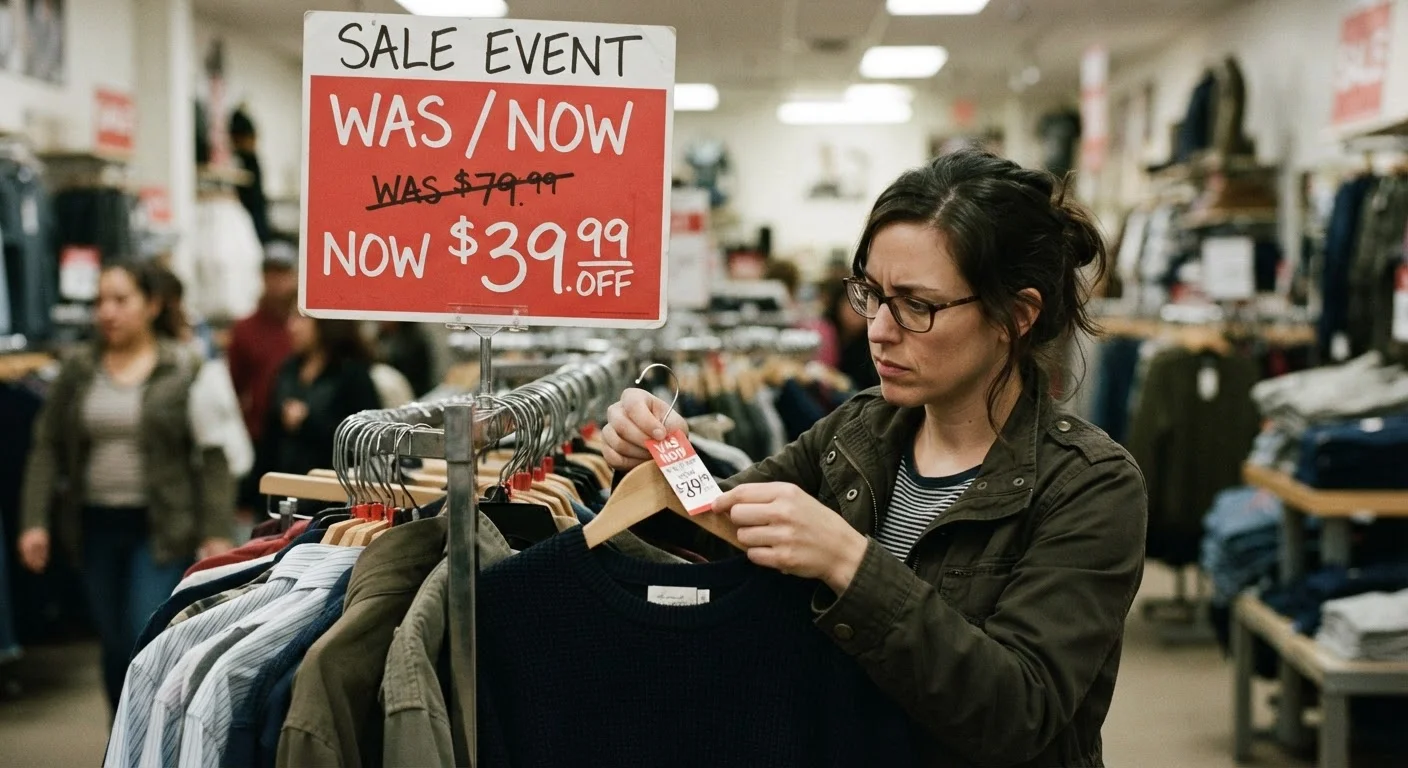
'Was / Now' pricing is a retail tactic where a product displays two prices side by side: a higher 'was' (or 'original') price and a lower 'now' (or 'sale') price. The intent is to signal savings. The problem is that some retailers set the 'was' price artificially high - a price the item rarely or never sold at - making the apparent discount look much larger than it really is.
In regulatory language, this is sometimes called a 'reference price' or 'former price' claim. U.S. consumer protection standards under the FTC's Guides Against Deceptive Pricing establish conditions under which a reference price must be genuine to avoid being considered misleading.
How 'Was / Now' Pricing Works - and Where It Goes Wrong
'Was / Now' tags follow a simple formula: display a higher former price next to a lower current price to create a sense of savings. Psychologically, the 'was' figure acts as an anchor - it shapes what shoppers perceive as a reasonable value before they ever evaluate the actual product. The larger the gap between the two numbers, the stronger the perceived deal.
The mechanism is legitimate when a product genuinely sold at the higher price. The legal and ethical problem emerges when retailers set a 'was' price that the item rarely - or never - reached in ordinary commerce. This practice, sometimes called a fictitious reference price, creates a discount that exists only on paper.
Common ways this plays out in practice include:
- Temporary price inflation: An item is offered at a high price for a few days, then immediately 'marked down' - meeting the technical definition of a former price while defeating its spirit.
- Manufacturer's suggested retail price (MSRP) misuse: A retailer lists MSRP as the 'was' price even though the item has never sold at that figure in normal retail conditions.
- Perpetual sales: Products remain in a 'sale' state indefinitely, meaning the 'now' price is simply the regular selling price with a inflated reference attached.
For a deeper look at the psychological mechanisms behind these tactics, see how anchoring and phantom discounts work.
“A former price is deceptive if the item was not openly offered to the public at that price for a reasonably substantial period of time in the recent, regular course of business.”
— Federal Trade Commission, Guides Against Deceptive Pricing, 16 C.F.R. Part 233
The Legal Framework: What U.S. Rules Actually Require
At the federal level, the FTC's Guides Against Deceptive Pricing set the baseline standard. These guides specify that a former price used in a comparison must be a bona fide price - one at which the product was openly offered to the public for a reasonably substantial period of time. If a retailer inflates a price briefly just to manufacture a discount, that reference does not qualify.
The guides are administrative guidance, not legally enforceable rules on their own. However, the FTC can pursue enforcement actions under Section 5 of the FTC Act, which prohibits unfair or deceptive acts in commerce, and courts use the guides as a reference when evaluating cases.
State Laws May Offer Stronger Protections
Federal FTC guidelines establish a national baseline, but many states have consumer protection statutes that go further - some allow individual consumers to sue retailers directly for deceptive pricing, while others impose specific requirements about how long a 'former price' must have been in effect. If you believe you've been misled by a reference price, your state Attorney General's office is often a more direct avenue than a federal complaint.
State-level protections add another layer. Many states - including California, New York, and Illinois - have enacted consumer protection statutes that explicitly address deceptive reference pricing, sometimes with stricter standards or stronger private right-of-action provisions than federal rules. Class-action lawsuits against retailers for phantom pricing have been filed and settled under these state laws.
The practical implication: a retailer's pricing practice might be technically defensible at the federal level but still expose them to liability under state law, depending on where the consumer is located.
How to Evaluate Whether a Sale Is Real
Consumer protection rules help after the fact, but shoppers need tools that work before purchase. The most reliable approach combines price tracking with market comparison.
Use price history tools. Browser extensions and dedicated websites record how a product's price has changed over time on major retail platforms. If the 'was' price appears only briefly before a sale event - or if the 'now' price matches the item's price for most of the past year - the markdown is likely exaggerated. Price history tools can expose inflated original prices in ways that in-store tags never will.
Compare across retailers. If competing stores consistently sell the same product at or near the 'sale' price, that price is effectively the market price - not a discount.
Look at the sale's permanence. A product that appears to be 'on sale' every time you check the retailer's site is likely priced at its regular level. Understanding what legitimate sales actually look like can help you distinguish genuine markdowns from cosmetic ones.
40%+
Shoppers influenced primarily by discount size
Research published in the Journal of Marketing Research has found that the size of a stated discount - not the actual final price - is a primary driver of purchase decisions for a substantial share of consumers.
Millions
Dollars recovered in state pricing settlements
Multiple state attorneys general have reached settlements worth millions of dollars with major retailers over fictitious reference pricing claims, demonstrating active enforcement of these standards.
Be aware that the impulse to act on an apparent bargain is a real cognitive bias - and one retailers design for. Certain deal-hunting habits can cost more than they save when they're driven by the perception of a discount rather than actual need or value.
What to Do If You Suspect Deceptive Pricing
If you believe a retailer is using fictitious reference prices, you have several options beyond simply avoiding that store.
Document what you see. Take timestamped screenshots of the pricing, especially if you can capture the 'was' price and the sale price together with the retailer's name visible. This documentation supports any complaint you file.
File a complaint. The FTC accepts consumer reports at ReportFraud.ftc.gov. Your state Attorney General's office is often a more direct route for deceptive pricing complaints, particularly if the retailer operates in your state. Some states have dedicated consumer affairs divisions that investigate pricing complaints.
Consider the broader pattern. A single ambiguous price tag may not rise to the level of a formal complaint. But if a retailer consistently displays implausibly high 'was' prices across many products, that pattern is more significant and worth reporting. Deeply suspicious pricing - particularly from unfamiliar online sellers - can also be a signal worth examining further. Recognizing other red flags of fraudulent online stores is a useful companion to evaluating pricing legitimacy.
The core takeaway is straightforward: a 'was' price is only meaningful if it represents what an item genuinely cost before the markdown. Treating reference prices as claims to be verified - rather than facts to be trusted - is a practical habit that costs nothing but a few minutes of research.