

Key Takeaways
Legitimate Sale
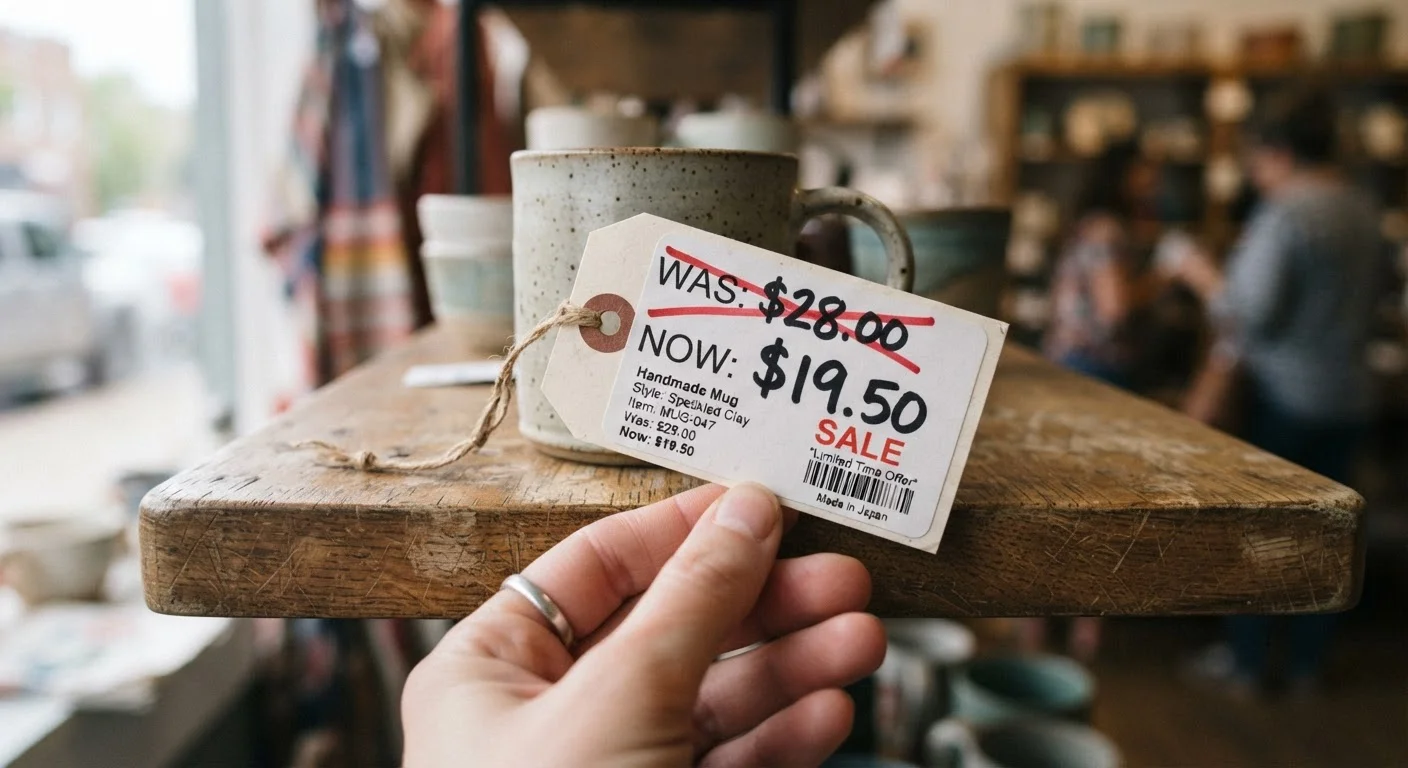
A legitimate sale is a price reduction from a price the retailer actually charged - not a price inflated specifically to make a discount look impressive. The original price must have been offered genuinely and for a reasonable period before the markdown. The sale price should represent a real decrease in what consumers pay.
Under U.S. Federal Trade Commission guidance, a 'former price' used in a comparison must reflect the price at which the item was honestly offered to the public for a substantial time. Prices set artificially high solely to manufacture a discount may violate FTC guidelines on deceptive pricing.
What Separates a Real Discount From a Manufactured One
The core question behind any sale is simple: lower than what? A discount only means something if the starting point - the reference price - is honest. When a retailer sets an artificially high 'original' price and then immediately marks it down, the percentage saved is technically accurate but practically meaningless. You're not saving money off what anyone actually paid; you're paying the price the retailer intended all along.
Genuine discounts share a few common traits. The item was previously sold at the higher price for a meaningful period. The markdown reflects a real reduction in margin, a seasonal inventory need, or a competitive response - not a pricing trick. And the sale price is verifiably lower than what the same product typically costs elsewhere.
This is meaningfully different from what the phantom discount playbook relies on: high anchor prices designed to make modest markdowns feel dramatic. Understanding the distinction is the first step toward evaluating any offer clearly.
What FTC Guidelines Say About Reference Prices
The Federal Trade Commission's Guides Against Deceptive Pricing state that a 'former price' used in a comparison must be a price at which the product was actually offered to the public - not a fictitious or inflated figure set to make a discount appear larger. While enforcement is not automatic, these guidelines provide a baseline standard for what constitutes honest comparative advertising. Consumers who believe a retailer's pricing is deceptive can file a complaint with the FTC at ftc.gov.
The Role of Price History in Verifying a Baseline
One of the most reliable ways to assess whether a discount is real is to look at what the item has actually sold for over time. Price history tools track a product's listed price across weeks or months, showing whether today's 'sale' price is genuinely low or simply a return to its normal range after a brief artificial spike.
A pattern worth watching: some retailers raise prices in the days before a major sale event, then 'discount' back to the original level. The price history chart will show the spike clearly. If the current sale price sits at or above where the product spent most of its recent history, the discount isn't delivering real savings.
Price history tools are widely available as browser extensions and work across major retail platforms. They take seconds to consult and are among the most objective checks available to shoppers.
~60%
Shoppers who don't verify sale prices independently
Consumer research has consistently found that a majority of shoppers accept advertised discounts without cross-checking against price history or competing retailers.
7 days
Typical minimum for a valid 'former price' under FTC guidance
FTC guidance on comparative pricing suggests a former price should have been offered for a reasonable, substantial period - industry practice often interprets this as at least one week of genuine offering.
Up to 30%
Price inflation before major sale events, per consumer studies
Academic and consumer advocacy research has documented cases where listed prices rise in the period immediately preceding major promotional events, deflating the real value of the subsequent 'discount'.
How Percentage Framing and Urgency Distort Perception
Two of the most effective tools retailers use to make discounts feel more compelling than they are: percentage framing and artificial urgency. Neither tells you whether a price is actually a good value.
Percentage-off figures are relative. A 40% discount on a $12 item saves $4.80. The same percentage on a $150 purchase saves $60. High percentages on low-cost items often generate excitement disproportionate to the actual dollar savings. Understanding how percentage framing affects perception helps you evaluate deals on their real dollar value - not just a number that sounds impressive.
Countdown timers and 'only a few left' notices are marketing mechanics. They may reflect real inventory constraints, but they're also commonly used as pressure tactics regardless of actual scarcity. A legitimate sale doesn't require you to panic-purchase to benefit from it.
Always Convert Percentages to Dollars
Before deciding a percentage discount is compelling, do the arithmetic. Multiply the original price by the discount percentage to get the actual dollar savings. Then ask whether that dollar amount - not the percentage - justifies the purchase. This single habit removes a significant amount of retail framing from the equation.
A Practical Framework for Evaluating Any Sale
Before accepting a discount at face value, run through three quick checks:
- Verify the reference price. Was the original price actually charged for a meaningful period? A price set last week and 'discounted' today is not a genuine markdown. The legal gray area around 'was/now' pricing means retailers have some room to maneuver here, so external verification matters.
- Cross-check across retailers. If the 'sale' price is still higher than what competing retailers charge as their standard price, the discount is relative only to that one retailer's baseline - not the market.
- Calculate the actual dollar value. Convert the percentage to a dollar amount. Decide whether that amount is worth the purchase, independent of how the discount is framed.
Once those boxes are checked, you're evaluating the deal on its merits - not on the retailer's presentation of it. See the full savings verification checklist for a complete step-by-step process before any purchase.
It's also worth noting that deeply discounted prices can occasionally signal something more concerning than inflated anchors. Prices that seem implausibly low - well below market across every comparison point - can be a red flag for illegitimate sellers entirely.