

Key Takeaways
Looks Can Deceive: Why Visual Polish Isn't Proof
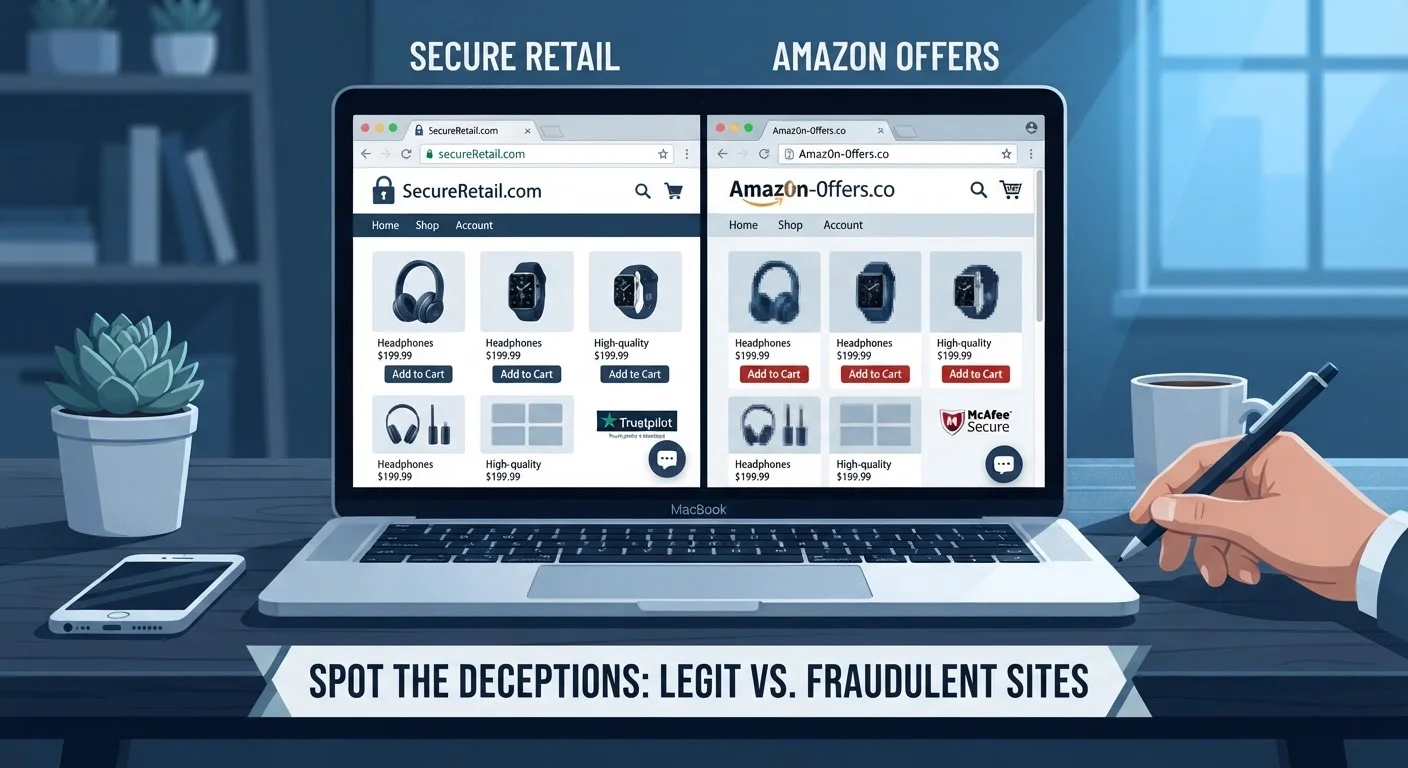
Online scammers have become sophisticated designers. Modern website-building tools make it trivially easy to clone a retailer's layout, copy its product images, and mirror its brand colors - all within hours. The result is a storefront that feels familiar and professional, even when it's entirely fraudulent.
Readers often assume that if a site looks like a major retailer, it probably is one. That assumption is exactly what counterfeit operators rely on. Understanding why appearances mislead - and which signals actually matter - is the first step toward safer shopping. For a deeper look at what legitimacy really looks like under the surface, see our guide to trustworthy retailer signals.
Myth
If a website has the HTTPS padlock, it's safe to shop there.
Fact
HTTPS encrypts your connection but says nothing about whether the site operator is honest or legitimate.
The padlock icon means data traveling between your browser and the server is encrypted - that's it. Fraudulent sites can and do obtain HTTPS certificates, which are often free and require no business verification. A padlock is a necessary baseline, not a trust seal. Always evaluate the domain name, business contact details, and payment options separately.
Myth
A site that uses familiar brand logos and product photos must be authorized to sell those products.
Fact
Scammers routinely copy brand assets without permission; the presence of a logo proves nothing about authorization.
Copying an image or logo from a brand's official site takes seconds and violates intellectual property law - but scammers aren't deterred by that. Many counterfeit storefronts display legitimate brand imagery to create an illusion of affiliation. If you're unsure whether a seller is an authorized retailer, check the brand's official website for a list of authorized sellers or resellers.
Myth
Positive customer reviews on a site confirm it's trustworthy.
Fact
Reviews displayed on a site's own pages are completely unverifiable and trivially easy to fabricate.
Any site operator can post glowing testimonials with no accountability. Even star ratings and reviewer names can be invented. Instead, look for reviews on independent platforms - ones where the business cannot delete or filter feedback. Search the store's name on those platforms and pay attention to patterns in negative reviews, particularly complaints about non-delivery or unresponsive customer service.
Myth
If a site looks identical to a retailer I already trust, it probably is that retailer.
Fact
Cloning a site's visual design is a common tactic; the URL and domain are the only reliable identifiers.
HTML, CSS, and image assets from a legitimate site can be copied wholesale and republished at a different domain. The visual experience can be indistinguishable from the real thing. Always verify the domain in the address bar matches the retailer's official URL exactly - character by character. Bookmark retailers you shop with regularly so you always navigate directly to the genuine address.
Myth
Receiving an order confirmation email means the purchase went to a real business.
Fact
Scam sites send automated confirmation emails to appear legitimate while still having no intention of fulfilling the order.
Automated order confirmation emails are easy to generate and are a standard part of many fraud operations - they buy time and reduce buyer suspicion. If you have doubts after placing an order, don't wait for delivery. Check your bank or card statement, contact your payment provider promptly, and search the retailer's name for fraud reports. Our article on phishing emails and shopping explains how fraudulent messages mimic real retailer communications.
The Signals That Actually Matter
Once you move past visual appearance, a handful of verifiable details separate real retailers from convincing fakes.
88%
Of fraud sites use HTTPS
According to the FBI's Internet Crime Complaint Center, the vast majority of reported fraudulent shopping sites carry a valid HTTPS certificate, making the padlock an unreliable trust indicator on its own.
$8.8B+
Lost to online fraud in a single year
The FTC reported that consumers in the U.S. lost more than $8.8 billion to fraud in 2022, with online shopping fraud among the most commonly reported categories.
The URL: A domain name that swaps one letter, adds a hyphen, or uses an unfamiliar suffix (like .shop or .store) is a major warning sign. Our breakdown of what a web address actually tells you explains exactly what to look for in the address bar before you go any further.
Contact information: Legitimate retailers publish a physical address, a working phone number, and a customer service email. Test them. A contact form that leads nowhere, or a phone number that rings to voicemail with no callback, is a red flag.
Payment methods: Scam sites frequently push wire transfers, cryptocurrency, gift cards, or obscure payment apps - methods that offer buyers no recourse after payment. Established retailers support credit cards and recognized payment processors, both of which carry consumer protections.
Never Pay by Gift Card or Wire Transfer
Legitimate online retailers do not ask for payment via gift cards, cryptocurrency, or bank wire transfers. These methods offer no buyer protection and are virtually impossible to reverse once sent. If a site's only payment options are these methods, treat it as a strong indicator of fraud and do not proceed.
If you want a structured approach before completing any purchase, work through our pre-purchase safety checklist - it covers each of these verification steps in order.
When the Price Is the Trap
Deeply discounted prices are one of the oldest lures in online fraud. A site may look completely credible, but if the prices are 60-80% below what any authorized seller charges, treat that gap as a signal - not a bargain. Scammers know that an attractive price can override a buyer's caution even when other warning signs are present.
This doesn't mean every discount is suspicious, but prices that seem impossible usually are. Our article on recognizing fraudulent online stores walks through the full range of red flags that accompany unrealistic pricing.
Verifying a seller independently - searching the retailer name plus terms like "reviews" or "complaints" in a separate browser tab, or checking with the Better Business Bureau - takes minutes and can prevent significant financial loss. That small friction is far preferable to disputing a fraudulent charge.